
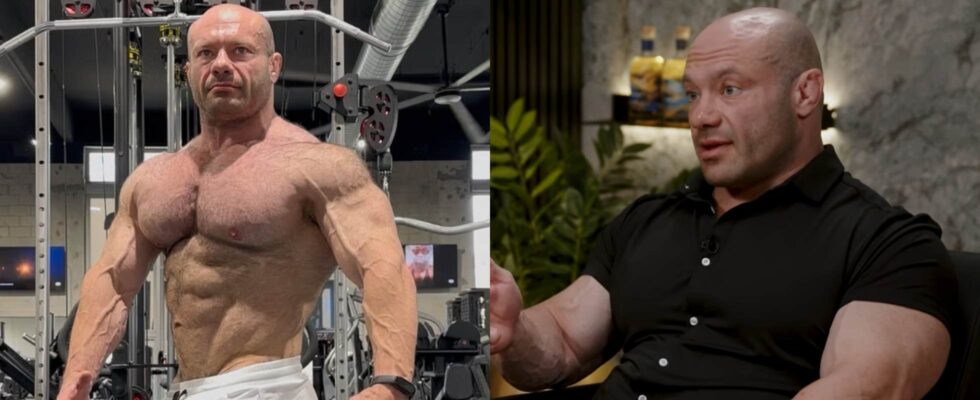
Sports scientist and bodybuilding competitor Dr. Mike Israetel sat down with Dave Rubin on The Rubin Report to discuss fitness, health myths, and performance-enhancing approaches.
When the conversation turned to testosterone replacement therapy, Israetel offered a candid breakdown of both the benefits and the risks associated with TRT.
Rubin brought up one of the most commonly discussed side effects, testicular atrophy, asking Israetel how real the concern actually is. Israetel acknowledged that it can happen, but explained that it does not affect everyone equally.
“A sizable fraction of people have no meaningful testicular atrophy,” he said. He also described the issue as a “solved problem” for many patients, noting that certain medications can help preserve natural function while on TRT and make the transition off treatment less disruptive.
When discussing the drawbacks of testosterone therapy, Israetel did not try to downplay the risks. “There are numerous downsides to TRT,” he said, before pointing to elevated red blood cell counts as one of the biggest concerns. “You get more blood cells and they clog you up,” he explained, stressing that thicker blood is a legitimate issue that requires regular monitoring and medical oversight.
At the same time, Israetel emphasized that proper TRT management is more important than whether testosterone is produced naturally or administered externally.
“Whether that comes from your balls or that comes from the needle is almost completely irrelevant on the effects for your body,” he said.
According to Israetel, the real problems begin when treatment is poorly managed or dosed incorrectly. “Proper TRT isn’t just being like, the doctor gave me TRT and it caused XYZ,” he explained. “It is titrating the dose, communicating to your doctor over time to get to the level where your blood work is the best it’s been.”
Israetel also acknowledged hair loss as another possible downside for men who are genetically predisposed to baldness. “Testosterone by itself for some males will cause baldness,” he said, though he added that there are treatment options available for people who want to address that side effect.
Despite outlining several risks, Israetel remained firm in his overall view of testosterone optimization. “Optimizing your testosterone will cause more benefits than not attempting to optimize your testosterone, full stop,” he said. He argued that the key is being proactive with medical care and staying consistent with blood testing. “It takes more proactive medical care and getting blood work, which you should be getting anyway regularly, and doing something about it if your blood work happens to be off,” he added.
Still, Israetel made it clear that TRT is not something people should approach casually or without guidance. He explained that the objective is finding a hormone level where “your blood work, your physique, your performance, your psychology all align for their best.”
According to him, both low testosterone and excessively high testosterone can create problems, which is why individualized treatment and physician supervision are essential.
