
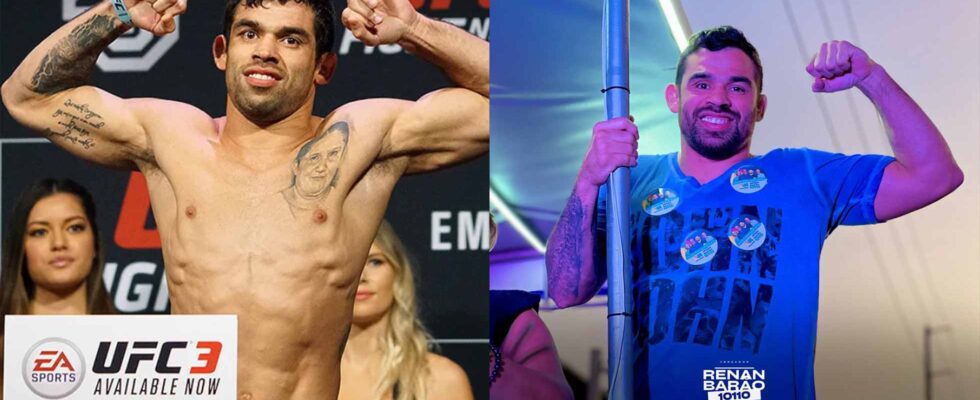
Former UFC bantamweight champion Renan Barao’s bid for political office fell short during the recent Brazilian elections. Barao, once considered one of the world’s top 135-pound competitors, received a mere 253 votes in his campaign for city councilor in Natal, the capital of Rio Grande do Norte.
In Brazil’s recent municipal elections, centrist and center-right parties gained significant ground, marking a conservative shift in the electorate as the ruling Workers Party lost support.
The race for mayor of São Paulo, the largest city in Latin America, is set for a run-off on October 27 between incumbent conservative Ricardo Nunes and leftist candidate Guilherme Boulos, who narrowly defeated far-right influencer Pablo Marçal.
Candidates linked to former President Jair Bolsonaro performed better than those backed by current President Luiz Inácio Lula da Silva, with Bolsonaro’s Liberal Party winning in two state capitals and securing run-offs in nine cities.
The centrist “Centrao” coalition emerged with the most mayoral victories, while incumbent mayors maintained control in half of the state capitals. The São Paulo elections highlighted an anti-establishment sentiment, evident in Marçal’s strong performance, which could influence the upcoming 2026 presidential race. Lula, whose popularity has waned, is expected to seek re-election, while Bolsonaro remains barred from running until 2030 due to previous claims against Brazil’s voting system.
Local elections are crucial for shaping future congressional and presidential races, although this year’s campaigns focused primarily on local issues. Prominent regional leaders included governors and House Speaker Arthur Lira, with São Paulo Governor Tarcisio de Freitas emerging as a potential presidential contender for the right in 2026.
The former champion wasn’t alone in his political aspirations, as ten other mixed martial arts personalities also threw their hats into the ring for various city council positions across Brazil. However, like Barao, they too failed to secure enough votes to claim victory.
Among the notable names was Felipe Arantes, who competed in the UFC with a record of 5-6-1. Arantes managed to garner 14,607 votes in São Paulo, making him the most successful of the group in terms of votes received. However, this tally still fell short of the threshold needed for election.
Chute Boxe leader Rudimar Fedrigo came in second among the MMA candidates, earning 3,758 votes in Curitiba. Other familiar faces from the fighting world included Godofredo Pepey, who received 77 votes in Fortaleza, and Evangelista Santos, who collected 341 votes in his hometown of Rondonopolis.
The results highlight the challenges faced by athletes transitioning into the political arena. Despite their fame and accomplishments in the world of combat sports, these individuals struggled to translate their popularity into electoral success.
At the lower end of the spectrum, 56-fight veteran Paulo Bananada received just 12 votes in Sapé, while Ralph Gracie, a member of the renowned Gracie family, secured 1,422 votes in Rio de Janeiro.
This foray into politics by MMA personalities reflects a growing trend of athletes seeking to leverage their public profiles for roles in public service. However, the outcome of these elections suggests that name recognition alone may not be sufficient to win over voters in Brazil’s competitive political landscape.
