
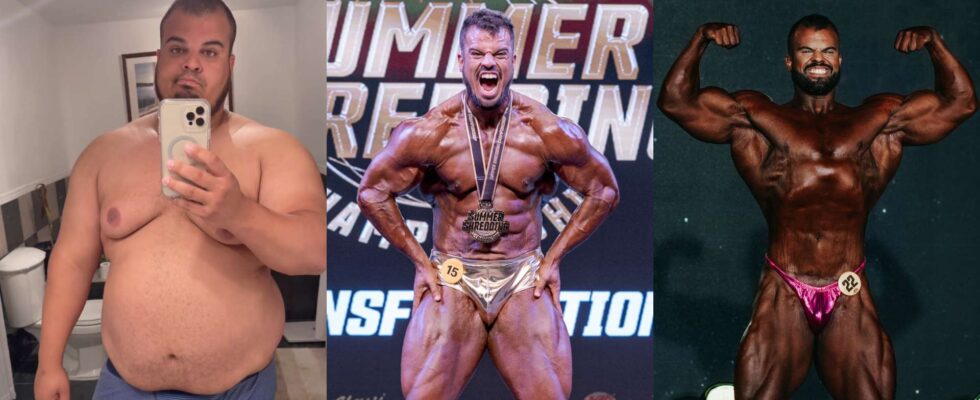
Simon “Goliath” Lafontant has gone from weighing 372 lbs (169 kg) to winning a $100,000 bodybuilding transformation competition in just over three years. But behind the dramatic physical change is a far more complicated story involving years of PED use, serious medical complications, and the psychological struggles that continued long after he lost the weight.
Appearing on Trensparent with Nyle Nayga, Lafontant opened up about everything he used throughout his transformation and the ambition to eventually compete in open bodybuilding at the Olympia.
Lafontant’s transformation began with a moment that forced him to confront just how far his health had deteriorated. “I was laying in bed and I like turned around and I was out of breath. Like I just woke up, turned around. I was out of breath,” he recalled.
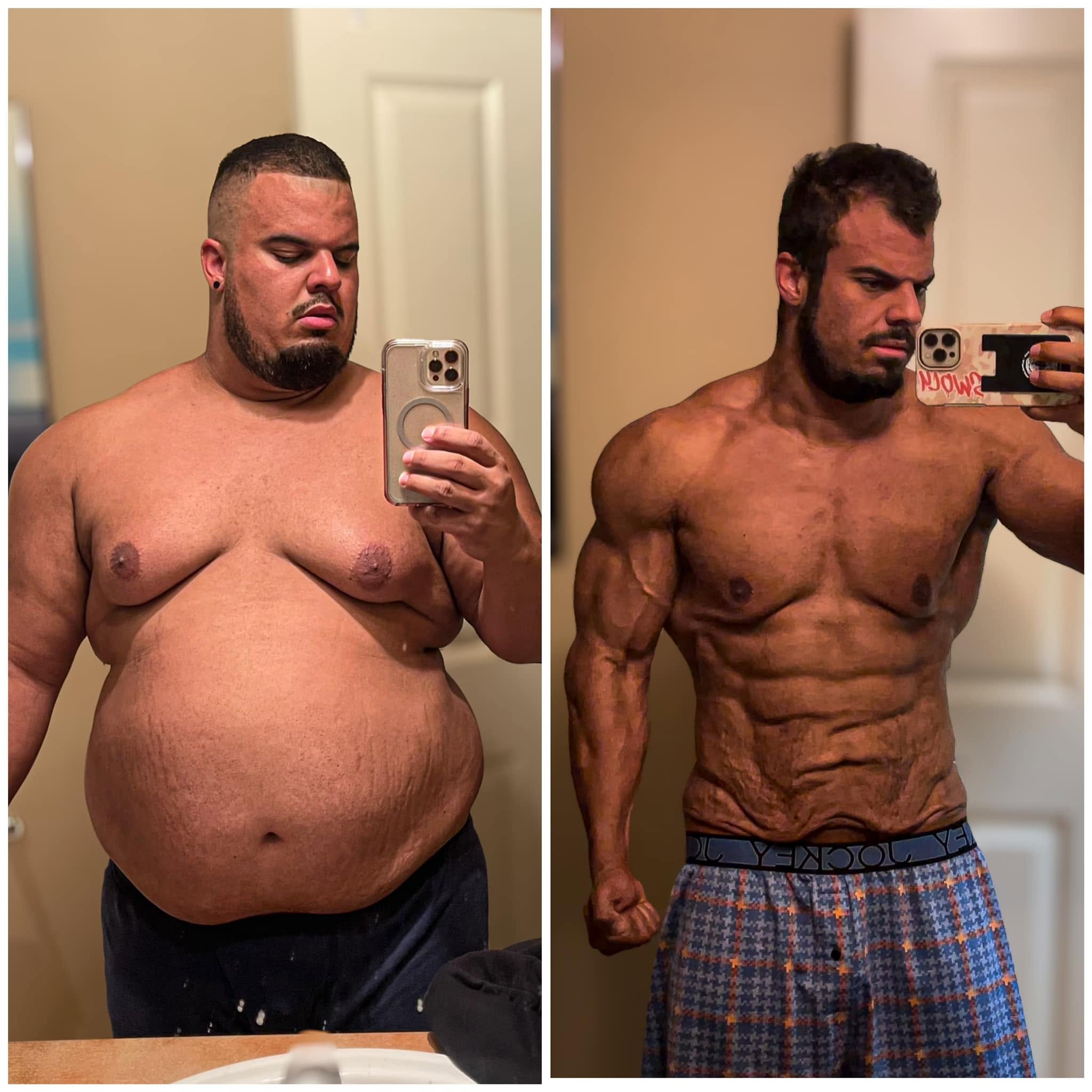
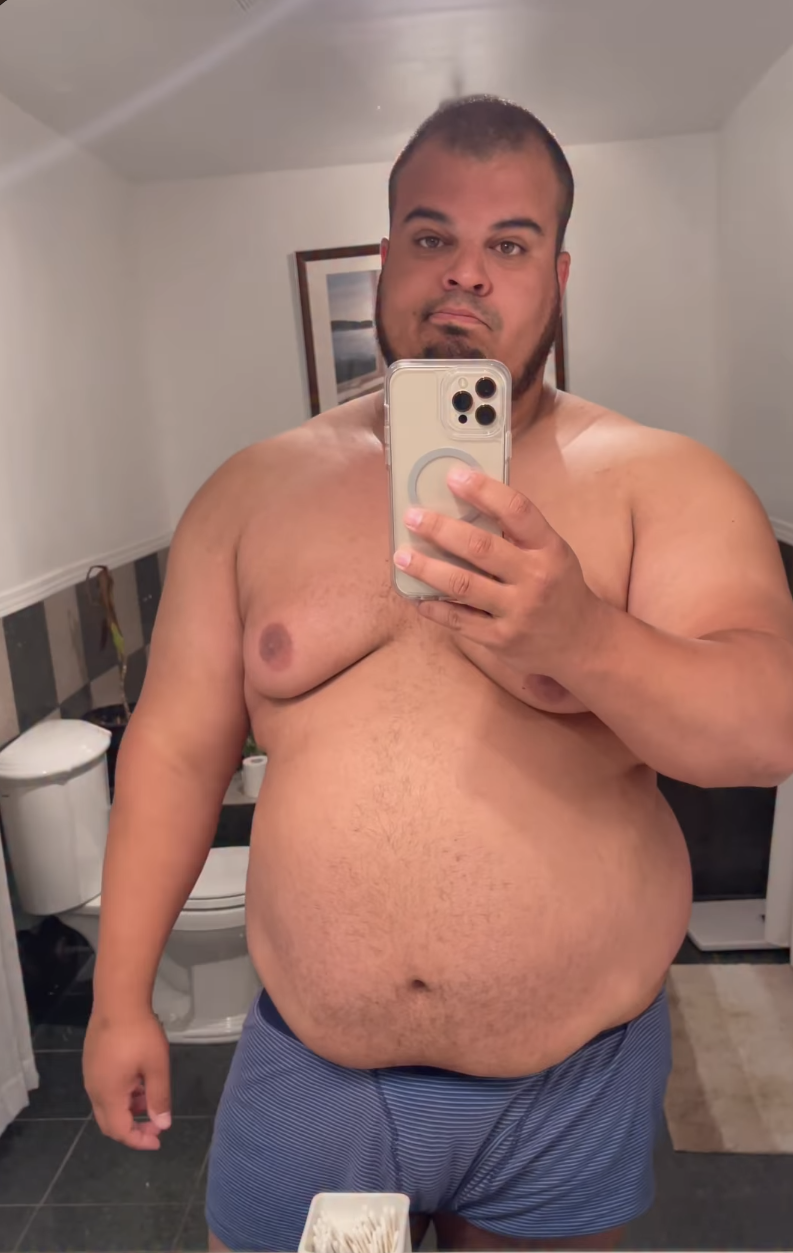
Two days later, the then-30-year-old recorded a video declaring that he would compete in a bodybuilding show within a year. At the time, he weighed 372 lbs.
His relationship with food had become deeply tied to shame, something that continued to affect him even after his physical transformation.
“I used to sneak garbage out at night so they wouldn’t know what I ate at night,” Lafontant said.
He was equally blunt about the psychological toll of being severely overweight.
“I don’t care if you’re with the body positivity movement or any of that. There is no chance that if you are that big, you don’t feel ashamed.”
Even after competing in Toronto, he found himself repeating old habits, waiting until everyone had left before eating cookies. Losing the weight had changed his appearance, but it had not immediately erased the mindset he had developed while living with obesity.
Lafontant’s history with PEDs began long before his transformation journey. At 13, a bully on his school bus suggested that roids could turn his fat into muscle.
Five years later, he acted on the idea. Armed with information from bodybuilding.com forums, Lafontant began his first cycle at 18, taking one gram of testosterone and one gram of trenbolone per week for two months.
Looking back, he believes the cycle caused lasting damage to his hormonal function.
“I completely messed my pituitary doing that and I didn’t realize it for a number of years afterwards but my test production just shut down,” he said.
The physical results were limited, but the consequences were not. His testosterone production remained severely suppressed for years, setting the stage for further health complications.
By the time Lafontant reached 30, his circumstances had become increasingly difficult. He was living with his parents, earning approximately $17,000 a year, and dealing with testosterone levels reportedly in the 70s.
A trip to Colombia with his brother, an Olympic runner, helped him recognize the severity of the problem. He explained that obtaining testosterone there was surprisingly straightforward.
“In Colombia, you can literally order testosterone through like their app, which is like Uber Eats,” he said.

Starting testosterone replacement therapy gradually changed how he felt about himself and his ability to function.
“It’s like adding color to a black and white book. Slowly the saturation comes. It doesn’t all come at once, but slowly you become more energetic. Your drive comes back, your self-confidence starts kicking in.”
However, testosterone was only one part of a much more complicated health picture. Lafontant also suffers from Crohn’s disease, which has contributed to significant medical complications.
His condition continues to affect him.
“I have gauze stuck between my behind right now because I’m always bleeding.”
These medical issues would remain a major consideration throughout his bodybuilding journey, particularly as his training and drug protocols became more demanding.
The first six months of Lafontant’s transformation were comparatively straightforward. He says he used no peptides or additional PEDs during this period.
He relied on 160 mg of testosterone per week prescribed for his medical condition. His diet and training were built around consistency rather than constant experimentation.
Breakfast consisted of a protein shake with oats, while his remaining meals featured rice or egg noodles with lean meat. He performed 20 minutes of cardio twice daily and increased the workload only when his progress stalled.
The results came quickly. Lafontant lost 105 lbs (48 kg) in six months while consuming fewer than 2,000 calories daily.
He attributed the rapid progress partly to his history of dieting without properly reversing out of restrictive phases, which he believes had negatively affected his metabolism.
After losing the initial 105 lbs, Lafontant received sponsorship from a supplement company.
“They put me on everything. By the second Will Tennyson video I was taking like nine different things at once. I didn’t know what worked, what didn’t,” he said.
The list included IGF-1, tirzepatide, growth hormone, CJC, TB-500, BPC-157, tesamorelin, 5-amino-1MQ, and NAD+. Of those, Lafontant singled out tirzepatide as particularly beneficial for a reason beyond its commonly discussed effects on appetite.
“Of all of the PEDs, of all the peptides that I was taking, tirzepatide was the most useful one, not for hunger suppression, but for my Crohn’s disease. That reduced the bleeding by like a factor of 10.”
For his first bodybuilding show, Lafontant said his coaches prescribed 500 mg of testosterone and 500 mg of masteron per week, alongside Arimidex every other day. During the final four weeks, he also took 25 mg of trenbolone daily.
Although the competition itself went well, the period immediately afterward was frightening.
“I put on 40 lbs (18 kg) in 6 days after the show. I was in the hospital with crackles in my lungs from holding so much fluid,” he revealed.
Lafontant said he stopped urinating for four days and developed severe swelling throughout his body. He ultimately required hospital treatment with diuretics to remove the excess fluid.
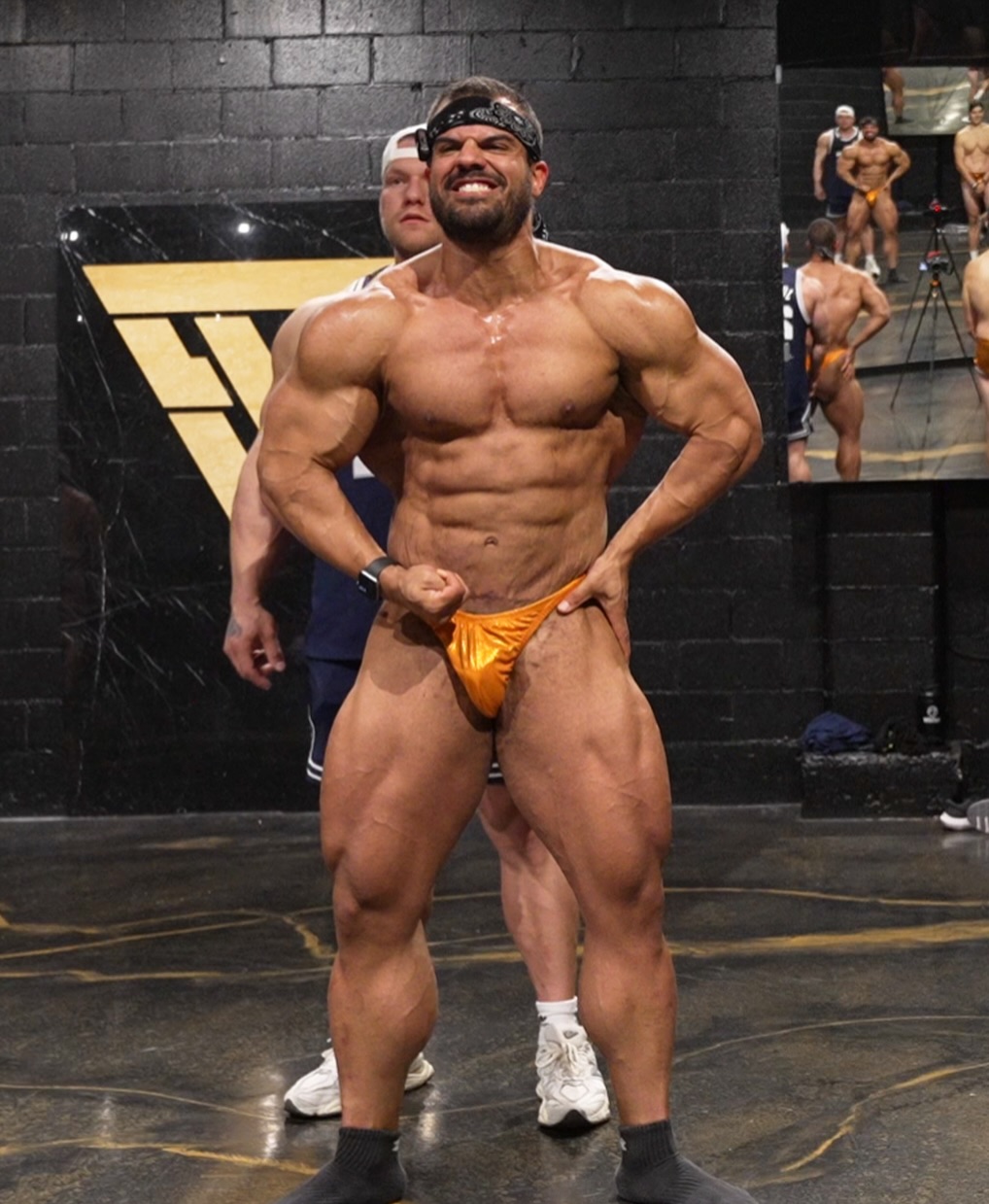
Within 12 hours of treatment, he lost 15 lbs (7 kg), which he attributed to fluid leaving his body.
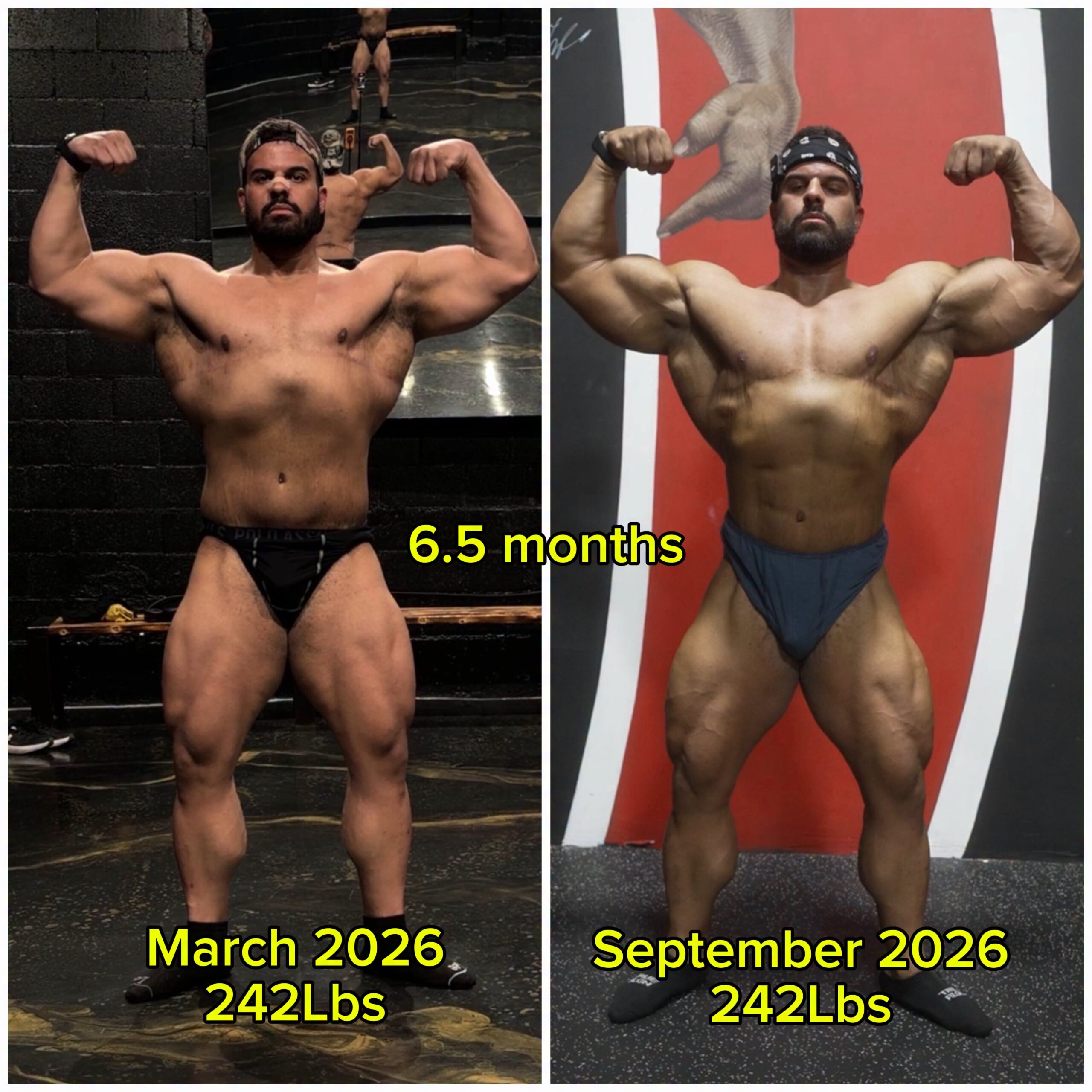
After his first competition, Lafontant underwent three major skin-removal surgeries over the course of a year. During his recovery periods, he said he stopped using additional PEDs and continued taking only 160 mg of testosterone weekly. Each operation required approximately three months of recovery, during which he had to maintain his diet while doing very little training.
Despite the limited activity, he gained only four pounds throughout the year. That period demonstrated a different kind of consistency. Instead of pushing through increasingly demanding workouts, he had to prioritize recovery and stick to his nutrition plan while allowing his body to heal.
While watching the open bodybuilding finals at the Olympia, Lafontant made a promise to himself.
“Mark my words, in three years from today, I will step on the Olympia stage as an open bodybuilder.”
Despite his confidence in the goal, Lafontant admitted that the prospect of pursuing open bodybuilding genuinely frightens him.
“I’m terrified. I’m so scared,” he said.
He understands that he will need to add substantial muscle while managing a condition that already complicates his training and recovery.
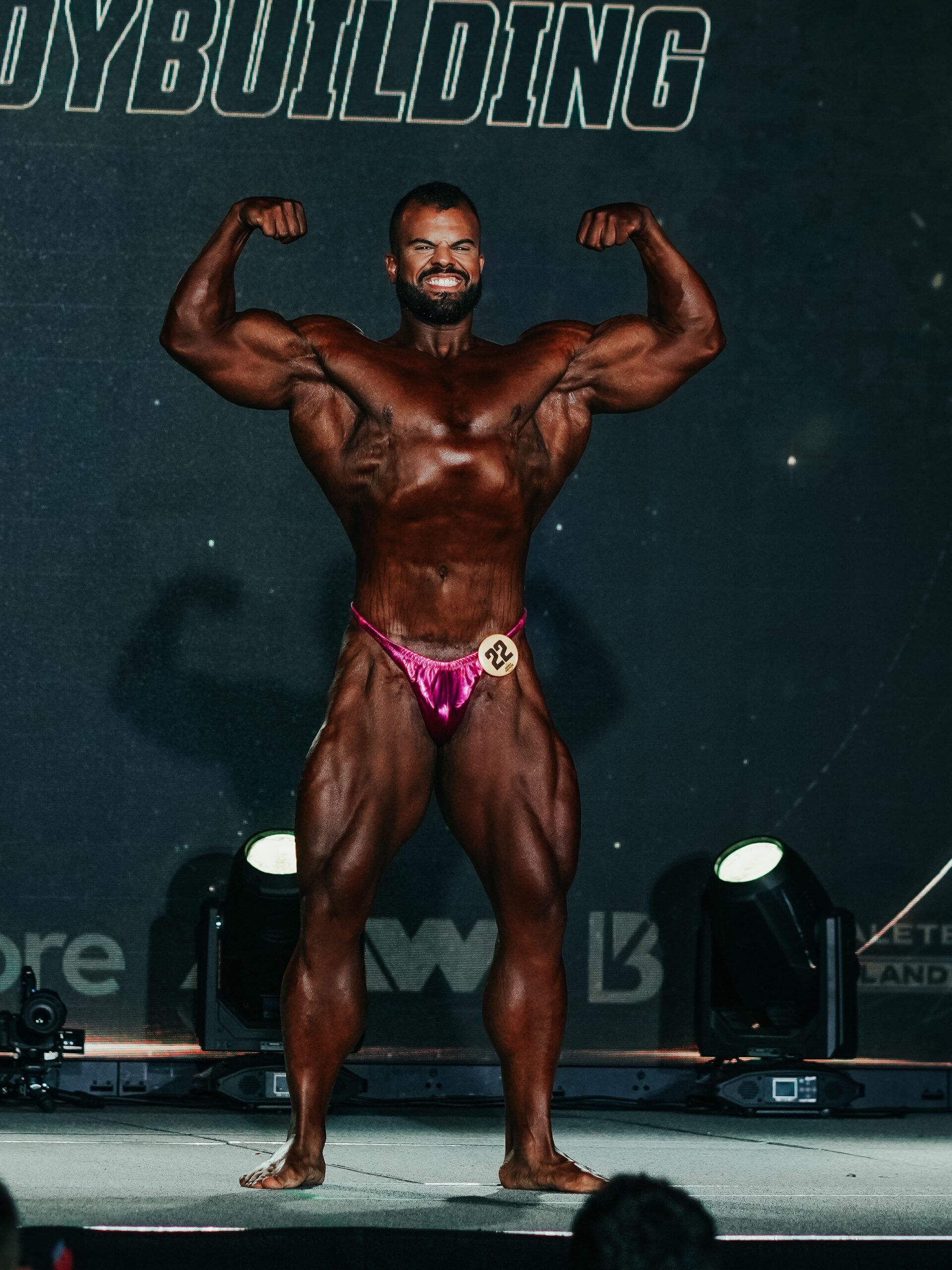
“I know the things I’m going to have to do. I know how hard it’s going to get. The Crohn’s is going to get harder to manage. The loose skin, I’m going to have to fill it out. My back needs at least 10 pounds of tissue on it. My glutes and legs gonna have to grow like four inches. My arms are also going to have to grow a couple inches.”
Lafontant also acknowledged that his ambitions have limits. He said he plans to monitor his health closely rather than pursue bodybuilding at any cost.
He undergoes bloodwork every six weeks as part of his Crohn’s disease monitoring, with more comprehensive panels every three months. He also plans to undergo cardiac imaging before beginning his next intensive growth phase.
When Nayga asked what message he would share with the world, Lafontant offered a final statement that captured the mindset behind his journey.
“It can be you. It can always be you. You can be that person. There’s no boundaries that anybody can set for you that can ever hold you back if you believe differently. Be delusional. Be undeniable and let the world know that you just walked into the room.”
