
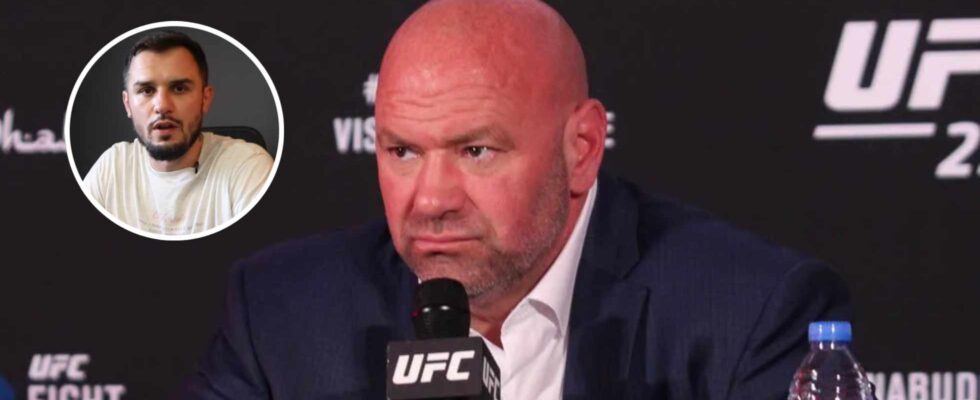
Former UFC star Myles Jury recently pulled back the curtain on his experience with the UFC antitrust lawsuit, sharing the exact numbers he walked away with and how the process worked for athletes involved in the case.
The lawsuit, formally known as Le v. Zuffa, resulted in a $375 million settlement. After attorney fees and other costs, approximately $250 million was distributed among eligible athletes. The settlement covered bouts that took place between December 2010 and June 2017.
Jury, who competed in the UFC from June 2012 through June 2019, had nine matches that fell within that window. His payout was calculated in two parts. The first was a per-bout payment. “Mine came out to $14,000 and some change per bout,” Jury explained. With nine qualifying matches, that portion totaled $127,000.
The second component was based on a percentage of total earnings during those years, including pay, win bonuses, and discretionary bonuses. “This was all across the board,” Jury said. For him, 31 percent of his earnings during those nine matches came out to roughly $102,000.
Combined, his total settlement came to $229,000, a number that genuinely surprised him. “Personally, when I heard about this lawsuit, I was expecting maybe on the lucky side five or 10 grand,” he said. “To come away with almost a quarter of a million dollars, man, that was awesome and a huge blessing.”
Jury noted that some athletes with a higher volume of bouts during the covered period received even larger payouts, with some collecting close to seven figures.
Beyond the numbers, Jury emphasized what the settlement meant for athletes who had already retired. Many leave the sport without financial safety nets, dealing with health issues and no ongoing income. For those individuals, the unexpected windfall made a real difference.
As for his own payout, Jury put the money directly into real estate, purchasing a commercial building in Michigan.
“It’s a commercial building and it pays off thousands of dollars a month triple net,” he said. He has been vocal about real estate as a long-term strategy, and he views the settlement as an opportunity to build lasting income rather than a one-time cash event.
His message to athletes is one of financial planning. Once a career ends, the checks stop entirely. There are no residuals, no royalties, nothing automatic.
“When it’s all said and done and those lights turn off, what are you going to do?” Jury said. “It’s up to the athlete to plan for their retirement.”
