
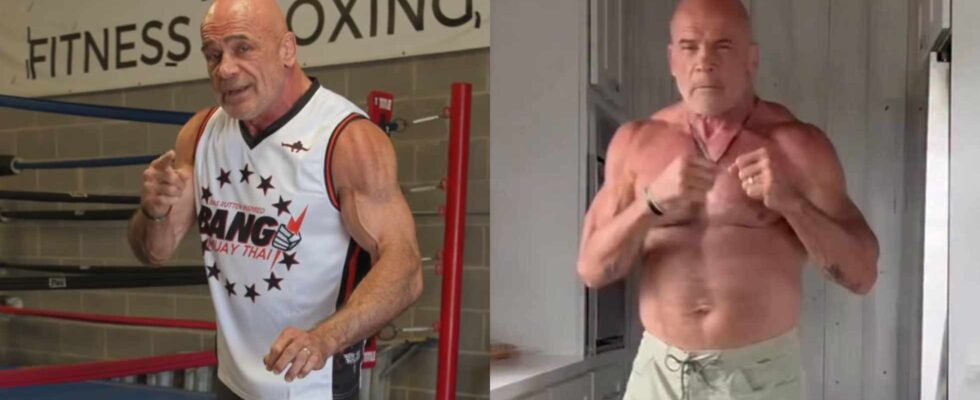
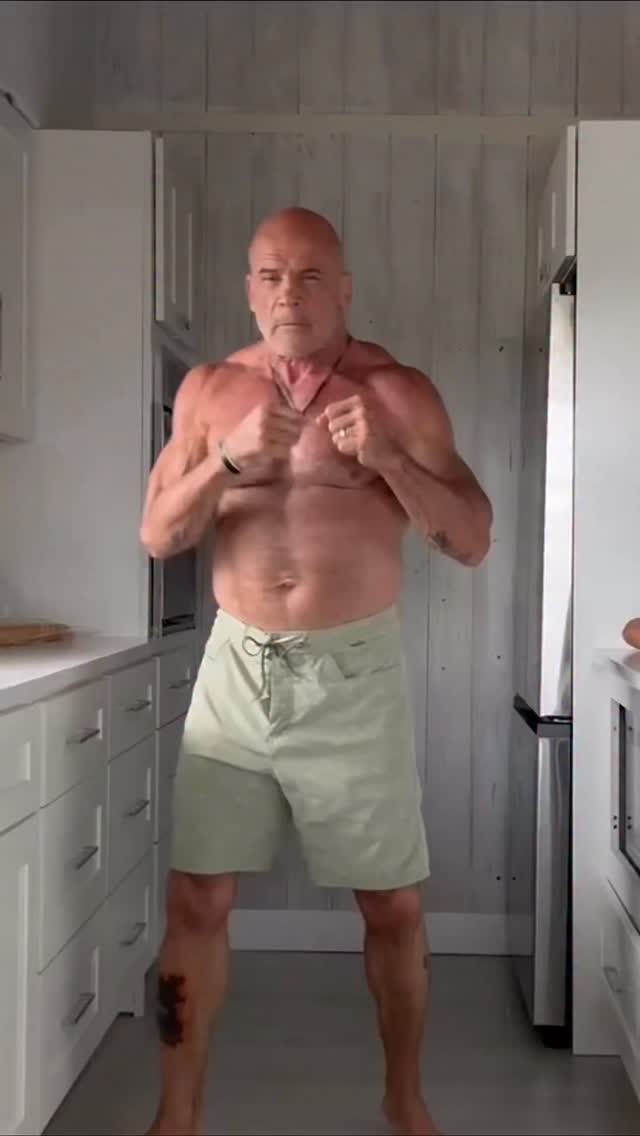
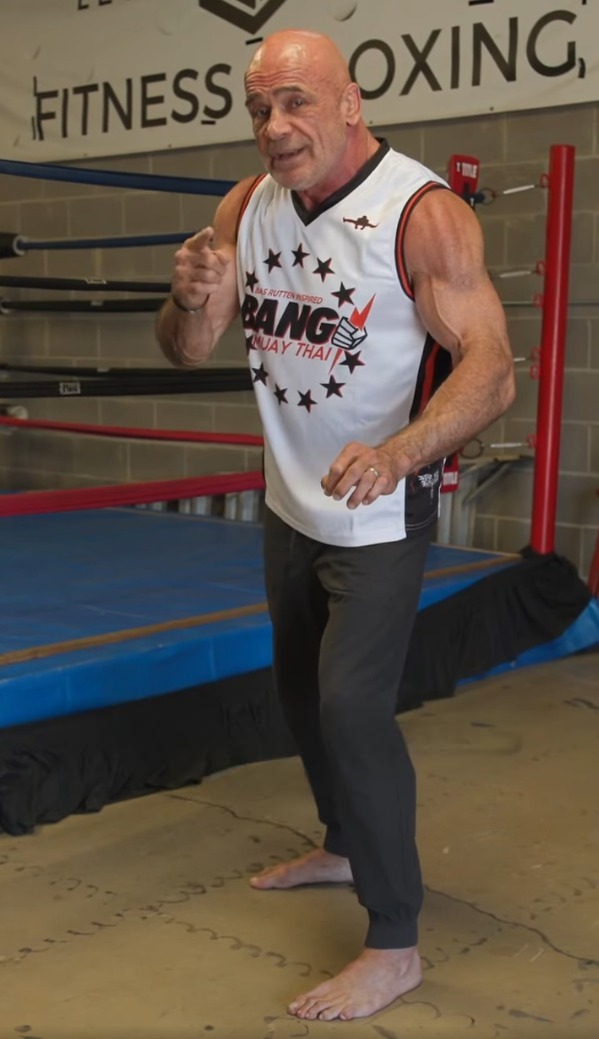
Former UFC heavyweight champion Bas Rutten has pushed back against widespread speculation that his muscular physique at 61 is the result of testosterone replacement therapy.
In a recent YouTube video, the Dutch-born MMA legend addressed the TRT rumors head-on and offered to stake $1 million on the claim.
“I don’t use TRT or any st**oids for that matter,” Rutten stated plainly. He did, however, acknowledge a prior history with the therapy, explaining that he turned to it following a serious neck injury sustained on a TV set.
During filming of a combat scene, he was dropped upside down on his head, compressing his discs and damaging nerves running to his right shoulder, triceps, biceps, forearms, and hand. The resulting nerve damage left him unable to perform basic tasks.
“Grabbing the milk out of the fridge was not going to happen,” he said.
Four neck surgeries followed, and in 2013, at his doctor’s recommendation, Rutten began TRT. He started at 200 milligrams per week, though he was careful to keep doses minimal, never wanting to add size beyond his natural 202 lbs.
“I like my weight, not too heavy, not too light,” he explained.
Over the years, Rutten gradually reduced his dosage down to 40 milligrams every four days. The decision to stop came almost by accident.
“I didn’t bring it on a trip and suddenly all the pains went away after like four or five days,” he said. That discovery prompted him to taper off further until he stopped entirely, roughly six months before the video was published.
Since stopping, he says his physique and weight have remained unchanged, pointing to this as evidence that TRT was never driving his appearance. He also pointed to UFC stars who used TRT before the practice was banned.
“What did they look like less than two months later? Much different,” he noted.
That said, stopping TRT does not always produce an immediate physical decline. The body’s natural testosterone production, suppressed during TRT use, can take months to recover and may never fully return to prior levels, particularly in older men or those who were on therapy for an extended period.
For many, natural levels simply return to the low baseline that prompted treatment in the first place.
In place of TRT, Rutten now uses peptides, specifically kisspeptin and sermorelin, along with NAD+. For anyone still convinced he is on TRT, his challenge stands. “We start at $50,000 plus the cost for testing,” he said. “I take a million. I take that bet.”
