

Stavros Halkias has heard the “sellout” accusations plenty of times this year, mostly tied to his willingness to talk politics on stage and on his podcast. But in a recent YouTube video, he flipped the accusation on its head and argued that the real version of selling out looks nothing like what his critics describe.
“Being a sellout is staying quiet. That is what selling out is, being brand safe, you idiots,” Halkias said. “You can say I’m a bad comic. If you don’t think I’m funny, that’s fine, truly. Comedy is subjective. But people been saying I’m a sellout. I’ve been turning down stuff cuz it’s bad.”
That willingness to turn work down he explained, extends directly to his podcast’s sponsorship choices, and gambling sits at the top of the list of things he won’t touch.
“I’ll advertise dumb stuff. I just don’t want to advertise things that are degrading the very fabric of our society,” Halkias said. “I think there’s going to be a big problem with gambling, for real. I think the statistics on like young men getting [ ] to gambling right now are out of control.”
Halkias didn’t claim a spotless record on the subject. He admitted that he and his co-hosts ran sports betting promotions early in the show’s run, before second-guessing the arrangement and walking away from it.
“Look, we did a little sports gambling in the beginning just because we were starting the podcast. I wasn’t thinking about it. We were on autopilot. And within like what six months, it just felt wrong and we stopped,” he said.
He didn’t stop at traditional sportsbooks either, taking a shot at the prediction market platforms that have cropped up as a kind of gambling workaround. “Now this gambling stuff that’s like you can gamble on anything. All that stuff, Polymarket, Kalshi, those people should be in jail. Like the people who run that stuff,” he said.
The stance separates Halkias from much of the podcasting circle built around Joe Rogan’s orbit. Tony Hinchcliffe continues running ads for PrizePicks, a daily fantasy platform that operates a lot like a sportsbook with a different label.
Rogan has his own DraftKings sponsorship running on The Joe Rogan Experience, a partnership that looks increasingly hard to square with his own comments about not following traditional sports at all, outside of MMA and boxing.
It’s a tension that’s shown up inside Rogan’s own show in ways that go beyond the sponsorship itself. On episode #2512, Joey Diaz sat across from Rogan and walked through just how far gambling promotion has pushed into everyday life, even as Rogan’s livelihood is partly tied to one of the biggest names in the space.
The two started on lighter footing, with Rogan bringing up a Knicks bet from the night before and asking Diaz about his own habits. “Do you bet sports all the time? How often you bet?” Rogan asked.
Diaz said basketball was his sport of choice this time of year. He said, “This time of the year? I bet basketball because it’s real. There’s defense.”
When Rogan asked how he places bets, specifically whether he still used an old school bookmaker, Diaz was clear about where his money goes now.
“DraftKings. Everything is on DraftKings,” he said. Diaz then confirmed moments later that he doesn’t have a bookie anymore.
From there, Diaz pivoted from enjoying the platform to worrying about what it’s doing more broadly. “I enjoy because DraftKings has so many fun,” he said, before contrasting the current legal landscape with the underground betting operations that still get broken up by law enforcement. “Like there’s bookies out there. Like they just keep busting these mafia rings in Jersey and New York. 39 people.”
He also referenced a coaching scandal that made headlines, saying, “They had the big bust last year with the basketball coaches that they put the cards up and you could see through the cards on the table.” His read on where things are headed was blunt. “It’s gambling has grown to a nightmare. We’re going to pay for this in 5 years.”
Diaz then drew a comparison to something he experienced firsthand decades ago, when financial companies set up shop outside college orientation sessions handing out credit lines to students who had no business holding them.
“But when I went to college after orientation, you walked out and there was credit card companies, Discover, Mastercard, Visa,” he said. “And they give you a credit card for being a student. For 250, automatic, right there.” In his view, betting companies have simply stepped into that same role. “And that now when you go to those orientation days, DraftKings is there.”
He made clear this isn’t just about one company. “You know, the other ones, FanDuel’s there, and I’m not putting them down,” he said. “I love DraftKings, but you’re copping these kids. These kids don’t have enough problems with student loans.”
He added, “Right now. I’m going to put a thing. More people are gambling more than ever.”
Rogan agreed the issue reaches beyond American borders, bringing up a conversation he’d had about the scale of the problem in Australia.
That exchange stands out because of how little pushback Diaz got from Rogan, despite Rogan’s own financial ties to the industry. It also isn’t the first time Rogan’s position on gambling has drawn scrutiny.
On an episode with Brian Redban, Rogan defended the legal betting boom using a prohibition framework, arguing that shutting the apps down would just send people toward riskier alternatives.
“It’s not good to make it illegal because then people are just going to get it somewhere else, right? And bad versions of it,” he said. “They’re going to go out and they’re going to support illegal gambling. They’re going to go to people’s houses where they’re going to have poker games and they’re going to get robbed. You know, it’s going to, you’re just going to open people up to illegal activities.”
That take reads differently next to things Rogan has said in the past, including comparisons between gambling and hard drug abuse, and comments calling UFC CEO Dana White a gambling addict for the sums he’s wagered in single nights.
Rogan once described watching White lose and then recover $600,000 at a blackjack table during a single session, framing it as evidence of just how powerful the pull can be. When Russell Crowe brought up the normalization of gambling during his own appearance on the podcast, Rogan reportedly offered little response.
The audience has started noticing the gap between what these shows say about gambling and what they advertise. Conversations among listeners have increasingly centered on how many top podcasters Theo Von included, run multiple betting-adjacent promotions while building personas around looking out for everyday people.
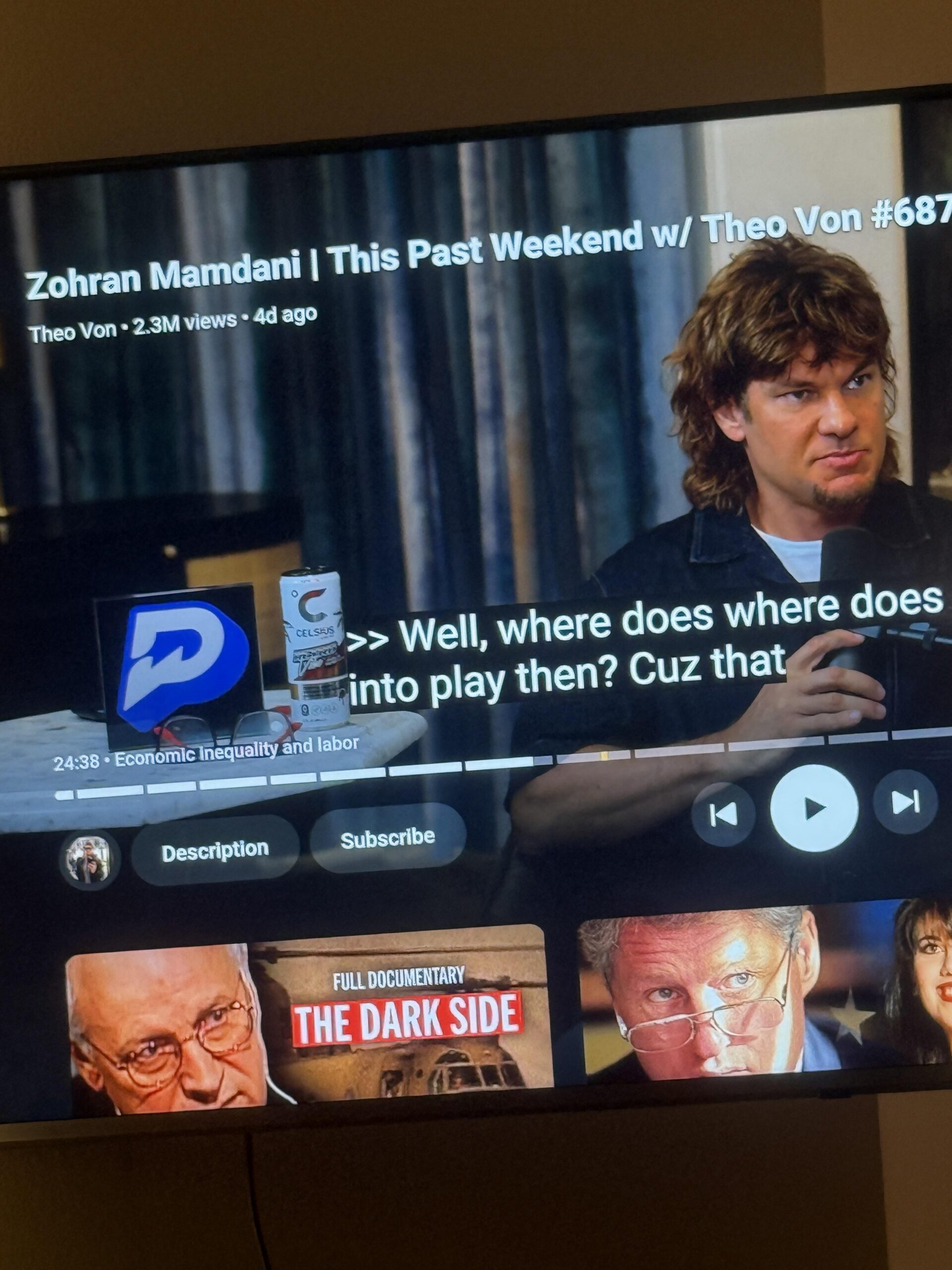
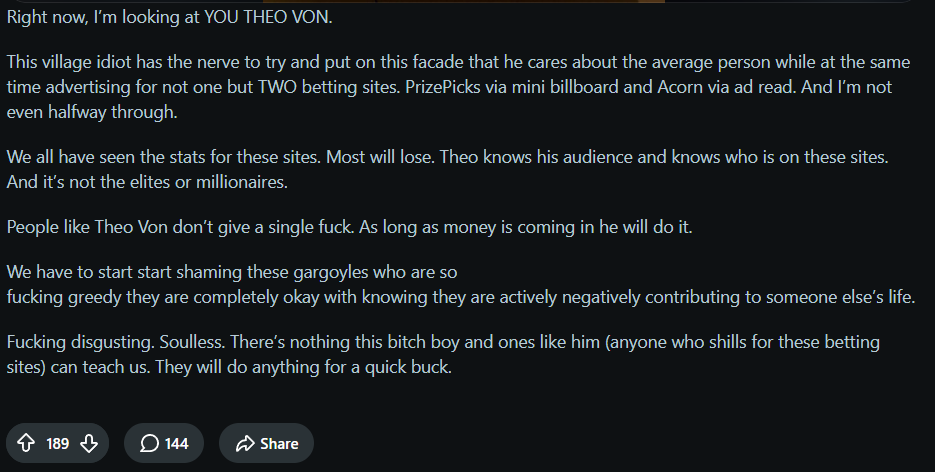
Critics point out that these platforms are designed so most users lose money over time, and that the audiences most engaged with podcast culture aren’t exactly the wealthy elite who can absorb those losses without consequence. Others push back, arguing listeners can simply choose not to bet or not to tune in, and that sponsorship choices are a personal business decision no different from any other product placement.
