
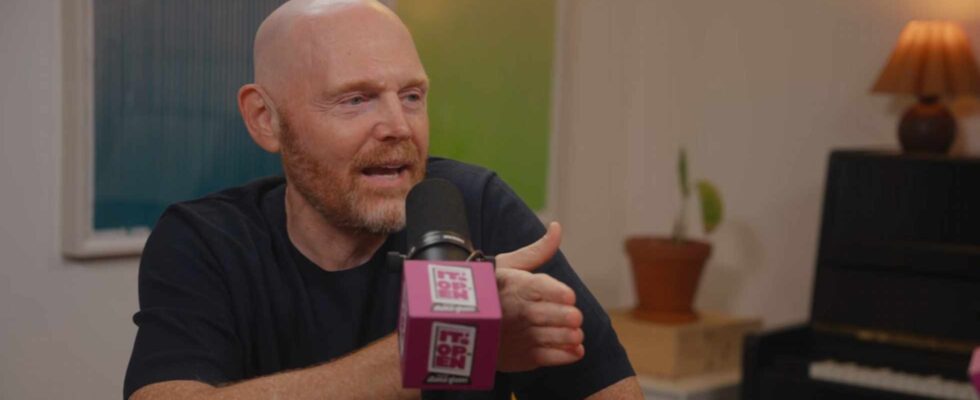
In a recent conversation on the podcast “It’s Open” with Ilana Glazer, comedian Bill Burr didn’t hold back when discussing the current state of American capitalism and how deregulation has reshaped the country. His commentary touched on monopolies, wealth inequality, and the need for a return to regulated markets.
Burr’s central thesis was straightforward.
“Capitalism is a great thing if it’s regulated and they started deregulating it in the early eighties. And that’s how we ended up like where we’re at,” he explained.
This deregulation according to Burr, has led to a new and problematic way of doing business where companies close the door behind themselves, preventing competition and dictating market terms.
He described the modern business model with frustration: “You come up with something and you just close the door behind it. And it’s like, no, nobody else is making money in this business, this sector of business except for me.”
He continued, “And then I’m going to systematically eat up everybody that’s left. I’m going to do this startup, lead loss, I’m going to overpay everybody and everybody’s going to come to me and then we put everybody else out of the business. I dictate the market and you’re going to work for pennies or you’re going to be homeless.”
The comedian pointed to Live Nation as a prime example of monopolistic behavior gone unchecked.
“You can tell it’s a monopoly when they don’t care,” he said. “Because it used to be like when there weren’t monopolies, all you had was your reputation, the quality of your product, and how you treated your customers. When you have a monopoly, that’s why like Live Nation, they’re internally sending emails laughing about how much they’re messing over people.”
Burr emphasized that he has no problem with wealth creation itself, but takes issue with how workers are treated in the process.
“I have no problem with people having zillions of dollars, but like pay the workers. Give them benefits,” he stated. “Most people don’t have outrageous demands. It’s like, I would like to have a family. I’d like to be able to clothe, shelter, and feed them and not have to worry every month that I’m gonna be homeless.”
He also challenged the justifications often used by corporate leaders for their ruthless tactics. “The more of a reptile you are, the more merciless you are, it’s respected in business. And then they hide behind them. Well, that’s how business is done. It’s like, no, it isn’t. That’s how you’re doing business.”
Looking back at history, Burr connected current problems to specific policy changes in the early 1980s. He recalled how regulations once prevented media consolidation, with rules about limiting ownership across different media types.
“They used to have rules of sevens about no one person can own any combination of seven radio stations like newspapers, magazines, TV, because they realized you could control public opinion,” he explained.
The breakdown of these protections he argued, has created an environment where money has essentially won, and the public is manipulated through controlled information channels.
Despite his criticism of current conditions, Burr maintained optimism about the future.
“People don’t wanna be oppressed. People wanna be free,” he said. He believes that eventually, working people will recognize their common interests regardless of political divisions. “Everybody is getting messed with in the same way that’s the working person. And so I feel like eventually we’re going to let go of this.”
His hope is that people will look beyond manufactured divisions and focus on the real source of their economic struggles.
“There’s plenty of nonviolent ways that you can teach these lizard people how to be human beings,” Burr concluded, suggesting that collective action and awareness could bring about meaningful change without violence.
