

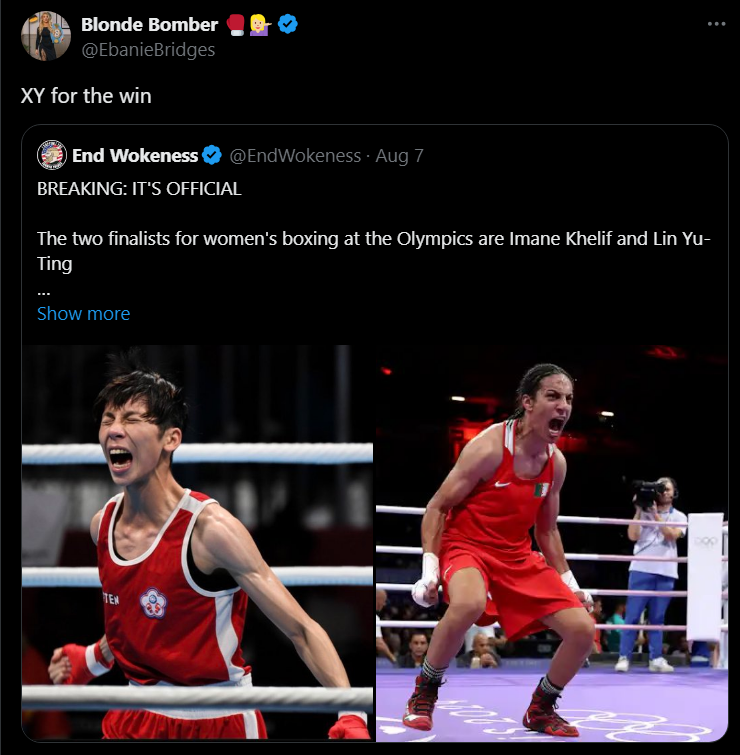
The boxing world has been abuzz with the news that two female boxers, Imane Khelif and Lin Yu Ting, have made it to the finals of their respective weight classes at the 2024 Olympics in Paris. However, this historic achievement has been overshadowed by a controversial debate surrounding their gender identity.
The International Boxing Association (IBA) had previously banned Khelif and Yu Ting from competing at the Women’s Boxing World Championships last year due to reported failures in a gender eligibility test. The test results indicated that both fighters have XY chromosomes, which are typically associated with biological males.
Despite this initial ruling, the International Olympic Committee (IOC) has since announced that it no longer recognizes the IBA’s decisions, paving the way for Khelif and Yu Ting to compete in Paris.
This news has sparked a heated discussion within the boxing community, with some, including popular fighter Ryan Garcia, voicing concerns about the potential competitive advantage these athletes may have.
In a response to fellow boxer Ebanie Bridges’ tweet, which read “XY for the win,” Garcia simply wrote, “LMFAOOOOOOOOOOOOO,” seemingly mocking the idea of intersex athletes competing against cisgender women.

The debate surrounding Khelif and Yu Ting’s participation in the Olympics has raised complex questions about fairness, inclusivity, and the role of gender in sports. While some argue that their XY chromosomes give them an unfair advantage, others contend that they should be allowed to compete as women, as they identify and live as such.
As the boxing finals in Paris draw near, the world will be watching closely to see how this story unfolds. One thing is certain: the outcome of this competition will have far-reaching implications for the future of gender testing in the sport of boxing and beyond.
