
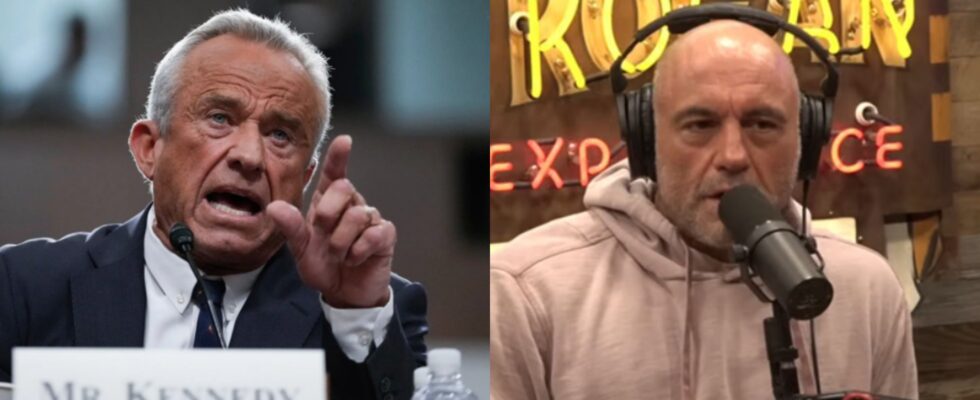
The Department of Health and Human Services announced Wednesday it will temporarily allow pharmacies to make six wellness peptides available by prescription, a move that follows mounting public pressure and vocal criticism from podcast host Joe Rogan.
According to sources, the peptides now accessible include BPC-157, TB-500, epitalon, MOTS-c, KPV and semax. These treatments have gained popularity online for purported benefits ranging from tissue repair to improved skin appearance, with some advocates claiming longevity effects, though scientific evidence supporting these assertions remains limited.
HHS framed the decision around safety concerns and patient freedom. “Under President Trump’s leadership, HHS is working to put prevention and patient safety at the center of health care—and that includes confronting the risks of black-market peptides,” the federal health agency stated.
The announcement emphasizes that the new policy does not grant FDA approval or establish clinical safety and effectiveness. Instead, it requires patient-specific prescriptions, traceable ingredients, quality testing, and safety reporting to hold compounders accountable and provide patients an alternative to unregulated sellers.
The timing of the announcement appears linked to recent public frustration expressed by Rogan during episode #2570 of The Joe Rogan Experience. During the podcast with comedy group Mystery Boys, Rogan criticized the Trump administration for what he characterized as broken promises regarding peptide access.
“Calley Means just left the White House today. Calley Means who was working to try to get peptides and all these different things passed through said ‘I can’t do this,'” Rogan mentioned, referring to a Trump administration figure who had reportedly been advancing access to these treatments.
Rogan argued that entrenched interests were preventing policy implementation. “The deep state’s real and there’s all these industry insiders that are embedded in the government. They say they’re going to do something and then they do everything they can to slow it down and keep it from happening,” he said.
He expressed frustration with the timeline. “Peptides supposed to be done two years ago,” Rogan stated. “All this stuff was supposed to happen a long time ago and they’re hitting the brakes on everything because they want money.”
Rogan raised concerns about health consequences from restricted access. “How many people are going to lose their health, perhaps get very sick, maybe even pass because they don’t have access to whatever they need,” he noted.
Peptides represent a broad category of molecular structures. Some synthesized peptides, such as insulin and GLP-1 treatments, have received FDA approval following extensive clinical trials. However, no published clinical trials provide evidence that these six specific peptides are effective in humans for any condition.
Medical professionals have cautioned that unregulated peptide products may not contain what is advertised and could be contaminated or incorrectly dosed. The FDA classified 19 peptides as unsafe to be compounded in 2023, a decision HHS Secretary Robert F. Kennedy Jr. has previously described as improper.
During his podcast, Rogan connected the peptide discussion to health policy concerns he had previously discussed with Kennedy, particularly regarding agricultural chemicals. He recalled Kennedy explaining that an executive order had preserved glyphosate use because eliminating it would disrupt food production.
“So imagine that the food business is reliant on poison,” Rogan said. “If it doesn’t use poison, it can’t stay open.”
