
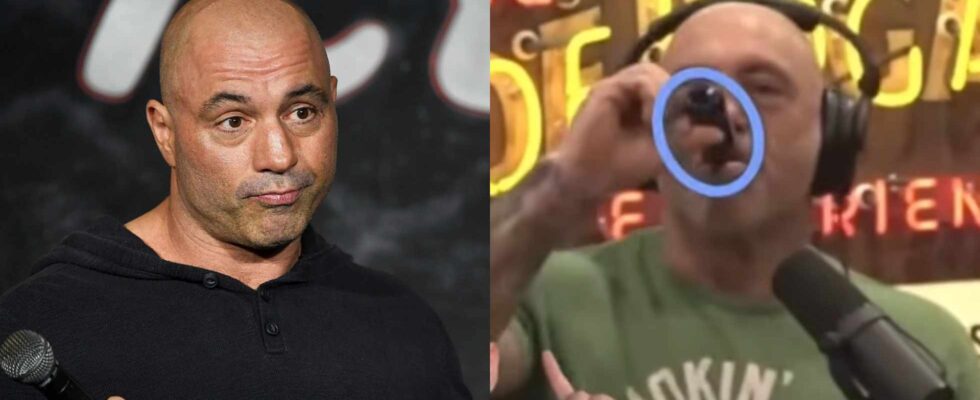
Before a show, Joe Rogan reportedly drank a bottle of Feel Free, a plant-based tonic marketed as a health and wellness enhancer. What his audience may not have known is that the small blue bottle contained a Southeast Asian leaf the FDA formally compared to an opioid in 2017 and linked to 36 documented fatalities that same year.
The product, manufactured by Botanic Tonics, presents itself as a natural social and cognitive enhancer, promoting kava, a root long used in Pacific Island cultures. What it downplays, according to a class action lawsuit and a growing number of former users, is its reliance on a far more potent leaf extract that experts say can produce dependency comparable to opioid-related d**gs.
Investigative journalist Scott Carney, who spent over 100 hours reporting on Botanic Tonics, noted in his documentary investigation that Rogan’s consumption of Feel Free before a show gave the product significant visibility.
Whether Rogan was compensated for the endorsement or simply used the product personally remains unclear, but the exposure contributed to rapid national proliferation of the elixir.
Feel Free positioned itself as a tool for people looking to step away from alcohol, running over a thousand targeted advertisements with slogans like “all the buzz without the b*oze” and “not your average alc*hol-free elixir.”
Former users report a different reality. One person described spending upward of $54,000 over roughly 18 months feeding a daily habit. Another described a daughter who developed seizures, lost 40 lbs, and passed away after becoming dependent on the tonic.
Clinical ad*iction psychiatrist Cornel Stanciu explained that the combination of kava and the undisclosed leaf compound inhibits the metabolism of each ingredient, amplifying the potency of both beyond what either would produce alone. He flagged liquid extract versions as particularly concerning, noting that a single capsule could be equivalent to three trees’ worth of leaf material.
Carney personally tested Feel Free on camera and reported feeling a pull to take more within minutes of the initial effects wearing off. “You feel free for a few minutes and then you want to go back on it,” he said.
The company’s founder operates under the name JW Ross, but his real name is Jerry Cash, a former oil company executive sentenced to nine years in prison in 2009 for a money laundering scheme.
Carney’s investigation also found that the Department of Justice dropped a lawsuit against the company in late 2025, shortly before Botanic Tonics made a $500,000 donation to RFK Jr.’s super PAC, raising serious questions about who in Washington is looking out for public health.
