

Dr. Layne Norton has responded to a viral video in which a vegan astrologer claimed that demons taught humans to eat meat, challenging her argument with biblical references and scientific research on astrology.
The astrologer’s claim was based on the Clementine writings, which she interpreted as suggesting that fallen angels corrupted humanity by introducing meat consumption. She also claimed that Peter warned about animal consumption releasing toxic vapors into the air.
According to her explanation, demons feed on low-vibrational energy, and eating meat supposedly lowers a person’s vibration to a level that allows these entities to attach themselves to them. Vegetarians, meanwhile supposedly vibrate too high for demonic forces to survive around them.
Norton began by questioning the biblical basis of her argument, pointing out that several passages in the Bible directly contradict the idea that consuming animals is inherently wrong.
“Since she would like to invoke the Bible, if we are going to be logically consistent, then I think there are some texts in the Bible that are quite instructive when it comes to whether or not it’s okay to consume animals,” he said.
He then brought up Jesus’ own dietary choices, noting that the Bible explicitly describes him eating fish after his resurrection.
“It’s pretty awkward that Jesus ate fish. I’m pretty sure his vibration was just fine,” Norton remarked.
He referenced Luke 24:42-43, which describes Jesus accepting a piece of broiled fish and eating it in front of his disciples. Norton also cited Genesis 1:29, where God gives humans plants for food, before pointing out that other biblical passages make room for eating animals as well.

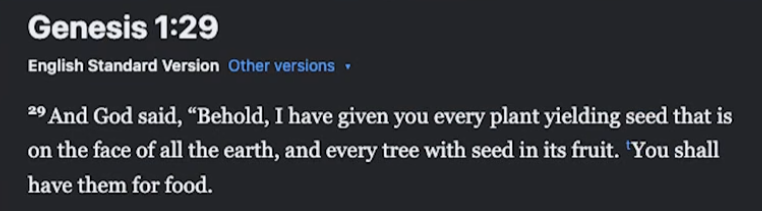
“Yeah, seems like God and Jesus were cool with animals and plants,” he concluded.
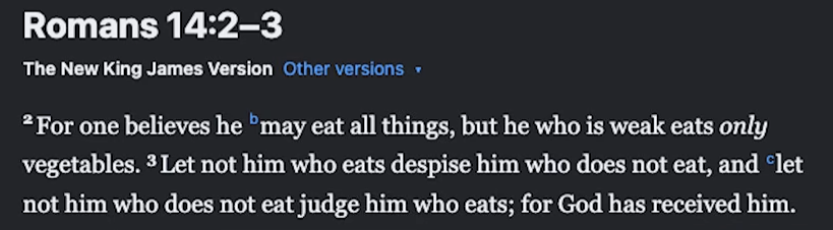
Norton also brought up Romans 14:2-3, which discusses differences in dietary choices, including those who eat everything and those who eat only vegetables. The passage specifically cautions against judging or looking down on people for their food choices.
He then questioned the astrologer’s use of the term “vibration,” asking how such a claim could be measured or verified.
“What kind of vibration, what frequency, how are you measuring it? How are you objectively assessing this? Oh, wait, you’re just talking about vibes,” Norton said.
The discussion then shifted to astrology itself. Norton pointed out that the Bible passage she was using to support her argument sits alongside other passages that criticize practices associated with astrology and stargazing.
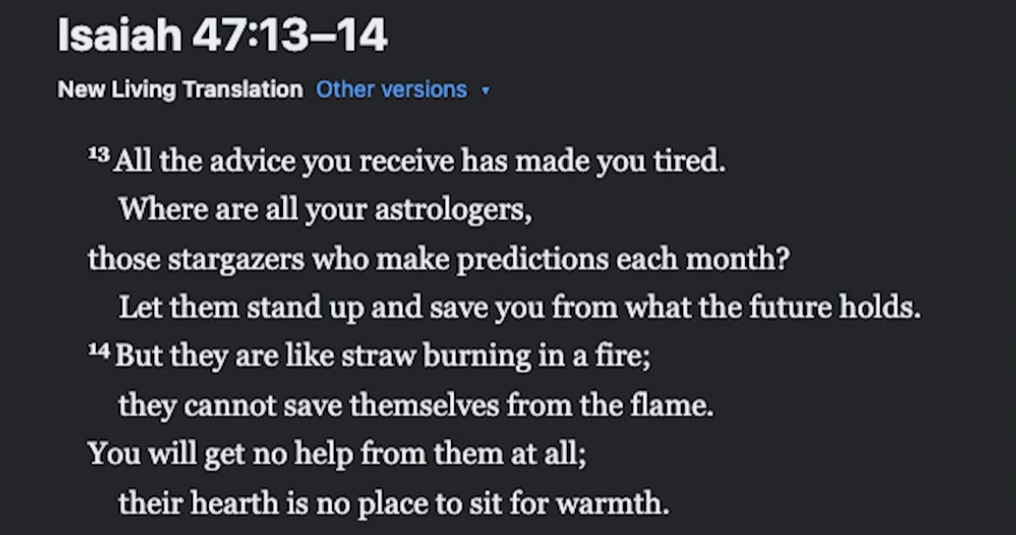
He referenced Isaiah 47:13-14, which mocks Babylon’s astrologers and stargazers for their inability to protect the city from impending judgment.
Beyond the biblical references, Norton questioned the scientific credibility of astrology. He cited research involving blinded astrologers, whose recommendations reportedly performed no better than random chance, as well as a study involving 15,000 people that found no association between astrological signs and personality traits.
Despite his criticism, Norton made a distinction between questioning someone’s reasoning and dismissing their dietary choices. He acknowledged that choosing a vegan diet for ethical reasons is entirely reasonable, particularly for people concerned about animal welfare.
“If you are vegan, if you choose to be vegan and you’re doing so for ethical reasons because you do not want to eat animals, because you don’t like how they’re treated, that is a very reasonable reason to be vegan. But trying to make up a vibe check based on biblical authority, especially when you are omitting portions of the Bible that specifically show that it’s okay to consume animals while being a hypocrite yourself, that is not exactly high vibrational,” he explained.
Norton wrapped up by returning to the central issue with the astrologer’s argument, emphasizing that invoking religious texts requires applying the same standards consistently rather than selecting only the passages that support a particular position.
“Once again, if you’re going to invoke a specific line of logic, you have to be logically consistent. You cannot pick and choose sections of logic that you would like to invoke,” he concluded.
