

The recent announcement from the U.S. government has sent ripples of concern through the sports world. Starting January 21, the United States has paused processing immigrant visas for 75 countries, a decision that has raised questions about potential impacts on international athletic competitions, including the UFC.
For mixed martial arts enthusiasts, the immediate worry centered on whether competitors from affected nations would face barriers to competing in American events. The UFC’s roster features considerable international representation, with athletes hailing from Brazil, Russia, Armenia, and several African nations.
With only women’s bantamweight champion Kayla Harrison currently representing the United States at the championship level, the promotion’s reliance on global talent is undeniable.
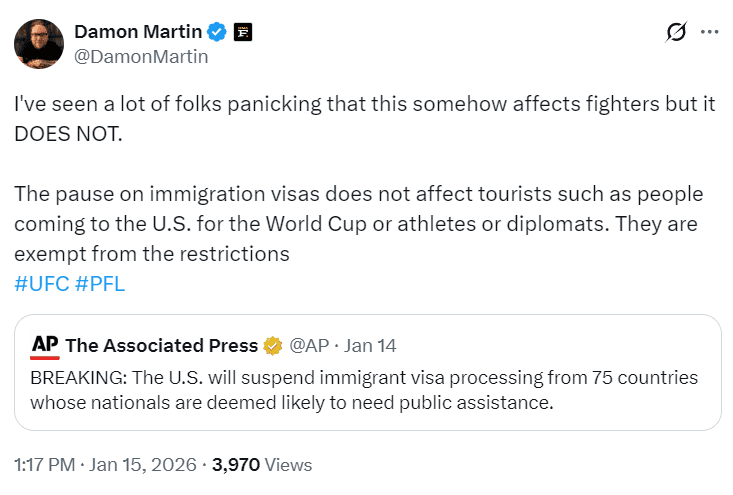
However, veteran MMA journalist Damon Martin has provided clarity that should ease concerns among fans and promoters alike. According to Martin, the visa suspension specifically targets immigrant visas, which grant permanent residency to applicants processing through U.S. consulates and embassies abroad.
“I’ve seen a lot of folks panicking that this somehow affects fighters but it DOES NOT. The pause on immigration visas does not affect tourists such as people coming to the U.S. for the World Cup or athletes or diplomats. They are exempt from the restrictions,” Martin wrote on social media.
This distinction proves essential for understanding the policy’s actual reach. Non-immigrant visas, including those for tourists, students, and temporary workers under programs like H-1B, remain unaffected by the suspension. Athletes entering the United States for competitions operate under separate visa categories that continue processing as normal.
The timing of this announcement comes as the UFC prepares to host a White House event on June 14, coinciding with President Donald Trump’s birthday. Despite the visa suspension, this event should proceed without disruption, as should regular UFC programming and competitions organized by other promotions like the PFL.
Martin suggests that while competitors entering the country for events face no immediate obstacles, those seeking permanent U.S. residency may encounter delays. He does not anticipate changes to the current exemptions “any time soon,” but the policy could affect athletes planning long-term relocation to America.
The 75-country suspension includes at least 15 nations with representation in major international sporting events. Among World Cup participants, Brazil, Colombia, Uruguay, Iran, Jordan, Uzbekistan, Haiti, Algeria, Cape Verde, Egypt, Ghana, Ivory Coast, Morocco, Senegal, and Tunisia appear on the list. Eight of the nine African teams already qualified for the tournament fall under the restriction.
In the UFC context, contenders from several affected countries have competed prominently. Brazilian athletes have historically formed a significant portion of the roster, while competitors from Russia and former Soviet republics also maintain notable presence.
The visa situation has precedent within MMA. Khamzat Chimaev, originally from Chechnya and Russia, reportedly faced visa complications related to alleged associations with Chechen leader Ramzan Kadyrov. Speculation arose that Chimaev changed his nationality to the United Arab Emirates partly to address these travel concerns, though UFC CEODana White has rejected such claims.
The broader question of international versus domestic competitor representation has sparked debate within the MMA community. Former middleweight champion Sean Strickland has voiced criticism about the UFC’s apparent preference for international talent over American competitors.
“I don’t know, dude. Like, the problem with the UFC, dude, is they don’t pay anybody. They don’t pay guys. So, like, the reason why you’re seeing everybody in the roster is Ahmed and, you know, Jose and whatever Brazilian name, you know? And it’s because the UFC isn’t paying you guys money. So, I think what you’re gonna have is you’re gonna have an entire roster filled with just foreigners,” Strickland said on social media.
The UFC has spent over three decades building its reputation as a truly international organization, showcasing talent from every corner of the globe. Early American dominance gave way to Brazilian excellence, followed by a Russian surge.
Today’s championship landscape features athletes from diverse backgrounds, including legends like Alex Pereira, Anderson Silva, Khabib Nurmagomedov, Merab Dvalishvili, and Khamzat Chimaev.
For now, the visa suspension appears unlikely to disrupt UFC operations or prevent international competing from competing on American soil. The exemptions carved out for athletes ensure that upcoming events, including major pay-per-view cards and the promotional White House gathering, should proceed without complication.
Tourist visas, while generally exempt from the suspension, do not guarantee automatic entry. Immigration authorities maintain discretion in individual cases, and political considerations or security concerns can still result in denials for specific applicants regardless of the broader policy framework.
The State Department has indicated that the suspension focuses on permanent immigration pathways rather than temporary travel for sporting purposes, business, or tourism.
