
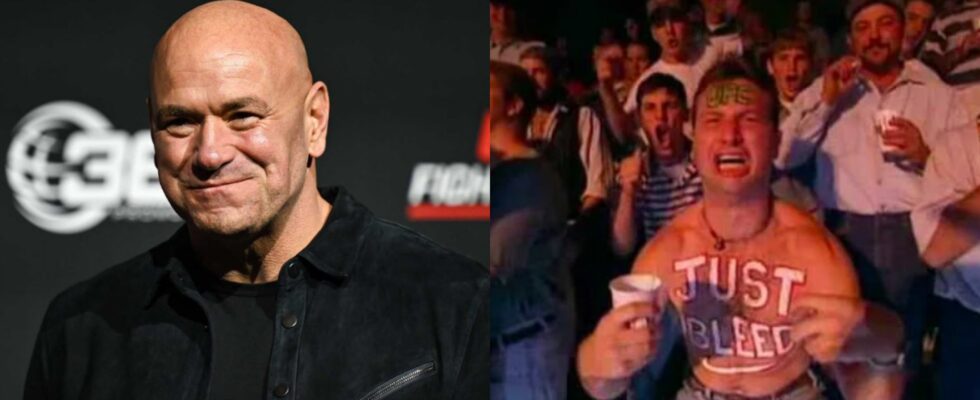
For years, the UFC operated under an unwritten rule: stay out of politics entirely. That rule no longer applies. According to MMA commentator Luke Thomas, the organization has not merely drifted rightward by accident, it appears to have made a calculated decision to embrace a more tribal, politically aligned identity, even if that means losing fans along the way.
Thomas, speaking on his show Luke Thomas Gets Political, traced the shift back to roughly 2016, with the most dramatic acceleration coming in the five years that followed.
“They were avowedly against making anything political in either direction for quite a long while,” he noted, adding that the change is “relatively new” in the context of the UFC’s full history.
What has crystallized Thomas’s view is not just the political drift itself, but how the organization has responded, or rather refused to respond, to criticism. He pointed to the Josh Barnett press controversy surrounding a recent White House event as a telling moment.
In an earlier era, negative press of that nature would have prompted a visible response from UFC leadership. It did not.
“There was a point where that kind of bad press would have made the UFC do something visibly. And they didn’t,” Thomas said.
He contrasted this with the testosterone replacement therapy controversy from an earlier period, when mounting negative coverage pushed the UFC to bring in USADA. The organization was responsive to reputational pressure then. It no longer appears to be.
Thomas’s conclusion is that the UFC has quietly accepted a trade-off: a potentially smaller overall audience in exchange for a core fan base that is deeply loyal, and loyal for reasons that extend beyond the fights themselves.
“If the fan base shrinks to a degree, that’s okay. That’s a cost they’re willing to just eat, because we’re going to keep people who are going to be much more loyal for reasons that may have little to do with the events themselves and more the culture surrounding it,” he said.
This shift, Thomas argues, has hardened into something that cannot be reversed quickly or easily. The identitarian framework now surrounding the sport, where fans feel the UFC reflects their values, their tribe, their sense of self, makes any pivot deeply complicated.
“How do you just undo what has been more than just a change organizationally, but a change in the whole way that the sport works?” Thomas asked.
His assessment is blunt: meaningful critical coverage of the UFC now finds almost no audience inside the sport. The only people paying attention to questions of fig hter pay, monopoly power, or organizational conduct are those outside it. For internal fans, any such criticism is dismissed as the work of a malcontent or a h*ter.
Thomas sees no change on the horizon. “My view remains that I don’t foresee any kind of change in any direction other than the one it’s on,” he said, “until the people who are currently running it or own it no longer do.”
