
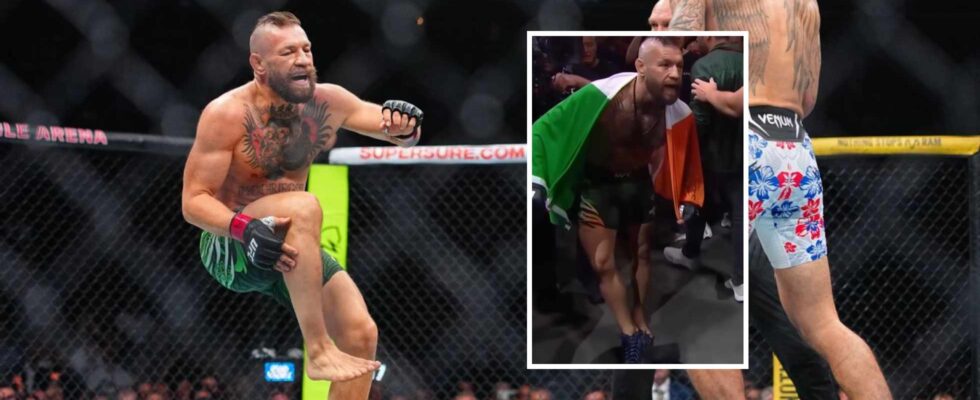
Several pieces of circumstantial evidence have emerged suggesting Conor McGregor was aware of a pre-existing knee issue heading into his UFC 329 bout against Max Holloway, and the details are difficult to dismiss.
The most notable data point is McGregor being photographed walking into Newport Pain Management on July 7th, four days before fight week officially began. Standard UFC pre-match medicals do not follow that timeline.

Initial medicals typically run two to four weeks out, with more detailed checks done on weigh-in day and a final exam before gloves are wrapped. Newport Pain Management describes treating patients using physical therapy, medications, nerve blocks, and counseling, which is consistent with ongoing injury management, not routine pre-match clearances.
That visit coincided with what McGregor’s head coach John Kavanagh told journalist Ariel Helwani was a decision to stay in Newport, California longer because the weather was nice. Newport Pain Management is based in Newport Beach, California. The timing lines up directly.
During match week, how McGregor carried himself raised additional questions. His gait looked slightly off as he walked in, appearing to favor his left leg. Before the face-off with Holloway, his extended focus on adjusting his shoes was widely read as showboating, but it may also reflect a desire for extra stability.
When removing his shoes before entering the octagon, he stumbled slightly, pulled his right foot out, and briefly hopped on his left.
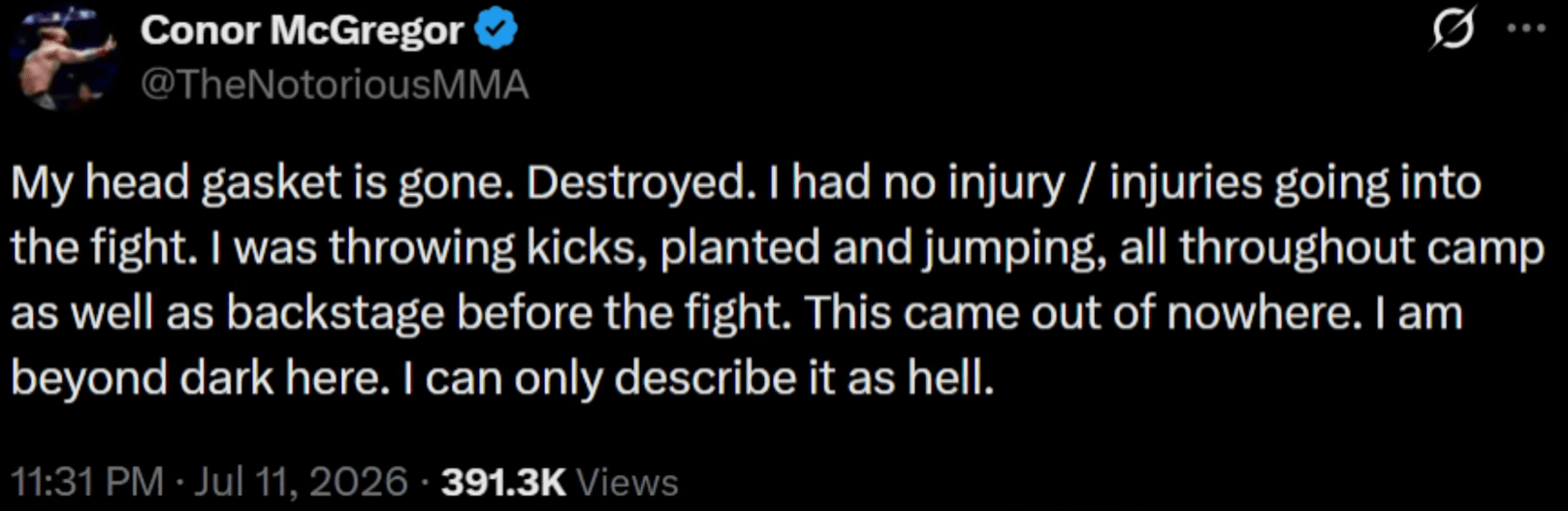
McGregor’s post-bout statement directly denied any prior issue: “I had no injury going into the match. I was throwing kicks, planted and jumping all throughout camp as well as backstage before the match. This came out of nowhere. I am beyond dark here. I can only describe it as h3ll.”
Sports medicine doctor Brian Sutterer told Helwani the injury presentation aligned with a pre-existing condition: “Meniscus is number one. An ACL is definitely possible and a concern, but it didn’t have the definitive look we’ve seen in other cases. It would fit with some pre-existing meniscus issues coming into the fight that got worse on the landing.”
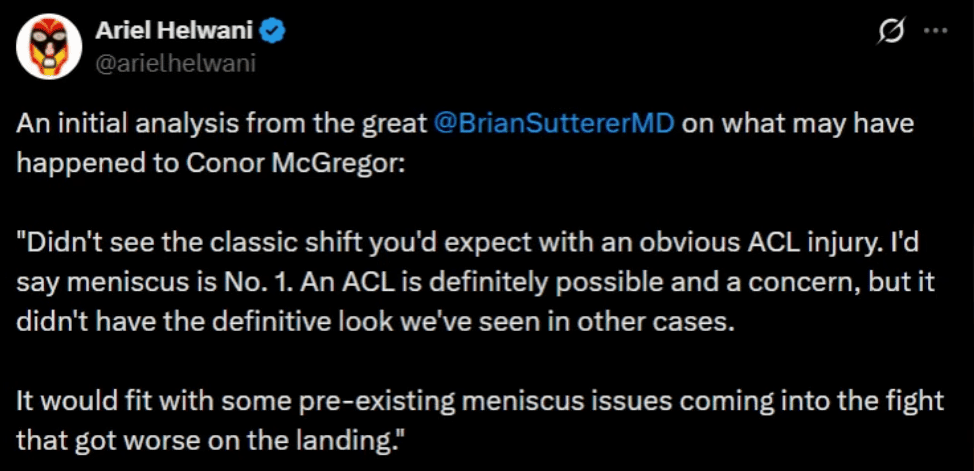
Sutterer also noted this was McGregor’s second knee injury of this type, his first having occurred during his 2013 match with Holloway on the opposite leg. Compensation patterns from that earlier injury may have placed added stress on the right knee over time.
The motivation for keeping an injury quiet is fairly straightforward. Commercially, any asterisk next to the loss limits the damage to McGregor’s brand, particularly with reports that he is seeking an exit from his UFC contract and positioning for a more lucrative deal elsewhere.
Competitively, an undisclosed pre-existing injury reframes a loss as an unfortunate circumstance rather than a definitive result.
Whether McGregor knew the full extent of what he was walking into remains unconfirmed.
