
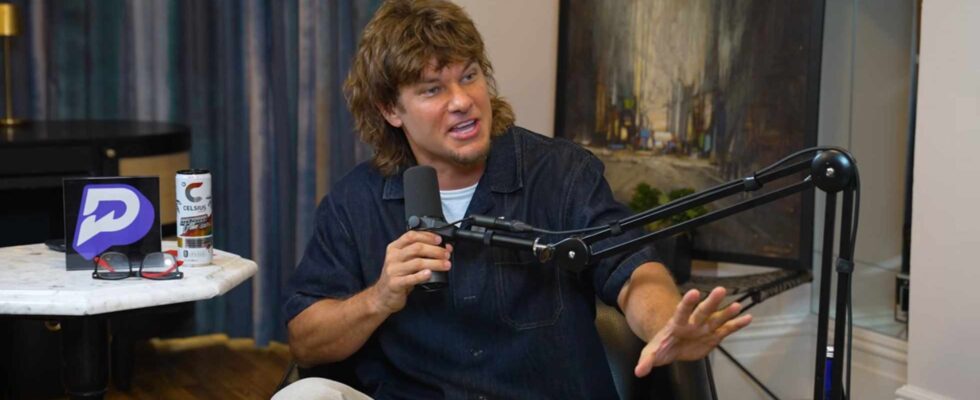
New York City Mayor Zohran Mamdani sat down with comedian Theo Von for a conversation that touched on economic inequality, the struggles of working Americans, and the breakdown of traditional political divides. What emerged was a portrait of a country where the fundamental promise of opportunity has become increasingly hollow for ordinary people.
Mamdani described discovering upon taking office that the city’s deficit was twice as large as reported, with no major crisis to explain it beyond simple mismanagement. He found wasteful consulting contracts and unused office space that cost taxpayers millions while essential workers struggled to afford basic necessities.
He explained, “I think one of the major things I saw was how deeply mismanaged the city budget was. So the prior administration had said we had a balanced budget. We had I don’t know, maybe a $6 billion deficit or so in the year to come. And then we came in, we looked through all the books and we found that at a best case scenario, we were at a $12 billion deficit in the city.”
Von and Mamdani discussed how the American dream has shifted from something people can achieve through hard work to something that feels like a lottery ticket.
Mamdani stated, “It’s slipping away. It feels like a thing you can believe in, not a thing you can live. And it needs to be a guarantee.”
The statistics bear this out: since 1986, rent prices have increased 150 percent while incomes have risen only 25 percent. Working families find themselves perpetually on edge, where a single medical emergency or car accident can push them into foreclosure.
The conversation highlighted a fundamental disconnect. Von described it as a sense that there’s not a side anymore in American politics.
Theo Von noted, “I don’t think voters think that they’re Democrat or Republican anymore. Everybody I talked to is like there’s not a side anymore. All of this is run it feels like by a higher cabal. Because it doesn’t feel real anymore.”
Both men agreed that traditional partisan labels feel increasingly meaningless when the system appears rigged for the wealthy regardless of which party holds power.
Mamdani pointed out that in his election, 60,000 New Yorkers voted for both him and Trump, suggesting voters are less interested in ideology than in finding someone who will materially change their circumstances.
The mayor shared stories from the picket lines at nurses’ strikes, where healthcare workers demanded basic safety measures and reasonable patient ratios. One nurse told him she commutes two hours each way because she cannot afford to live in the city where she works. These are people performing genuinely life-saving work who would need to work 200 years to match what hospital executives make in a single year.
Perhaps most revealing was the discussion of the recent Door Dash settlement, where the company was found to have underpaid workers by over $130 million. The CEO had openly discussed using a “greedy algorithm” to maximize shareholder profit.
When caught, the company issued a perfunctory apology as if the wage theft had been accidental rather than systemic.
This gets to the heart of what Von and Mamdani were circling: a system where greed has become not just accepted but expected, where quarterly earnings matter more than whether working people can afford groceries or housing.
The concentration of wealth and opportunity in fewer and fewer hands has created what Von called a “trafficking of opportunity” where your birth circumstances matter far more than your effort.
Von stated, “Now it feels like if you are born in a certain circles, if you have certain DNA, if you have… there’s kind of like a ‘you do the work and I’ll earn the wages,’ I’ll earn the money. It feels severely trafficking of opportunity.”
Mamdani argued that government must prove itself worthy of trust by actually delivering for people, from fixing potholes to providing universal childcare. Only by demonstrating competence and care on both small and large scales can public institutions regain legitimacy.
