

On February 28, 2022, former UFC champion Cain Velasquez set off a chain of events that would captivate headlines and spark heated debates about justice, morality, and the legal limits of vengeance. What began as a parent’s anguish over the alleged abuse of his child escalated into a high-speed car chase through California’s Morgan Hill, ending in an unintended injury. Velasquez’s case has since drawn comparisons to infamous acts of vigilante justice, such as Marianne Bachmeier’s courtroom incident in 1981 and Gary Plauché’s 1984 revenge over his son’s abuser.
The Incident
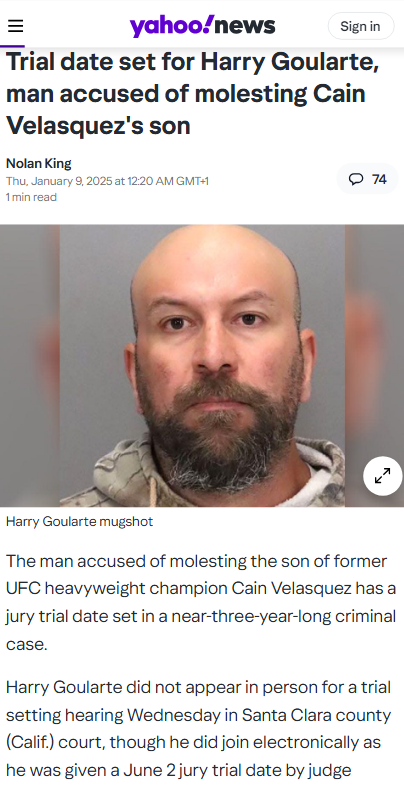
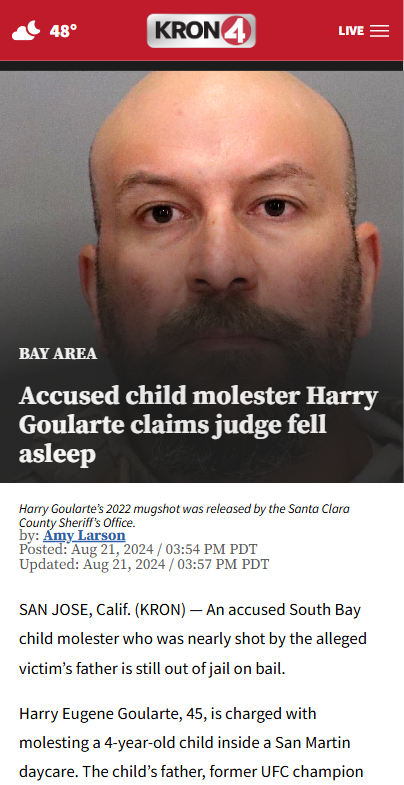
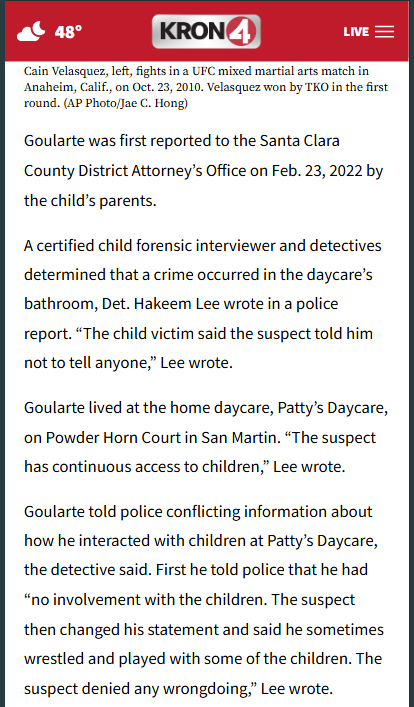
On that February day, Cain Velasquez pursued a pickup truck carrying Patty and Paul Bender, along with Patty’s son, Harry Goularte Jr. Goularte, accused of SA-ing Velasquez’s child at a family-run daycare, was reportedly being driven to a court-mandated appointment to fit an ankle monitor.
Fueled by rage and frustration, Velasquez fired shots at the truck, initiating an 11-mile chase that ended on Bailey Avenue in San Jose. The chase culminated in Velasquez ramming his own truck into the Benders’ vehicle and discharging several rounds. Though he aimed at Goularte, it was Paul Bender who was struck, suffering injuries to his arm and torso. Velasquez fled the scene but later surrendered to police. Bender ultimately recovered from his injuries.
Police have also confirmed that that are multiple others Goularte is suspected of abusing at his mother’s daycare.
While Goularte was released on bail immediately, Velasquez was kept in jail for 8 months despite overwhelming public support. In one interview, Khabib Nurmagomedov details:
“He’s the most respectful guy I’ve ever seen in my life. I trained with him for more than 10 years. I know his family. Everybody loves Cain. This is his kids. I don’t understand.”
“Ok put him in jail, but what about other guy? He’s more dangerous than Cain. Cain is dangerous for only one guy, but this guy is dangerous for everybody. I don’t understand this.”
Justice for Whom?
Velasquez pleaded no contest to attempted murder and several firearm-related charges, paving the way for a contentious sentencing process. The Santa Clara County District Attorney’s Office proposed a sentence of 30 years to life, a stark contrast to the seven years and eight months recommended by the county Probation Department. Velasquez’s attorney, Renee Hessling, decried the lengthy proposal, citing potential racial bias and invoking California’s Racial Justice Act, which prohibits convictions or sentences influenced by systemic bias.
The case has reignited debates about whether the justice system adequately protects targets of abuse, especially when alleged perpetrators like Goularte remain free pending trial. Goularte, who denies the allegations, faces a single felony charge of committing a lewd act and remains under supervised release.
Vigilante Justice
Velasquez’s actions echo those of Marianne Bachmeier, who, in 1981, smuggled a pistol into a German courtroom and shot Klaus Grabowski, the man accused of murdering her 7-year-old daughter. Bachmeier’s act was both condemned and celebrated, with some viewing it as a mother’s righteous vengeance and others as a dangerous subversion of the legal process.
Similarly, in 1984, Gary Plauché fatally shot Jeff Doucet, the man accused of abducting and SA-ing his son, Jody. Plauché’s act, caught on live television, led to a reduced sentence of probation and community service, sparking debates about whether his actions were justified by moral outrage.
Hero or Outlaw?
Velasquez’s case sits at the intersection of parental instinct, the failures of the legal system, and the consequences of taking justice into one’s own hands. Supporters of Velasquez, including prominent figures in the UFC community, argue that his actions were rooted in a profound sense of betrayal and helplessness. Some even call for clemency, likening his rage to a primal reaction that any parent might have under similar circumstances.
Others, however, caution against glorifying vigilantism. While the pain of Velasquez and his family is undeniable, his actions endangered innocent lives, including those of bystanders and the occupants of the truck.
The Moral Quandary
Velasquez’s case forces us to grapple with difficult questions:
- Can vigilante justice ever be justified?
- Should the law account for the emotional and psychological toll of crimes like this when evaluating acts of retaliation?
- How do we balance empathy with the need to uphold the rule of law?
The parallels to Bachmeier and Plauché suggest that society’s reactions to such cases are often divided along moral lines, with opinions shaped by personal values and experiences.
What Lies Ahead
As Cain Velasquez awaits his March 2025 sentencing, the court will not only decide his fate but also signal how the justice system views acts of vigilante justice in an era where public sentiment often sways in favor of those who take extreme measures to protect their families.
Cain Velasquez has the support of the MMA community including many UFC legends who wrote letters of support. It’s unclear if UFC president Dana White will vouch for him again, considering White’s proximity to the new US president Donald trump.
In his letter of support in 2022, Dana White praised Velasquez as a “model example” of a professional athlete. Additionally, White praised the former UFC champion for his honorable representation of the organization while he worked there.
“To the honorable judge of the Santa Clara Superior Court, I write this reference in full knowledge of Cain Velasquez’s current charges of attempted murder and assault. I was stunned to learn of these charges against him, as they are completely out of character for the man I was proud to say was a two-time UFC Heavyweight Champion. I have known Mr. Velasquez for more than 15 years, and during his time as an active athlete with UFC, he represented our company with dignity and always treated others with respect. He was a model example of how a professional athlete should carry himself, projecting a positive image to UFC’s fanbase.”
“Mr. Velasquez was extremely professional and went above and beyond to make a connection with our fans and promote the sport of mixed martial arts—- not only as an entertainment product, but also as a character—building discipline. As a Mexican American, Mr. Velasquez was proud of his heritage and never passed up an opportunity to visit Mexico on behalf of our company and demonstrate his gratitude to the Mexican fans for their support. People who know him best describe him as a humble, soft-spoken man who was very much dedicated t0 his family, including his wife and his two children.”
“If given the opportunity, I’m sure Mr. Velasquez would like nothing more than to return to his family and continue to make a positive impact on his community. I sincerely ask that you take this into consideration as you adjudicate next steps in this process concerning Mr. Velasquez. lf you wish for me to confirm any of the above, please do not hesitate to contact me.”
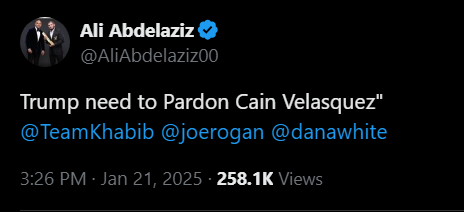
The call for clemency grows louder, with influential figures like Ali Abdelaziz and others advocating for a pardon. Their argument hinges on the notion that Velasquez’s actions, while unlawful, were born from an instinct shared by any parent faced with the same circumstances. Some believe a pardon could serve as an acknowledgment of the failures in the legal system to swiftly protect the vulnerable, while others argue it risks normalizing vigilante justice.
The final decision, whether it be a lengthy sentence or an act of clemency, will undoubtedly leave a lasting mark—not only on Velasquez’s life but on the broader discourse surrounding justice and morality in the face of heinous crimes. Whether or not a pardon is granted, this case underscores the painful tension between the desire for immediate retribution and the structured pathways of the legal system—a tension that may never be fully resolved.
