
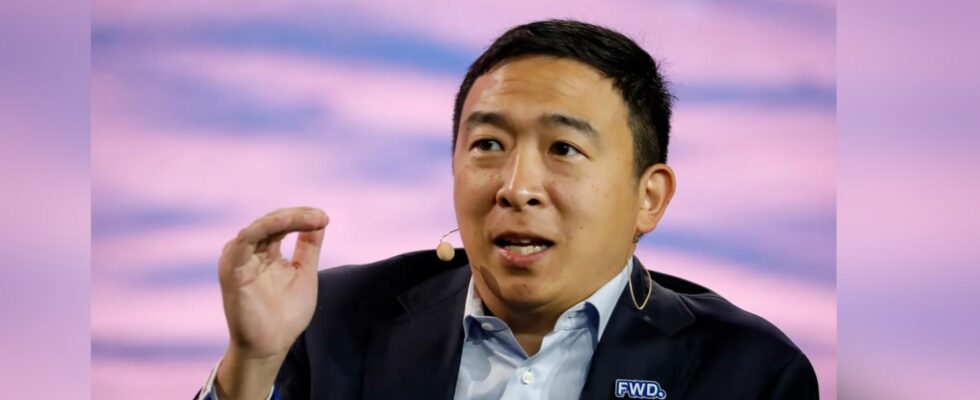
When Andrew Yang appeared on The Iced Coffee Hour podcast, he revealed one of the more unusual episodes from his 2020 presidential campaign. Yang said that the New York Times had physically altered a photo to make him appear shorter than he actually is, and was later forced to print a retraction.
Yang brought up the incident while discussing the media hostility he experienced during his primary run, explaining that certain outlets went out of their way to diminish his campaign in ways both figurative and, apparently, literal.
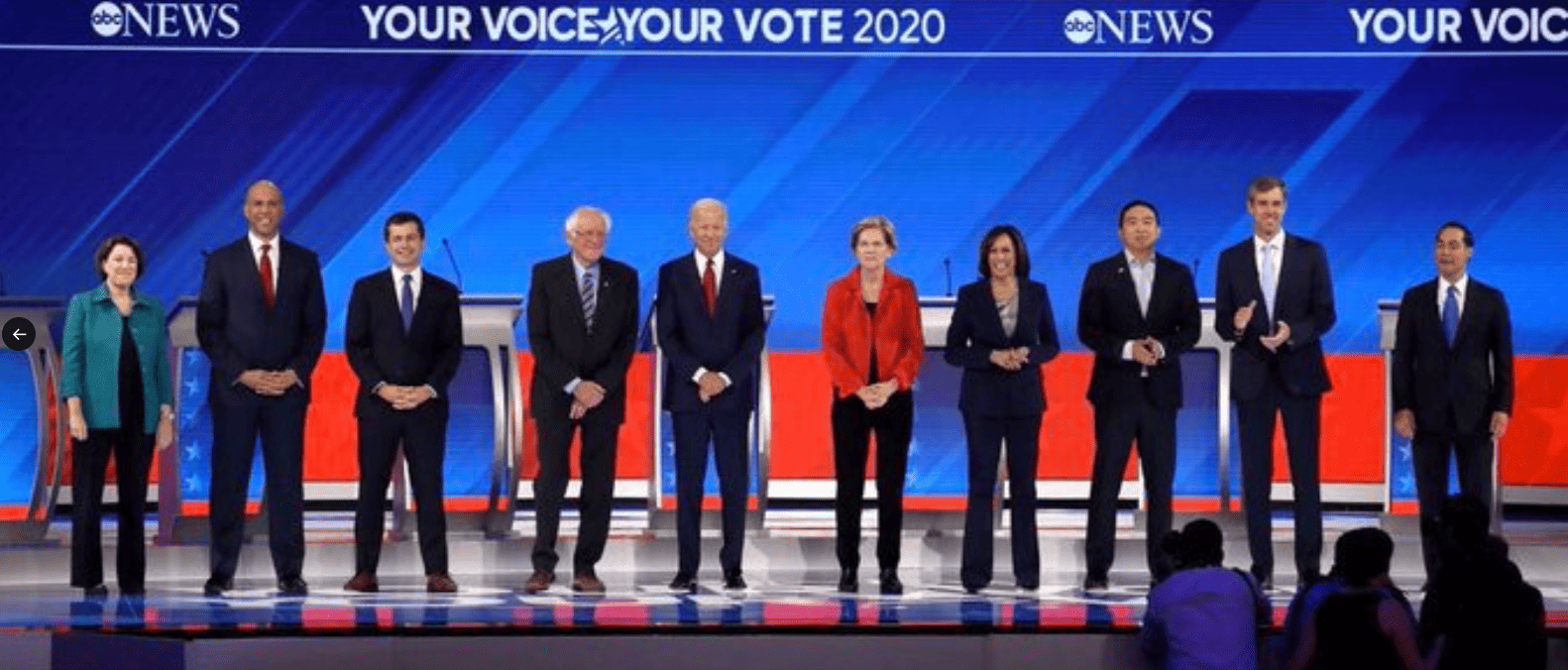
“The New York Times actually shrunk me visually by several inches in a photo,” he told hosts Graham Stephan and Jack Selby.
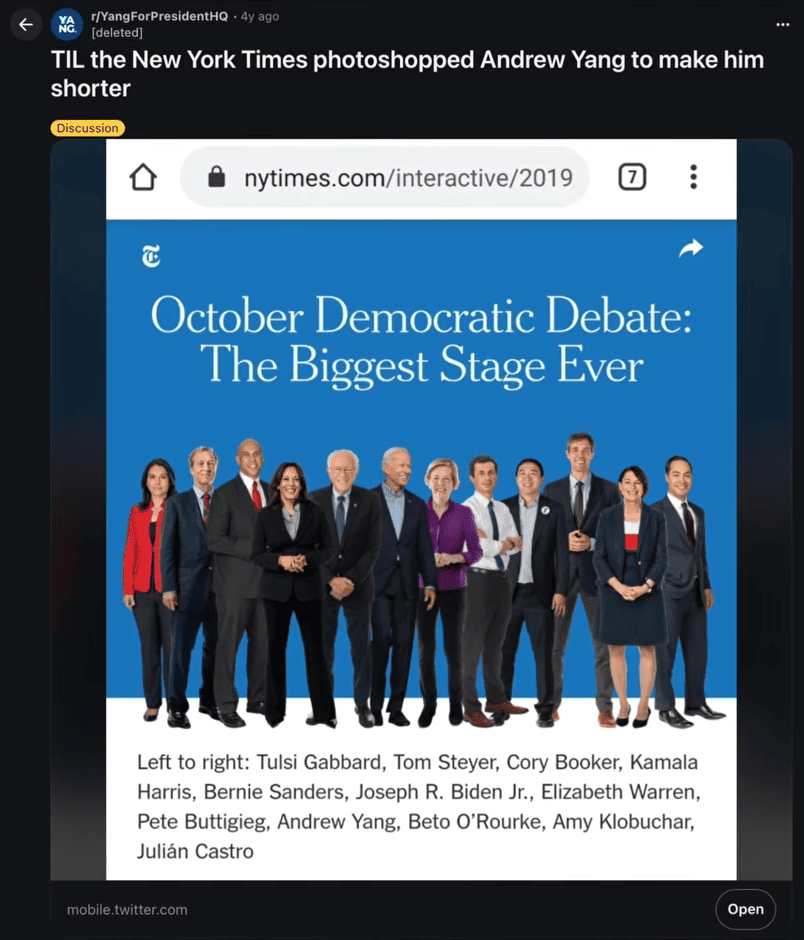
When asked how he knew, he replied: “I saw the photo and it’s like I’m not the same height as Amy Klobuchar or whatever. And then they actually had to print a retraction being like, ‘Oh yeah, sorry. We like shrank Yang.'”
When pressed on whether it was a single editor or random staffer responsible, Yang said his team was far more bothered by it than he was. “My team got livid about this stuff. I would just blow off most of them. It’s like, who knows?”
The photo incident was part of a pattern Yang described involving what he called “the holy trinity” of Democratic primary media: the New York Times, MSNBC, and CNN. He said these outlets held significant sway over Democratic primary voters, particularly older ones, and that navigating their coverage shaped the entire landscape of the race.
He detailed MSNBC’s treatment of his campaign as especially pointed. “There would be a fundraising graphic being like, ‘Hey, these are the candidates that raise the most.’ I would just be omitted from that graphic. Let’s say I was supposed to be like fourth in that graphic. It would just skip me,” he said.
He added that when he called it out publicly, the response was a complete blackout rather than an acknowledgement. She stated, “Even when I made the seventh presidential debate, MSNBC wouldn’t even cover that. Wouldn’t even cover the fact that I made it.”
He also cited a former MSNBC producer who came forward after leaving the network. “An MSNBC producer named Ariana Picari, after she left, said, ‘I was given a list of candidates never to have on air and Andrew Yang was one of those candidates.'”
Yang said he chose not to pursue legal action against the Times over the photo, noting it would have been politically counterproductive.
“There was tons of downside and no upside to getting into a food fight with the holy trinity of Democratic voting opinion makers,” he explained.
He added that heading into 2028, these outlets carry less influence than they once did, though they remain relevant with older Democratic primary voters. “You might think, ‘Who the hell’s watching these things?’ And people care less than they did, but they still can put their finger on it for a Democratic primary.”
