

A comprehensive global survey has revealed a dramatic erosion in public backing for transgender athletes competing according to their gender identity, with acceptance plummeting across nearly every nation measured over the past four years.
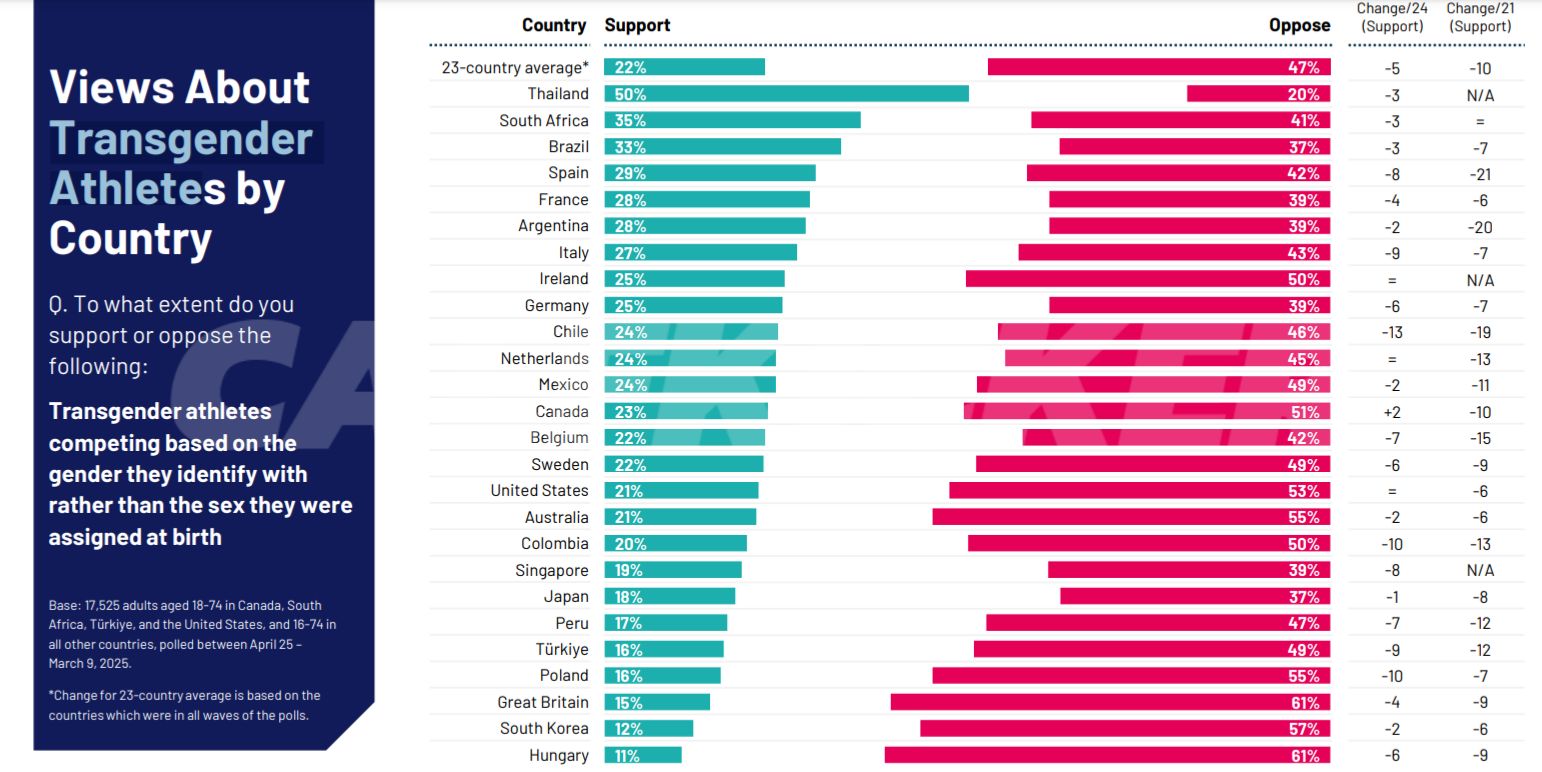
The 2025 Ipsos LGBT+ Pride Report, which surveyed more than 17,000 adults across 26 countries, found that only 22% of respondents now support transgender athletes competing based on the gender they identify with rather than their biological sex. This is a significant drop of 10 percentage points since 2021 and a five-point decline from just last year.
Perhaps most striking is the intensity of opposition. In every single country surveyed, those opposed to transgender athletes competing by gender identity outnumbered supporters by substantial margins. On average, 57% of respondents globally expressed opposition—more than two and a half times the level of support.
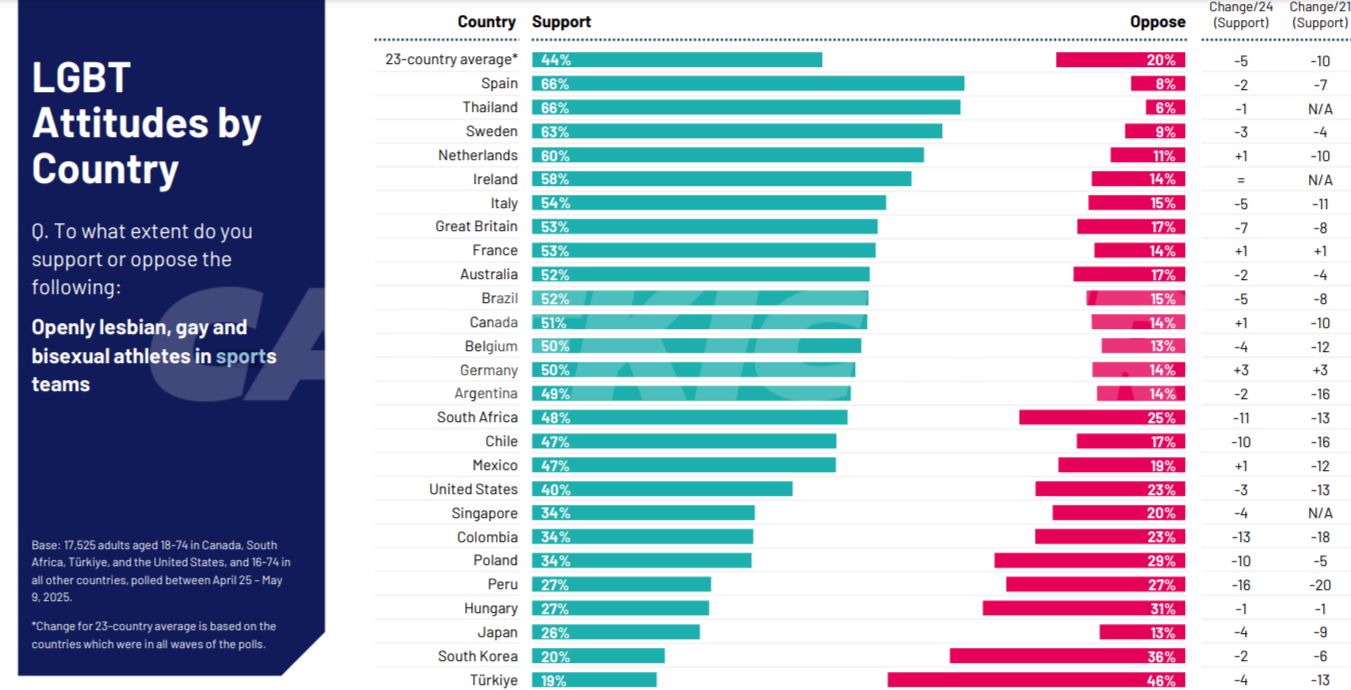
The decline represents a reversal from earlier optimism about growing acceptance of LGBTQ+ issues. While other questions in the survey showed continued support for gay and lesbian rights, sports participation has emerged as what researchers describe as “a flashpoint” in public opinion.
Thailand stood alone as the only country where a majority—50%—still supports transgender athletes competing by gender identity. South Africa and Brazil followed at 35% and 33% respectively. At the opposite end of the spectrum, Hungary recorded just 11% support, with South Korea at 12% and Great Britain at 15%.
The trend has been particularly pronounced in certain European and Latin American nations. Spain saw support collapse by 21 percentage points since 2021, while Argentina dropped 20 points and Chile fell 19 points over the same period. Even in the past year alone, Chile experienced a 13-point decline.
Canada proved the sole exception to the downward trajectory, with support ticking up two points from 2024, though the country still registered a 10-point decline since 2021. Overall, Canadian support stands at 23%.
The data also revealed unexpected generational patterns that challenge assumptions about younger people uniformly holding more progressive views. While Generation Z women showed the highest support for openly lesbian, gay and bisexual athletes in sports at 59%, Generation Z men recorded the lowest support of any demographic group at just 37%—creating a striking 22-percentage-point gender gap within the youngest generation.
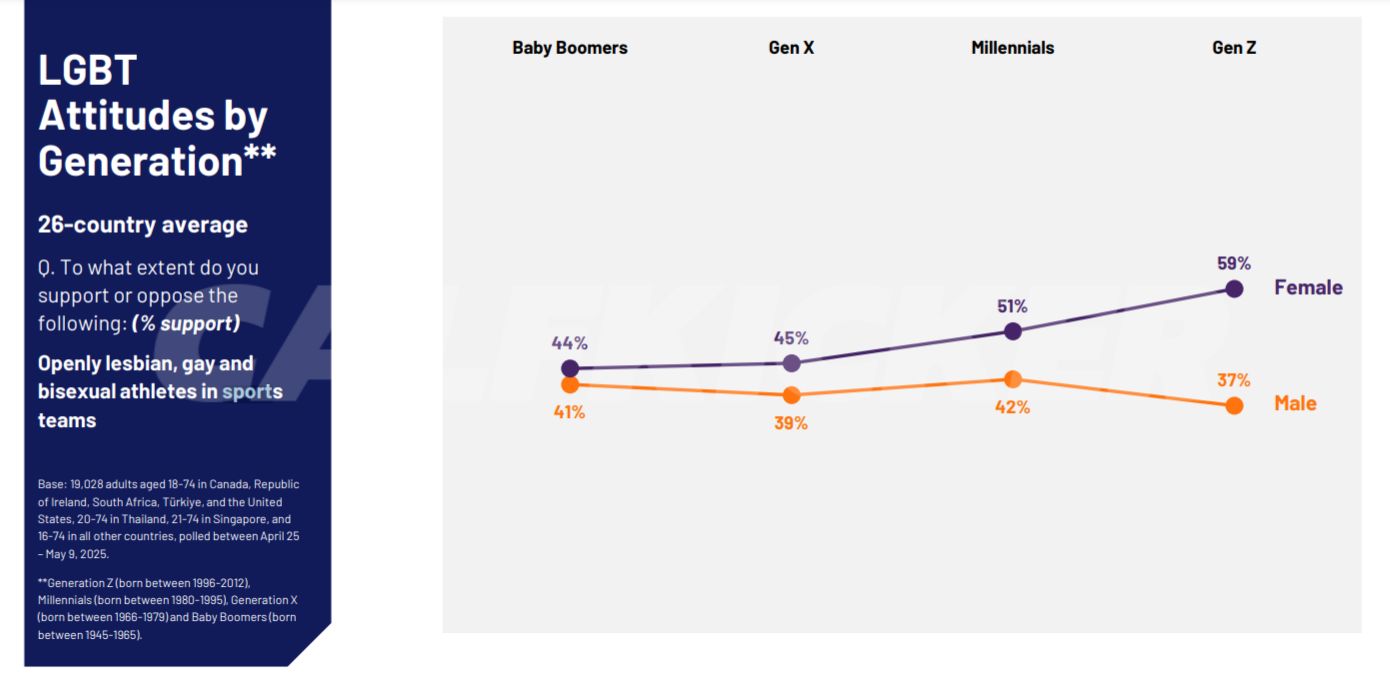
When it comes specifically to transgender athletes competing by gender identity, the numbers are even more sobering for advocates. Only 35% of Generation Z women support such policies, while just 20% of Generation Z men agree—both figures falling well below what might be expected from the cohort often considered most socially progressive.
The survey results arrive amid ongoing policy debates in numerous countries over fairness in women’s sports, with sports governing bodies, school districts, and legislatures worldwide grappling with how to balance inclusion and competitive equity. The sharp decline in public support suggests growing skepticism about allowing biological males who identify as female to compete in women’s categories.
Conducted between late April and early May 2025, the Ipsos survey captured attitudes from adults across nations spanning every continent, providing one of the most comprehensive snapshots of global opinion on transgender sports participation to date.
The findings indicate that while acceptance of sexual orientation diversity continues to advance in many societies, gender identity issues—particularly as they intersect with competitive sports—remain deeply contentious, with public opinion moving decisively away from transgender inclusion policies over recent years.
