

The longevity community has been involved in controversy as biohacker Dave Asprey launched a public attack against fellow wellness figure Peter Attia, whose career now hangs in the balance following revelations about his connection to convicted offender Jeffrey Epstein.
CBS News recently pulled a “60 Minutes” segment featuring Attia after he was named more than 1,800 times in recently released Epstein files. The segment had originally aired in October and was scheduled to rerun during Super Bowl programming.
The network is now reconsidering its relationship with Attia, who had been announced as a contributor alongside 18 other professionals.
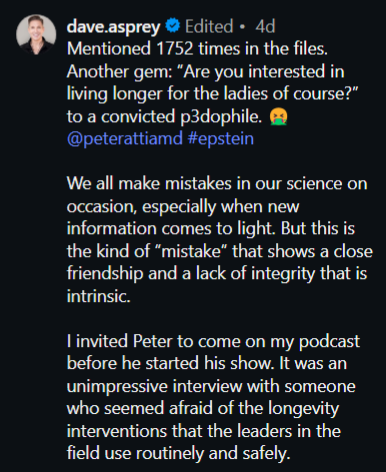
In a recent social media post, Asprey called Attia out and did not hold back in his assessment of the situation. “Mentioned 1752 times in the files. Another gem: ‘Are you interested in living longer for the ladies of course?’ to a convicted p3dophile,” Asprey wrote, referencing correspondence found in the documents.
The email exchanges revealed in the Epstein files painted a troubling picture of the relationship between Attia and the financier.
In 2015, Attia wrote to Epstein: “the biggest problem with becoming friends with you is that the life you lead is so outrageous, and yet I can’t tell a soul.”
A year later, Attia told an Epstein assistant: “I go into JE withdrawal when I don’t see him.”
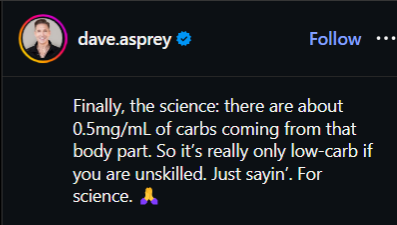
Another email quickly sparked backlash online, with critics calling the message inappropriate given Epstein’s history.
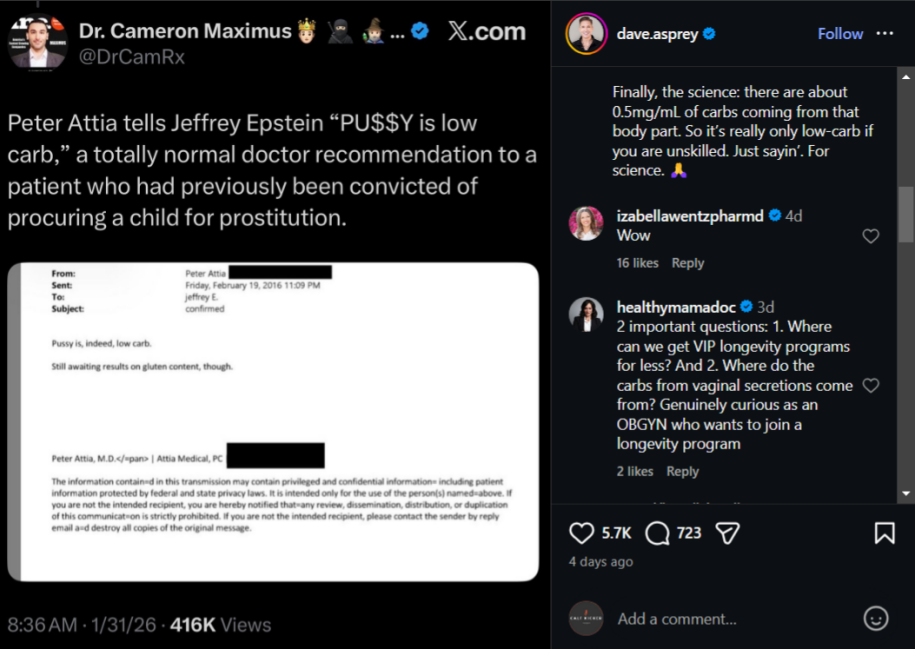
Attia publicly apologized on February 2, calling the emails “embarrassing, tasteless and indefensible.” He maintained that he was not involved in any wrongdoing and denied participating in any unlawful activities.
But Asprey suggested the controversy revealed deeper character flaws. “We all make mistakes in our science on occasion, especially when new information comes to light. But this is the kind of ‘mistake’ that shows a close friendship and a lack of integrity that is intrinsic,” he stated.
The criticism extended beyond the Epstein connection. Asprey recounted his own professional interactions with Attia, which apparently left him unimpressed.
“I invited Peter to come on my podcast before he started his show. It was an unimpressive interview with someone who seemed afraid of the longevity interventions that the leaders in the field use routinely and safely,” Asprey said.
Asprey also took aim at Attia’s medical recommendations and business practices. “Then I read his book, and I will save you $35. It says that you should overtrain, take statins, and make sure that you get the V. Oh he’s also happy to charge you $250k to say you can’t extend your life, but you should overtrain and take statins and get the V. Oh, and seed oils are good for you,” he wrote.
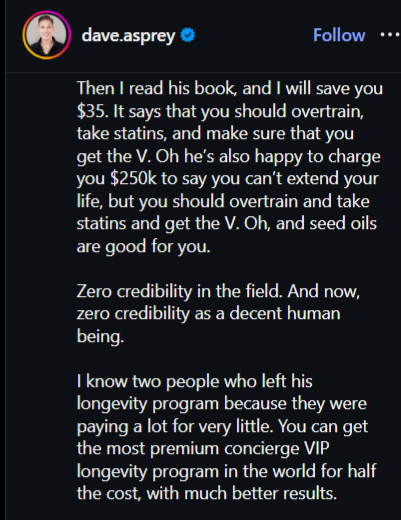
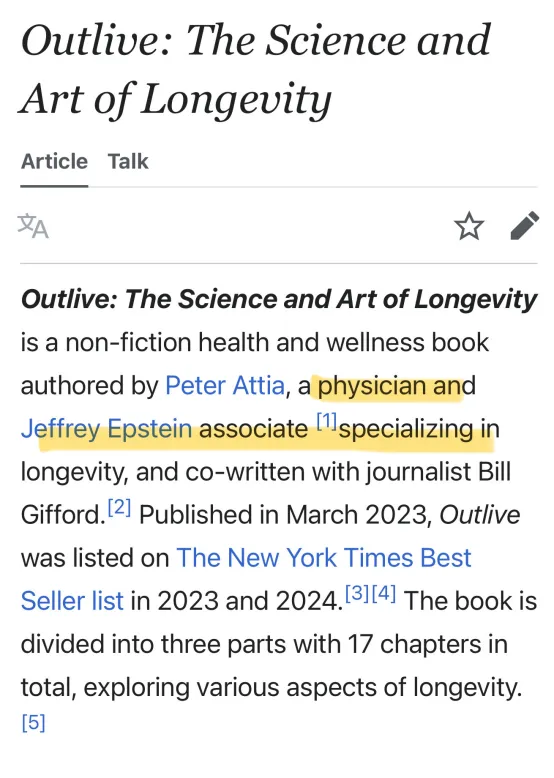
His conclusion was blunt: “Zero credibility in the field. And now, zero credibility as a decent human being.”
Asprey also mentioned hearing from dissatisfied clients. “I know two people who left his longevity program because they were paying a lot for very little. You can get the most premium concierge VIP longevity program in the world for half the cost, with much better results,” he claimed.
The timing of Asprey’s comments coincides with his own media presence discussing his approach to longevity. In a recent YouTube video, the biohacker revealed he has been on testosterone replacement therapy since age 26, after a Silicon Valley longevity specialist told him his hormone levels were dangerously low.
“Even though I was 26, I went to see the first longevity doctor in Silicon Valley,” Asprey explained. “When he saw my lab test, he said, ‘Dave, your testosterone is lower than your mother.'”
The physician gave him a choice between starting therapy or accepting negative health consequences. “You can go on injections, but you may have to take these forever, or you could just accept having man boobs, being fat, and tired all the time,” Asprey recalled being told.
“I said, ‘Okay.’ And I went on testosterone therapy, and it changed my life,” he said.
Now claiming lab markers comparable to a 35-year-old despite being 52, Asprey reports significant improvements. “My testosterone levels are higher now than they were when I was 25,” he stated. “I’ve been on testosterone therapy the vast majority of my life after age 26.”
Asprey addressed concerns about lifetime dependency on hormone therapy. “Some people, fearmongers, will tell you if you go on testosterone, you have to be on it for life. This is not true,” he said. “I’ve learned how to naturally move my testosterone up into low normal, even though I’ve been on testosterone therapy for many years.”
His current regimen involves taking pills twice daily. “Every morning you take two pills, at lunch you take two more pills, and then you have testosterone like a man should,” he explained.
Asprey believes hormone replacement becomes necessary for most men as they age. “If you want to live a very long time, once you hit your mid-40s, you’re probably going to need testosterone if you’re a man and you’re alive,” he stated. “Evidence shows that if you go on testosterone replacement, especially if your levels are low and you’re aging, you will live longer and reduce your risk of all sorts of health problems.”
Asprey himself has faced scrutiny for undergoing cosmetic procedures, including a facelift. He acknowledged the surgery after observers noticed changes in his appearance, explaining that significant weight loss had left him with excess facial skin that couldn’t be addressed through supplements or other methods alone.
While some viewed the surgery as contradicting his promotion of natural longevity methods, Asprey maintained that using medical intervention when appropriate aligns with his philosophy of actively managing the passage of time rather than passively accepting decline.
