

In a recent episode, Climate Town’s Rollie Williams methodically dismantled the viral anti-renewable energy monologue from the TV show “Landman” that spread like wildfire across social media—and found its way onto Joe Rogan’s podcast almost verbatim.
The clip features Billy Bob Thornton’s character delivering what sounds like a devastating takedown of wind and solar energy, claiming wind turbines never offset their carbon footprint and questioning the viability of renewable energy. The problem? Nearly every claim is demonstrably false.
Armed with a climate science and policy degree, Williams fact-checked each assertion using peer-reviewed research. The most egregious claim—that wind turbines won’t offset their carbon footprint in their 20-year lifespan—is contradicted by multiple life cycle assessments showing turbines offset their manufacturing emissions in just 5.3 months on average.
The remaining years produce entirely carbon-free energy, making the talking point not just misleading but backwards.
The deeper revelation came when Williams traced the origin of these talking points. After watching press interview and listening to the source podcast “Boomtown,” he discovered the monologue didn’t come from the show’s oil industry consultant or the podcast creator Christian Wallace.
Instead, Williams found the smoking gun in a three-and-a-half-hour Joe Rogan Experience episode featuring Landman’s co-creator Taylor Sheridan.
In that conversation, Sheridan and Rogan trade the exact same debunked talking points that ended up in the show, from “oil is in everything” to wildly inaccurate statistics about California’s energy grid.
Sheridan claimed 75% of California’s electricity comes from fossil fuels when the actual number is 42%, with renewables providing 58%. He appeared to be riffing numbers that sounded authoritative without bothering to verify them, a pattern repeated throughout the episode.
What makes this particularly insidious is that these aren’t original thoughts. Williams traced the arguments to decades of fossil fuel industry propaganda campaigns.
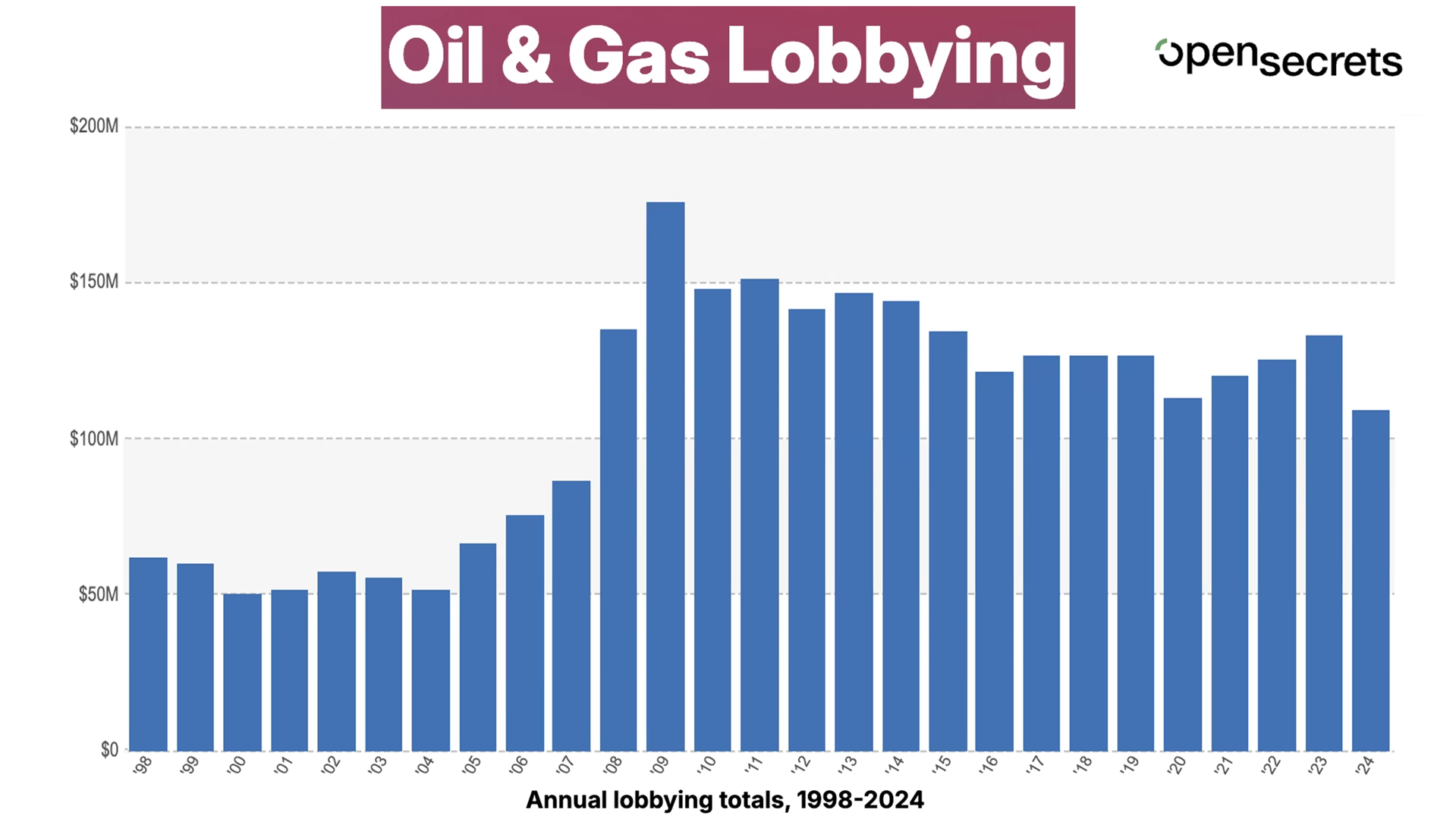
Oil companies have spent millions promoting these specific narratives through advertisements, lobbying groups, and even children’s books distributed to public schools. The strategy wasn’t to convince everyone, but to seed doubt and confusion widely enough that talking points would be absorbed and repeated by people who never question their origin.
Neither Sheridan nor Rogan are likely taking direct payments from oil companies. They’re simply repeating what they’ve heard without verification, then amplifying it to massive audiences.
As Williams notes, they’ve become unwitting participants in what oil executives planned decades ago—a broad disinformation campaign designed to capture minds and poison the well against climate action.
Oil companies don’t need to control every message; they just need to flood the zone with enough compelling-sounding misinformation that it eventually reaches influential creators who package it as edgy truth-telling.
When that happens on one of America’s most popular podcasts and a hit television show, millions absorb falsehoods as facts.
