

When 24-year-old Joshua Van stepped into the Octagon at UFC 323 in Las Vegas last Saturday, few could have predicted he would leave as the new flyweight champion. Even fewer would have guessed that his daily McDonald’s breakfast routine would become the most talked-about aspect of his unexpected coronation.
Van’s victory came in the most anticlimactic fashion possible—just 26 seconds into the co-main event, defending champion Alexandre Pantoja attempted a head kick, lost his balance, and suffered what appeared to be a dislocated or broken arm when he tried to catch himself during the fall.
The injury forced an immediate stoppage, making Van the second youngest UFC champion in history behind Jon Jones.
“He’s one of the greatest of all time, I didn’t want it to go that way,” Van told Joe Rogan in the post-bout interview, displaying genuine disappointment about the circumstances of his title win.
But it was what came next that truly captured the internet’s attention. When asked about his training regimen and diet, Van casually revealed a breakfast routine that would make nutritionists everywhere clutch their pearls: he eats McDonald’s every single morning.
“I go to McDonald’s every morning,” Van stated matter-of-factly. His order? Two breakfast burritos, two hash browns, and an orange juice. For lunch, he switches to Big Macs. “That’s my breakfast every day,” he confirmed,.
The revelation comes at a peculiar moment in American food culture, as longevity expert Bryan Johnson and others have been sounding increasingly urgent alarms about the health consequences of ultra-processed fast food.
Johnson’s recent investigation into McDonald’s most popular menu items painted a disturbing picture of what consumers are actually putting into their bodies.
Consider the breakfast burritos that Van consumes daily. According to Johnson’s analysis, McDonald’s breakfast offerings contain processed meats laden with sodium nitrites and nitrates—preservatives that form compounds classified as probable carcinogens by the World Health Organization.
Research shows that every 50-gram daily increase in processed meat consumption correlates with an 18% increase in colorectal cancer risk.
The hash browns aren’t much better. Fried in refined seed oils that oxidize rapidly under high heat, they form aldehydes—cancerous compounds that systematically damage proteins, cell membranes and DNA. When starch meets extreme frying temperatures, it creates acrylamides that trigger oxidative stress, chronic inflammation, and accelerated cellular aging.
“Every time you eat these fries, you’re essentially fast-forwarding your biological clock,” Johnson explains in his research, though the same principle applies to hash browns prepared using similar methods.
Van’s lunchtime Big Macs deliver nearly half the daily recommended sodium allowance and pack 9 grams of added sugar—rivaling a glazed donut in sweetness. This sugar content creates an insulin spike that produces temporary euphoria, followed by a crash approximately 90 minutes later. The industrial beef used in these burgers comes from grain-fed cattle, producing meat with compromised omega fatty acid ratios that contribute to systemic inflammation.
Johnson doesn’t mince words about the Big Mac’s impact: “It’s a death machine.” The combination of industrial beef, oxidizing seed oils, and gut-disrupting emulsifying agents creates what he describes as a “perfect storm of metabolic dysfunction.”
Yet here stands Joshua Van, UFC champion at 24, eating this exact menu every single day. The contradiction is almost poetic in its absurdity.
The timing of Van’s revelation is particularly ironic given the recent viral image of Robert F. Kennedy Jr. clutching a McDonald’s Big Mac aboard Trump’s private jet under the banner “Make America Healthy Again starts TOMORROW.”
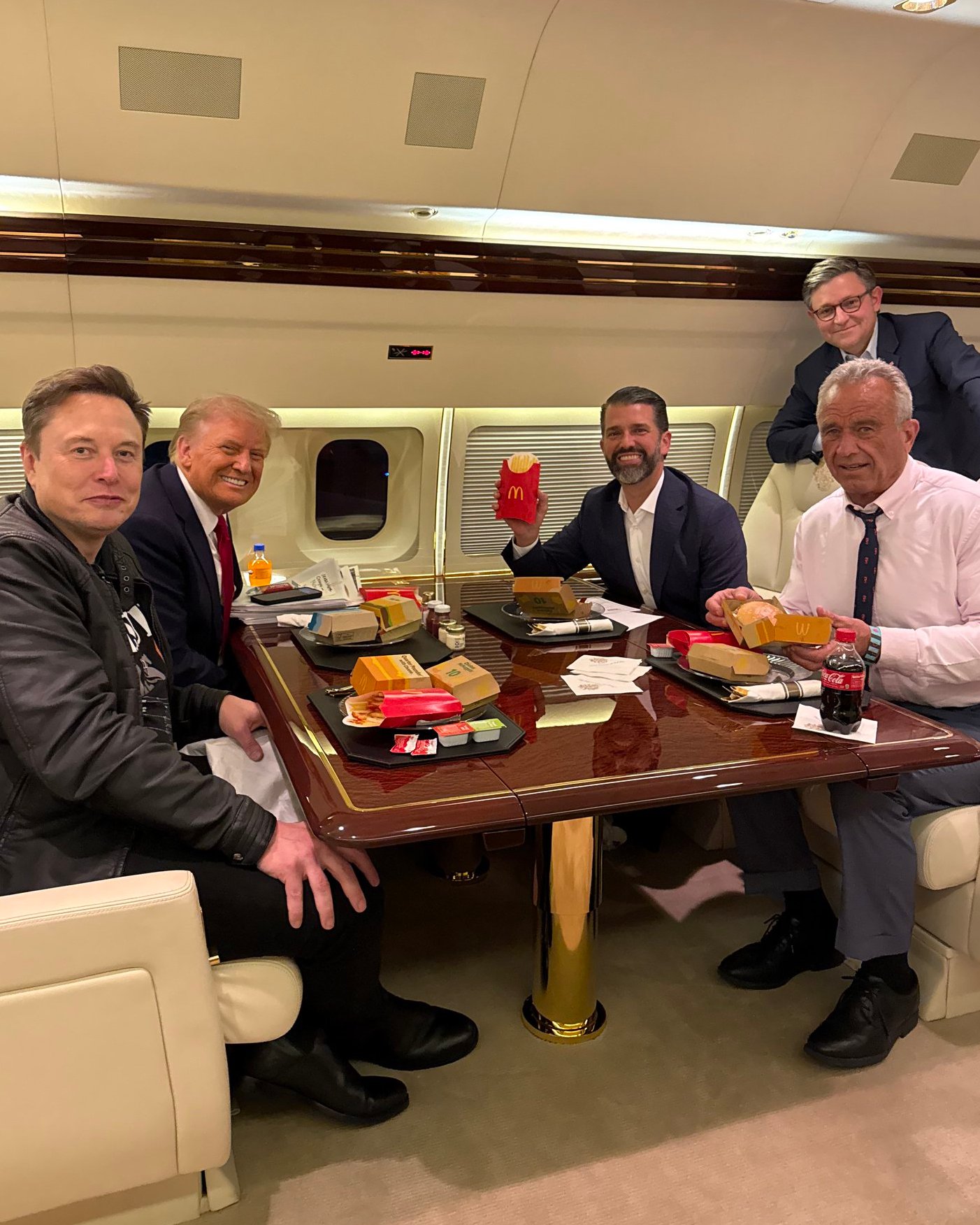
Kennedy, who has spent years criticizing processed foods and specifically McDonald’s, found himself literally consuming the very products he’s warned against.
Van’s case presents a different kind of contradiction. How is this possible? The answer likely lies in youth, genetics, and the extraordinary physical demands of professional MMA training.
His intense training regimen—likely involving hours of cardio, strength training, and skill work daily—creates metabolic conditions where even suboptimal fuel sources get processed efficiently.
But longevity experts would argue that Van is playing with fire. The cumulative effects of oxidized oils, acrylamides, processed meats, and excessive sodium don’t always manifest immediately in young athletes.
