
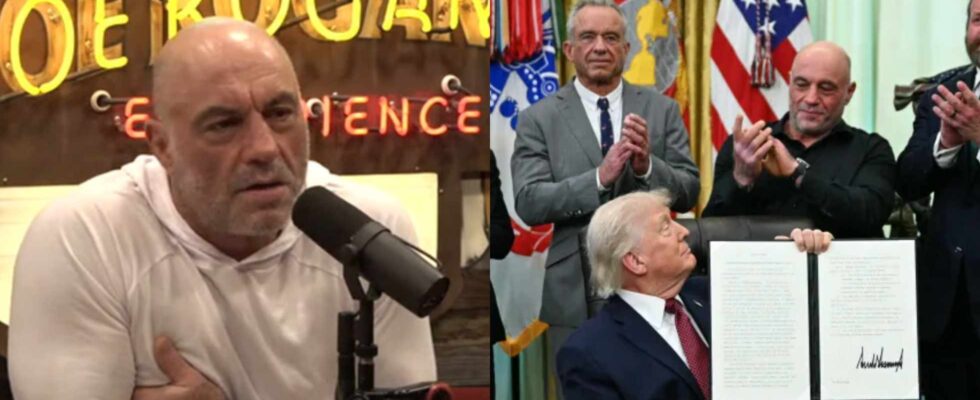
Joe Rogan criticized the Trump administration over delays involving peptides and broader health policy during The Joe Rogan Experience #2570, featuring the comedy group Mystery Boys.
During the podcast the conversation turned to Calley Means, a Trump administration figure who had reportedly worked to advance access to peptides and other treatments. Rogan said Means had recently left the White House after becoming frustrated with resistance inside the administration.
Rogan mentioned, “Calley Means just left the White House today. Calley Means who was working to try to get peptides and all these different things passed through said ‘I can’t do this.’”
Rogan argued that entrenched interests within the government were preventing the administration from following through on its promises, suggesting that industry influence was slowing down proposed reforms.
He continued, “The deep state’s real and there’s all these industry insiders that are embedded in the government. They say they’re going to do something and then they do everything they can to slow it down and keep it from happening.”
Rogan agreed with the criticism, focusing on the gap between campaign promises and actual policy.
“Peptides supposed to be done two years ago,” he said. “All this stuff was supposed to happen a long time ago and they’re [ ] hitting the brakes on everything because they want money.”
The conversation framed the delay as part of a larger conflict between public health and established commercial interests. Rogan argued that people could lose access to treatments they believe they need while existing products and agricultural chemicals remain available.
“How many people are going to lose their health, perhaps get very sick, maybe even die because they don’t have access to whatever the [ ] they need,” he noted.
Rogan then connected the peptide discussion to his earlier conversations with Robert F. Kennedy Jr., particularly Kennedy’s claims about glyphosate and food production. Rogan recalled Kennedy explaining that an executive order had been issued to preserve glyphosate use because removing it would disrupt the food industry.
“So imagine that the food business is reliant on poison,” Rogan said. “If it doesn’t use poison, it can’t stay open.”
He acknowledged that changing agricultural practices would require significant investment and time, including rebuilding soil health and shifting away from industrial fertilizers and herbicides. But he argued that financial pressures had allowed potentially harmful practices to continue after their risks became known.
