
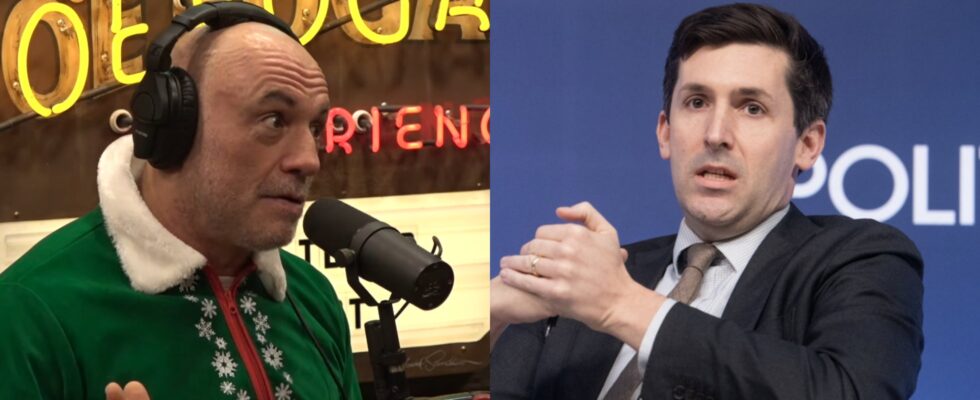
Joe Rogan has questioned why the Trump administration has struggled to deliver on some of its promised health policy changes. He pointed to the departure of Calley Means, a prominent Make America Healthy Again (MAHA) advocate and adviser to Health Secretary Robert F. Kennedy Jr.
During The Joe Rogan Experience #2570, Rogan and his guests discussed Means’ resignation from the Trump administration, connecting it to delays surrounding peptide regulation and restrictions on glyphosate, a herbicide Rogan had previously discussed with Kennedy.
“Calley Means just left the White House today,” Rogan said. “Calley Means who was working to try to get peptides and all these different things passed through said ‘I can’t do this.’”
Rogan argued that entrenched interests within the government were preventing the administration from following through on its promises, suggesting that industry influence was slowing down proposed reforms.
He continued, “The deep state’s real and there’s all these industry insiders that are embedded in the government. They say they’re going to do something and then they do everything they can to slow it down and keep it from happening. Peptides supposed to be done two years ago. All this stuff was supposed to happen a long time ago and they’re [ ] hitting the brakes on everything because they want money.”
Rogan also warned that delays in changing health policies could have consequences for people seeking treatment, arguing that the lack of access to certain stuff could affect their health.
“How many people are going to lose their health, perhaps get very sick, maybe even die because they don’t have access to whatever the [ ] they need,” he noted.
Rogan then turned to glyphosate, revisiting an explanation Kennedy had reportedly given him during an earlier appearance on the podcast. According to Rogan, Kennedy described an executive order that maintained the chemical’s use because of concerns about disrupting the food industry.
“That was the craziest argument when RFK Jr. was on here and he was explaining that to me that they made an executive order to keep glyphosate because otherwise it would mess up the food business,” he said.
Rogan questioned why the food industry would be so dependent on a chemical that critics have raised concerns about, arguing that moving away from it would require substantial changes to existing agricultural practices.
“So imagine that the food business is reliant on poison. If it doesn’t use poison, it can’t stay open,” Rogan said.
Means’ departure comes amid growing frustration among MAHA supporters over what they see as the administration’s slow progress on food safety and pesticide regulation. Although he did not publicly explain his decision to resign, reports note that prominent voices within the movement have become increasingly dissatisfied with the lack of action on issues such as glyphosate and food security.
However, Means struck a positive tone in his departure statement. He stated that he “leaves with tremendous respect” for President Donald Trump and Kennedy. “This movement is in the first inning and just getting started.”
Means had become a prominent voice in the administration’s push to address chronic disease, ultraprocessed foods, food additives and pesticides. However, his efforts reportedly brought him into conflict with senior White House officials concerned about alienating powerful food industry interests.
Progress on the issue of ultraprocessed foods has also been slower than anticipated. Kennedy had promised a government definition of the food category in April. But the FDA’s acting commissioner Kyle Diamantas acknowledged that defining it “is really hard.”
An announcement expected in August instead focused on greater scrutiny of food additives, with only passing mention of ultraprocessed foods.
