

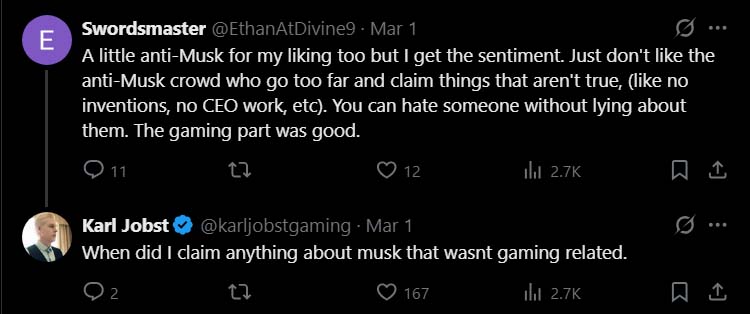
Popular podcast host Joe Rogan is facing backlash after being accused of using YouTube’s copyright system to suppress content questioning Elon Musk’s gaming credentials. The controversy erupted when prominent speedrunning content creator Karl Jobst reported that his viral video investigating Musk’s gaming achievements was hit with a copyright claim—allegedly at the request of Rogan’s team.
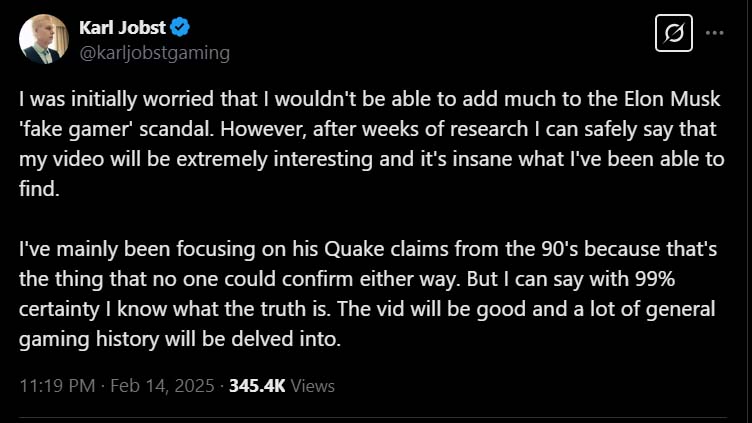
Jobst, known for his deep dives into gaming history and cheating scandals, had published a video scrutinizing Musk’s long-standing claims about his prowess in games like Path of Exile 2, Diablo 4, and, most notably, Quake. In the video, Jobst examined Musk’s repeated assertion that he was “one of the world’s best Quake players” in the 1990s, a claim that has been met with increasing skepticism.
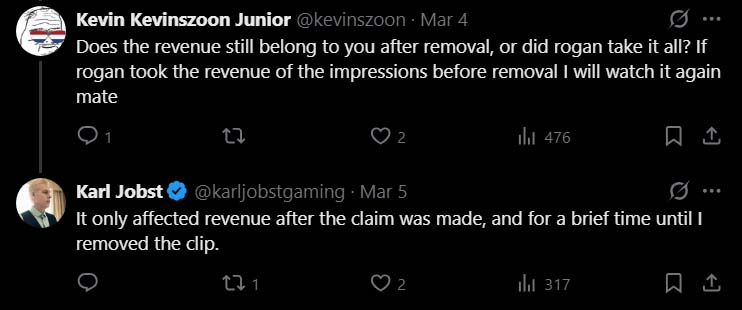
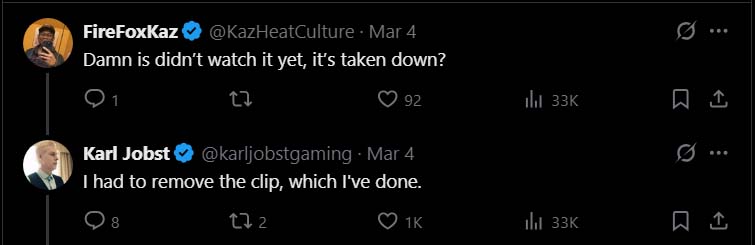
However, the video, which had garnered nearly a million views, included a 30-second clip from The Joe Rogan Experience where Musk boasted about his Quake skills. According to Jobst, this single clip led to Rogan’s team filing a copyright claim, effectively demonetizing and restricting his video.
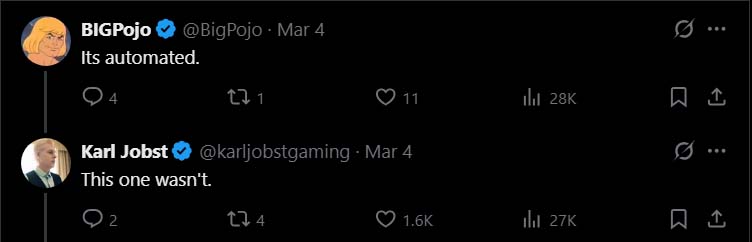
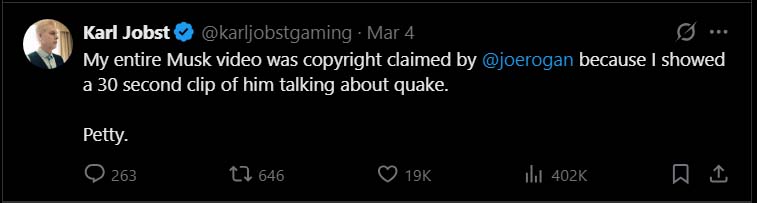
“My entire Musk video was copyright claimed by @joerogan because I showed a 30-second clip of him talking about Quake. Petty,” Jobst posted on X (formerly Twitter) on March 4.
He further emphasized that this wasn’t an automated claim, but a manual one—forcing him to remove the segment entirely. This has sparked widespread criticism from fellow content creators, including TheActMan, who commented:
“This new generation of snowflakes love to abuse the copyright system, I’ve noticed.”
Many have urged Jobst to contest the claim, arguing that the clip’s usage falls well within fair use guidelines. So far, he has not publicly responded to these calls, and Rogan has remained silent on the accusations.
The Musk Gaming Scandal That Sparked the Copyright Claim
The copyright dispute appears to be part of a larger controversy surrounding Musk’s credibility in gaming. In recent years, Musk has repeatedly claimed that he was not just a casual Quake player, but one of the best in the world. His specific claim? That his team placed second in the first paid esports tournament in the U.S., winning “several thousand dollars.”
However, deeper investigation into these claims paints a different picture.
Musk did, in fact, compete in a 1997 online Quake tournament called Ladder-to-kathon, held on the now-defunct M-player platform. His team, representing his company ZIP2, finished second—winning approximately $750. But while Musk has framed this as an elite competition, evidence suggests otherwise. The tournament was poorly advertised, restricted to M-player’s paid subscribers, and largely ignored by the top Quake players of the era.
Dennis “Thresh” Fong, widely regarded as the best Quake player at the time, directly contradicted Musk’s claim of being a top-tier competitor. In a 2020 podcast, Thresh bluntly stated:
“He wasn’t very good.”
In a more detailed 2024 Freethink interview, he reinforced this sentiment:
“Was he any good? He was okay. I know he claimed that he was one of the top players. He was definitely not one of the top players.”
Further scrutiny reveals that Musk’s tournament success may have been less about skill and more about technology. His company’s business-grade internet connection gave his team an unfair advantage over opponents with standard dial-up speeds. This advantage disappeared when they faced Team Olympus, another team with comparable internet speeds, resulting in Musk’s team losing.
A Pattern of Gaming Exaggerations
Musk’s Quake claims fit into a broader pattern of gaming-related embellishments. His recent Path of Exile 2 controversy, where he boasted about achieving high-level rankings only to later be exposed for having others play on his account, further damaged his credibility. Similarly, in Diablo 4, Musk portrayed himself as a top player, despite evidence suggesting that paid gamers were behind his achievements.
Even his Quake timeline is inconsistent—he has claimed to have played the game competitively while finishing his final semester at university, despite the fact that Quake was released after he had already left.
The implications of these repeated fabrications go beyond gaming. If Musk is willing to exaggerate minor personal achievements, it raises questions about the credibility of his broader claims—including those related to his companies and technological innovations.
Why Joe Rogan’s Copyright Claim Matters
The decision to issue a copyright claim against Jobst’s video has raised eyebrows, particularly given Rogan’s vocal stance on free speech. Critics argue that Rogan’s team’s actions are more about protecting Musk’s reputation than enforcing legitimate copyright rights. Jobst’s video didn’t just use a clip of Musk’s gaming boasts—it provided extensive evidence debunking them.
This isn’t the first time YouTube’s copyright system has been weaponized to suppress criticism. Large creators and companies have been accused of exploiting the system to silence unfavorable narratives. By claiming Jobst’s video, Rogan’s team has effectively restricted a widely viewed investigation into Musk’s credibility—prompting allegations of an attempted cover-up.
For now, Rogan and Musk have remained silent, while Jobst and other creators continue to push back. But this latest controversy has further cemented Musk’s reputation as someone willing to stretch the truth—and Rogan’s as someone willing to protect him.
