

For years, Andrew Huberman built a reputation as a voice of caution when it came to finasteride, a treatment widely prescribed for hair loss. The Stanford neuroscientist and podcast host repeatedly warned his millions of followers about the serious side effects associated with it, particularly in young men.
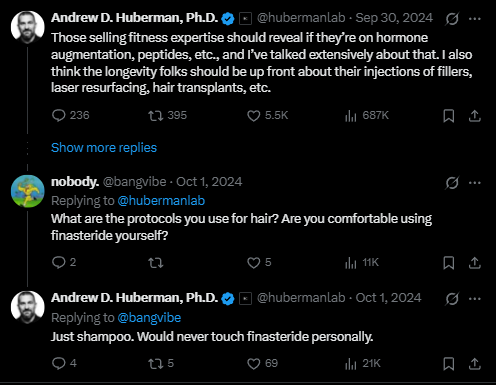
He discussed post-finasteride syndrome on his podcast, responded to concerned followers on social media, and even stated publicly that he would “never touch finasteride personally.”
Now, that stance appears difficult to reconcile with his latest career move. On November 9, 2026, Hims & Hers Health, Inc., one of the most prominent telehealth companies marketing and selling finasteride for hair loss, announced that Huberman had joined its board of directors.
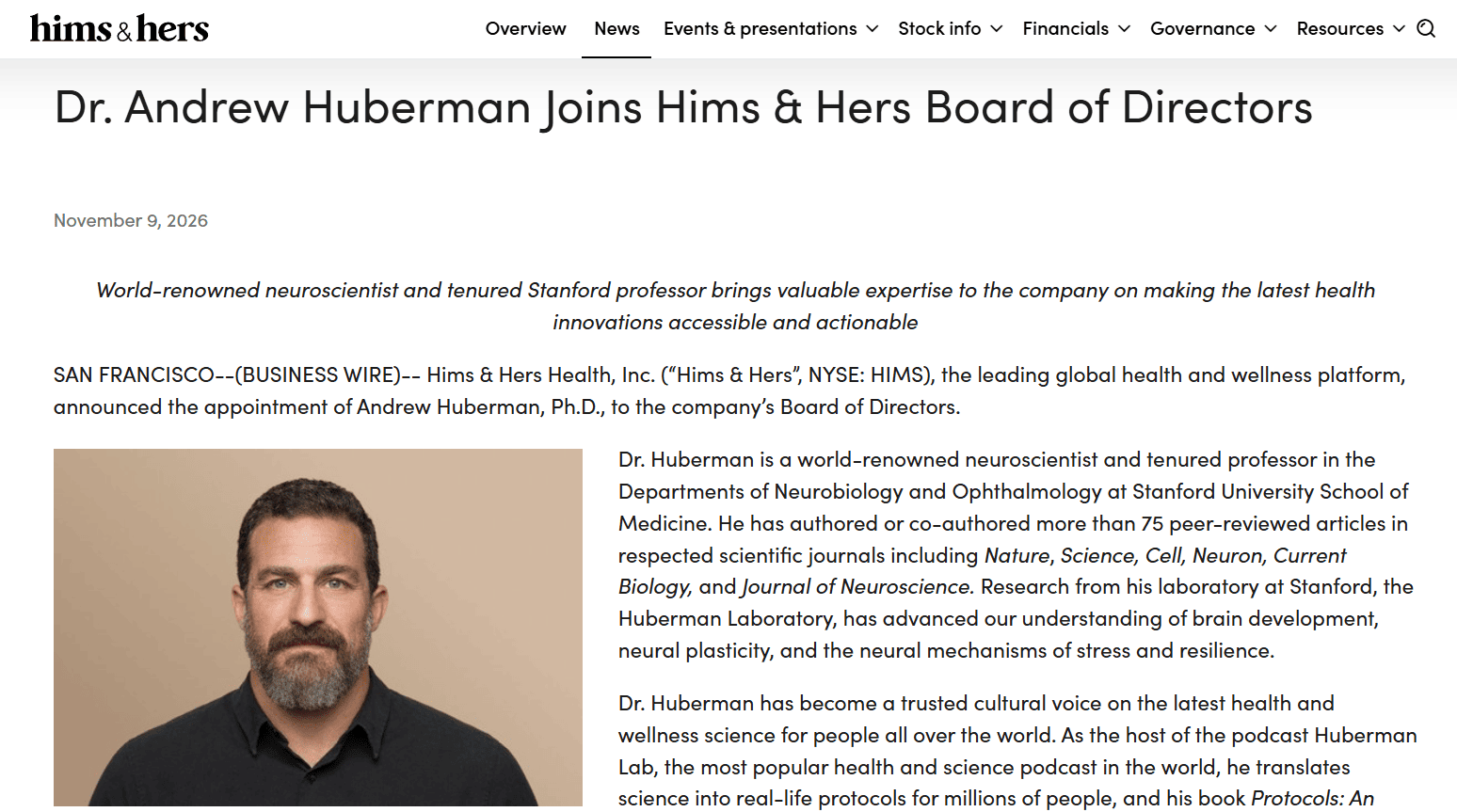
The appointment has raised questions about conflicts of interest and scientific independence, particularly among men who have experienced lasting complications from the treatment and looked to Huberman for guidance.
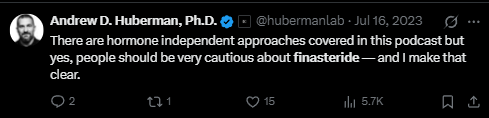
Huberman’s concerns about finasteride are well-documented across his social media posts and podcast episodes. In April 2023, when he released a podcast episode titled “The Science of Healthy Hair, Hair Loss and How to Regrow Hair,” he made his position clear in a follow-up post: “people should be very cautious about finasteride, and I make that clear.”
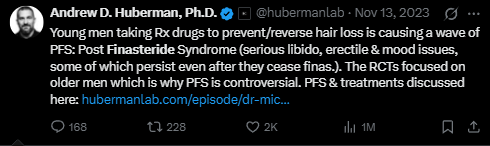
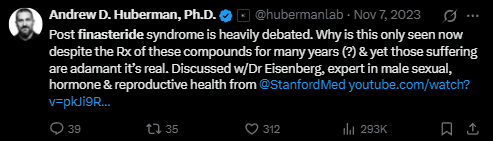
He later elaborated on the nature of the problem. “Post finasteride syndrome is heavily debated. Why is this only seen now despite the Rx of these compounds for many years?” he wrote in November 2023.
The question highlighted a troubling pattern: while finasteride has been prescribed for prostate conditions in older men for decades, its widespread use among younger men for cosmetic purposes is relatively recent, and the reported side effects appear to be concentrated in this demographic.
In September 2024, Huberman responded to a direct question about whether he would use finasteride himself. His answer was unequivocal: “Just shampoo. Would never touch finasteride personally.”
Most recently in 2025, Huberman reportedly stated that the second most common question he receives confidentially from men in their twenties to forties involves persistent concerns after taking finasteride, including issues that continue even after discontinuing the treatment.
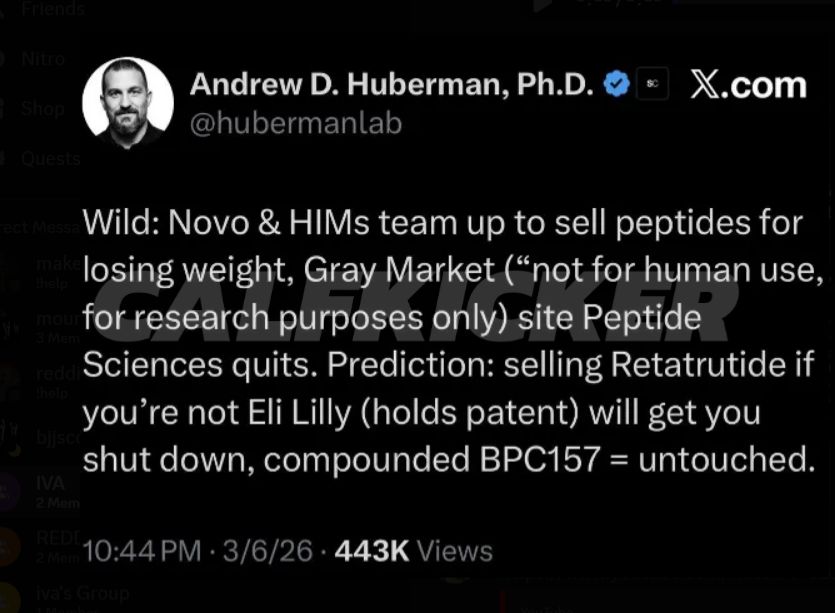
Huberman also weighed in on the changing peptide market, highlighting the growing involvement of pharma companies and telehealth platforms. Reacting to the partnership between Novo Nordisk and Hims & Hers, he pointed to the shutdown of research peptide supplier Peptide Sciences and predicted that regulatory scrutiny could reshape the industry.
“Wild: Novo & HIMs team up to sell peptides for losing weight, Gray Market (‘not for human use, for research purposes only) site Peptide Sciences quits,” he wrote. He added that selling retatrutide without authorization from patent holder Eli Lilly could lead to enforcement action, while predicting that compounded BPC-157 would remain unaffected.
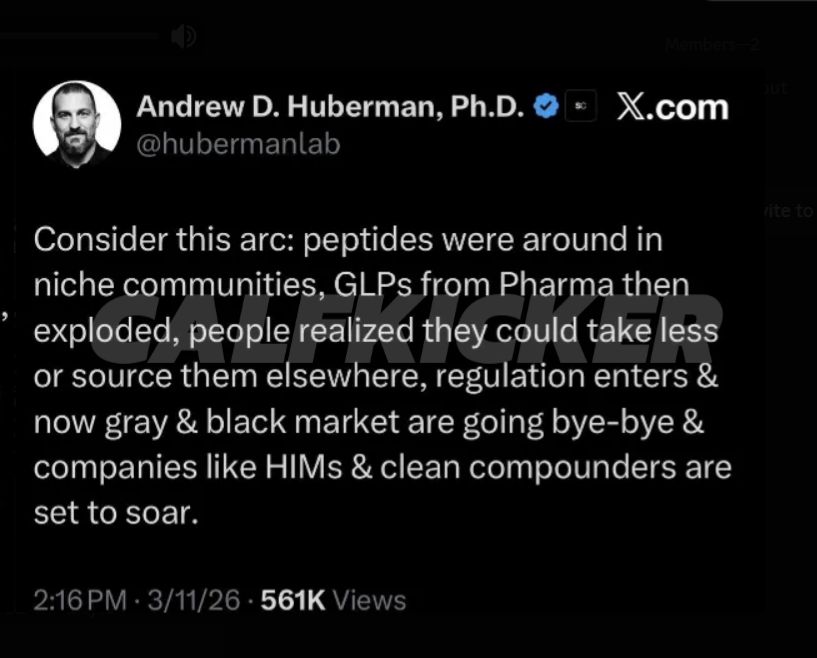
In another post, Huberman outlined how he believes the peptide market has evolved, from niche communities to the mainstream adoption of GLP-1 treatments. “Consider this arc: peptides were around in niche communities, GLPs from Pharma then exploded, people realized they could take less or source them elsewhere, regulation enters & now gray & black market are going bye-bye & companies like HIMS & clean compounders are set to soar,” he wrote.
What Is Post-Finasteride Syndrome?
Post-finasteride syndrome refers to a constellation of symptoms that some men report experiencing after taking finasteride for hair loss. These symptoms can include reduced desire for intimacy, impaired function, mood changes, and in some cases, thoughts of self-harm. What makes the condition particularly concerning is that for some individuals, these symptoms persist even after stopping the treatment.
Dr. Michael Eisenberg, an expert in male reproductive health from Stanford Medicine, discussed the phenomenon with Huberman on his podcast.
“Men that see these side effects tend to be younger men in their 20s, 30s and 40s, and they take it as you’re pointing out for hair loss,” Eisenberg explained.
Eisenberg confirmed what many patients had reported online: the condition can be permanent. “Some men do have resolution when they stop but there is this permanence in some handful of men,” he said. “They’ve done MRI imaging to try and understand sort of more anatomically or functionally what exactly is going on. I think there’s still a lot of unknowns about it but it can be permanent for some.”
For Huberman, this represented a pretty serious trade-off to either maintain or grow hair or lose function. He stated, “I’m not a clinician but my encouragement is always for people to approach these [ ] with a real level of seriousness if not caution ”
The mechanism behind post-finasteride syndrome remains unclear, but Eisenberg noted that treatment attempts yield mixed results.
“We go down all the host of treatments that we talked about and evaluations that we talked about. Again we have resolution in some but there are some that seem treatment refractory,” he said.
The Business of Hair Loss
Hims & Hers was founded in 2017 as a direct-to-consumer telehealth platform initially focused on treatments for hair loss and other conditions, marketed primarily to millennial men. The company went public in January 2021 through a merger with a special-purpose acquisition company at a valuation of $1.6 billion.
Finasteride remains one of the company’s core offerings. The generic prescription treatment is marketed alongside other hair regrowth treatments through the platform’s subscription model, which bundles telehealth consultations with medication delivery.
The company has faced regulatory scrutiny in recent years. In August 2025, Bloomberg reported that the Federal Trade Commission had been investigating the company’s advertising claims and subscription cancellation practices for more than a year.
The following month, the FDA sent Hims & Hers a warning letter faulting the company for statements on its website about its compounded products.
The company’s stock has declined 42% over the past year, according to social media posts analyzing the business move.
According to the company’s press release, Huberman will serve on the board of directors and also provide services as a scientific and brand marketing advisor. Additionally, he will “separately provide additional marketing support to the company through the Huberman Lab podcast.”
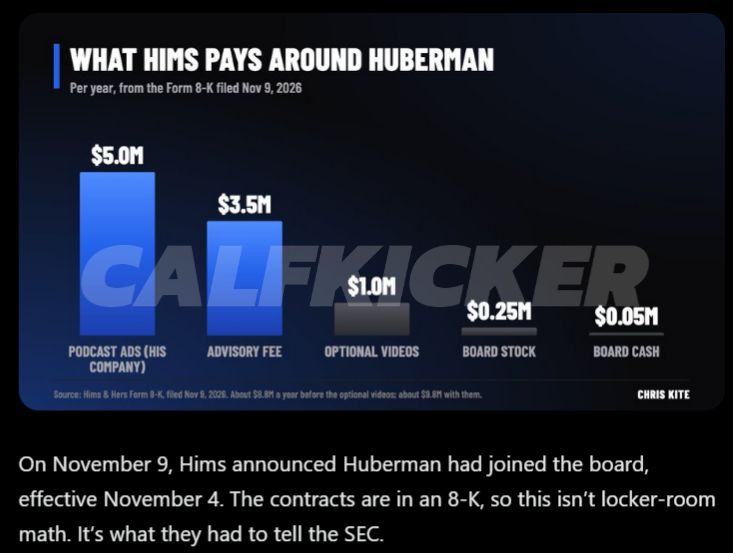
Social media posts suggest the arrangement includes approximately $8.8 million per year in contracts, leading some observers to characterize it as “more like a podcast sponsorship with a parking spot” than a traditional board position.
In the press release, Hims & Hers CEO Andrew Dudum stated: “Andrew Huberman has done more than almost anyone to make rigorous science accessible and actionable for millions of people. As we continue to build the future of personalized, science-backed healthcare, his expertise in neuroscience and human health will sharpen how we think about the science behind our offerings.”
Huberman’s own statement in the press release emphasized access to healthcare: “Everyone deserves access to the best possible healthcare and tools to feel great. Hims & Hers provides the ideal platform to deliver personalized health. I’m delighted to join the board of Hims & Hers because they are clearly the leaders in this effort, and are transforming an industry of personalized healthcare that, in the past, has been too slow to prioritize everyday people.”
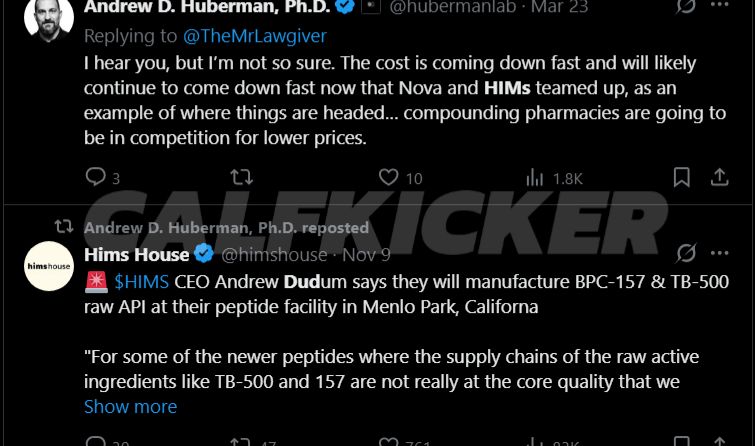
Reports indicate that Huberman was the one who initially reached out to the company’s CEO, rather than being recruited to the position.
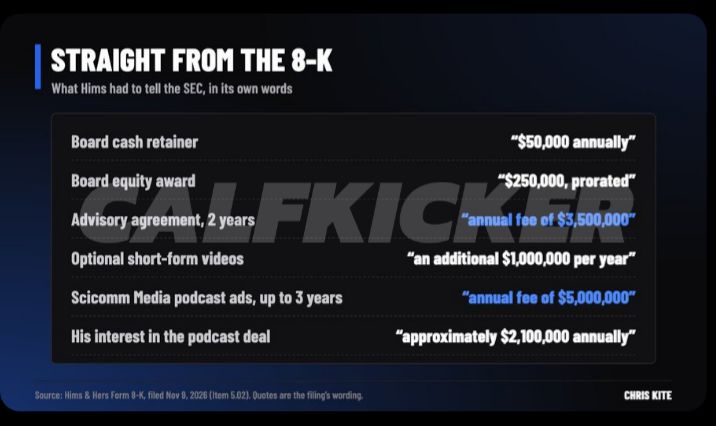
However, the financial details disclosed in Hims & Hers’ November 9 Form 8-K filing provide a clearer picture of the arrangement. According to the filing, Huberman’s company, Sciomm Media, will receive an annual fee of $5 million for podcast advertising under an agreement lasting up to three years.
He will also receive $3.5 million annually under a two-year advisory agreement, with an additional $1 million per year available for optional short-form video content. His board compensation includes $250,000 in prorated stock awards and a $50,000 annual cash retainer.
For followers who have listened to Huberman’s warnings about finasteride over the years, the appointment raises uncomfortable questions. How does someone who stated he would “never touch finasteride personally” reconcile joining the board of a company that markets and profits from the medication?
How will Huberman’s new financial relationship with Hims & Hers affect the scientific independence of his podcast, particularly when discussing topics related to the company’s products?
Huberman reportedly indicated earlier this year that a dedicated episode on post-finasteride syndrome was forthcoming. Whether that episode will still be produced, and how it might be shaped by his new board position, remains to be seen.
Huberman has built his audience on the promise of translating rigorous science into actionable protocols, free from commercial bias. His appointment to the Hims & Hers board tests that promise.
