

A newly filed status report in the UFC antitrust litigation has put a fresh spotlight on a personal cell phone number belonging to Dana White that only recently surfaced in discovery. The incident raised questions about what else may have gone undisclosed during the long-running case against Zuffa and TKO.
The filing was submitted after a court-ordered demand for an explanation of why a previously undisclosed personal cell number tied to White, ending in 2660, only came to light recently. At the last status conference, the presiding judge directed both White and one of the defense attorneys to submit sworn declarations addressing the phone and explaining how it had been left out of prior discovery.
The phone revelation came amid a dispute over how the UFC and its executives handled evidence in the antitrust litigation. Plaintiffs had already accused the promotion of failing to preserve relevant phone data, while questions were raised about the format of the material provided for forensic review and the reliability of the defense’s expert analysis.
Judge Richard Boulware also expressed frustration with how certain devices had been preserved, including concerns that some phones had been left unsecured and that a court-appointed expert had been unable to access at least one device.
Against that backdrop, the previously undisclosed number tied to White became a particularly significant discovery issue. Plaintiffs said the number had been used for UFC-related communications with executives including Hunter Campbell and Craig Borsari during a period when other White devices were potentially subject to the preservation obligations in the case.
Boulware ordered the defense to investigate the number, determine whether the associated device had been examined, and provide information about its carrier records.
The latest filing now provides the defense’s explanation for why the number was not included in the earlier device discovery, while also introducing new details about UFC-related messages that were sent to the line.
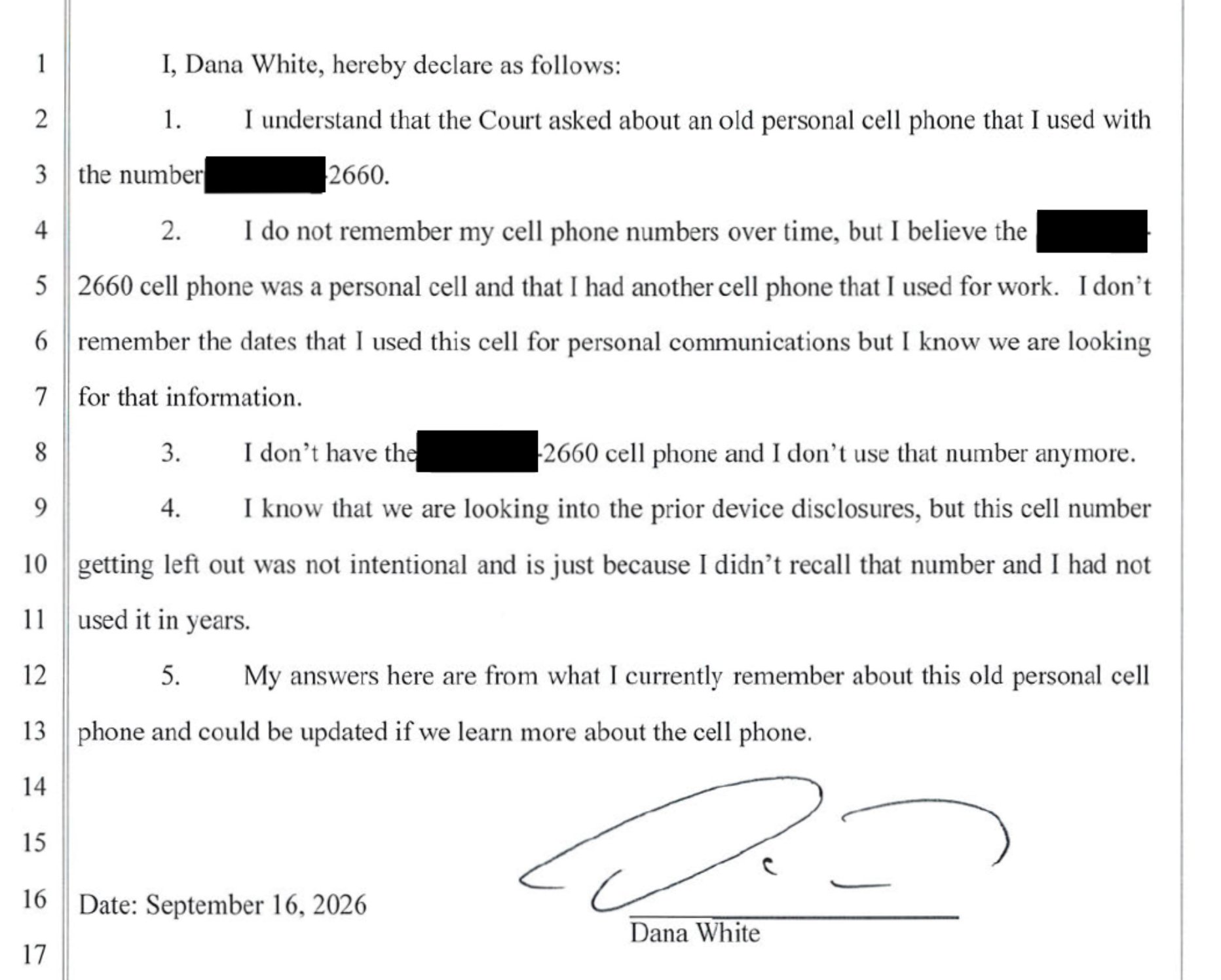
According to the status report, White says he maintained separate business and personal devices, and that the 2660 number was his personal line used roughly from 2018 to 2022, though the defendants did not give a definitive end date. The number was reportedly never collected or imaged as part of the custodian device discovery process.
The defense also cited a prior ruling from the Le v. Zuffa case, in which a judge denied a motion to compel production of White’s personal phones, arguing that precedent supports keeping this number out of the case as well. The omission from the 2025 court-ordered device disclosure was characterized as unintentional, with the defendants attributing it to White simply not remembering the number.
White’s declaration was brief and leans heavily on his claimed lack of memory regarding the device, with language noting his answers could be updated if more information emerges.
The accompanying declaration from the attorney is largely boilerplate, confirming the device was not imaged because it was deemed personal, while also confirming that AT&T subpoenas remain pending to establish precise usage dates.
The report includes a footnote that appears to complicate the defense’s position. It indicates that a UFC employee or associate, whose phone was collected during discovery, had the 2660 number saved under a contact labeled as White’s personal number. That same footnote reportedly acknowledges that the text thread under that contact included UFC-related content.
This detail suggests people close to White knew the line was his private number, yet business matters were still being discussed over it, which undercuts the argument that the number should be excluded solely because it was personal.
