
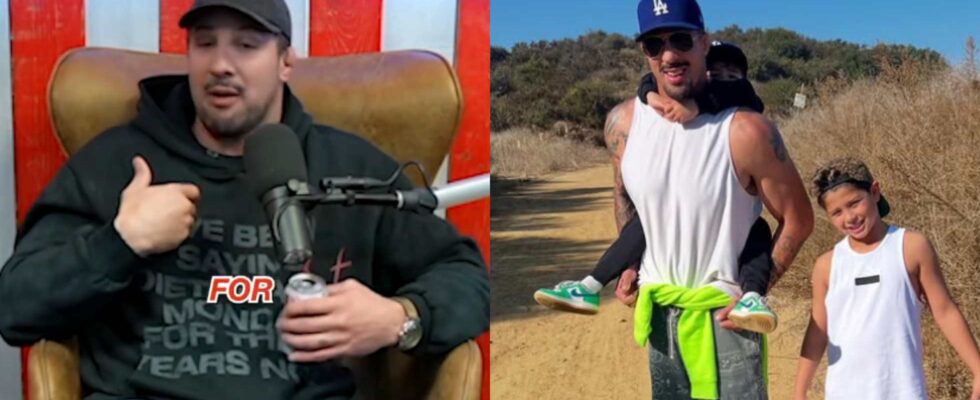
Former UFC heavyweight and podcast host Brendan Schaub recently revealed his approach to healing a bicep tear, opting for peptide therapy instead of surgical intervention.
During an appearance on the Joe Rogan Experience, Schaub disclosed that he tore his bicep approximately one month prior and chose to treat the injury through a combination of injectable peptides.
Schaub said, “I tore my bicep like a month ago probably. But I’m on a bunch of s**t.” Rogan, noticing the visible change in Schaub’s arm, pressed him on whether he had sought medical repair. “It looks weird. Did you get it fixed or no?” Rogan asked.
“Nah, man,” Schaub replied. Rogan then clarified whether the tear was severe enough to warrant surgery, saying, “You don’t have to get it fixed. Is it small tear?”
Schaub confirmed the injury was minor, responding, “Yeah, it’s small tear. I’ve just been injecting… name something.”
At that point, Rogan jumped in to endorse a familiar peptide stack. “BPC57 with the TB500 is amazing,” Rogan said. “The best. Amazing,” Schaub agreed, before revealing he had gone even further down the peptide rabbit hole.
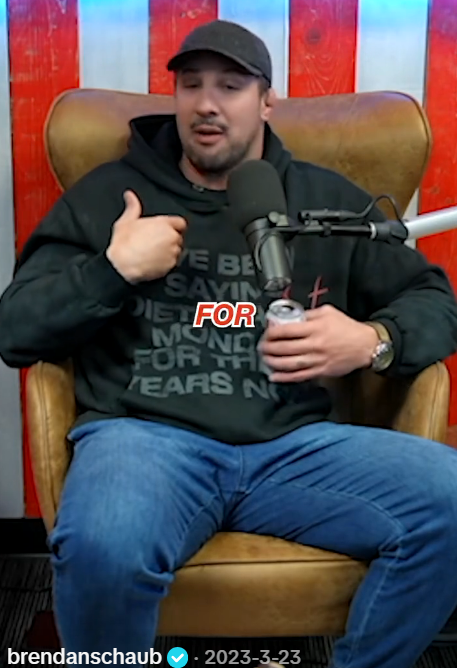

“I started taking Blue Scorpion Venom. Anything someone offers me, I’m like, I’ll try that…. They take venom and then use it for peptides.”
Curious, Rogan asked, “What does that do for you?” Schaub replied candidly, “Apparently it helps with healing.”
Schaub mentioned he has been using a stack of healing peptides, specifically naming BPC 157, TB 500, and IGF-1 as his primary treatments. Rogan enthusiastically agreed with the approach, noting that BPC 157 combined with TB 500 is particularly effective.
According to sources, BPC 157, or Body Protection Compound 157, has gained significant attention in athletic and recovery circles despite lacking formal human clinical trials. The compound has demonstrated promise in preclinical studies for tissue repair and healing.
TB 500, which is actually a fragment of the larger compound thymosin beta 4, has been associated with similar regenerative properties, though the research supporting TB 500 specifically is limited compared to its parent compound.
The third component of Schaub’s protocol, IGF-1, represents insulin-like growth factor 1. When used as a peptide analog, particularly in forms like IGF-1 LR3, it acts downstream in the growth hormone pathway to promote tissue repair, muscle growth, and recovery.
IGF-1 LR3 has a significantly longer duration of action, with a half-life of approximately 20 to 30 hours, making it a potent option for sustained healing responses.
While these peptides have become increasingly popular in fitness and recovery communities, they carry important considerations. IGF-1’s growth-promoting properties mean it could theoretically accelerate problematic cell growth in individuals predisposed to certain conditions. Both BPC 157 and TB 4 promote angiogenesis, the formation of new blood vessels, which aids healing but requires careful consideration in certain medical contexts.
Schaub mentions that his bicep has now healed significantly, saying: “I got back on the bench last week and had no problems.”
The effectiveness of such protocols remains largely anecdotal in human applications, as comprehensive clinical data is still developing.
