

The rise of Ben Askren from an unathletic freshman who couldn’t climb a rope to a pound-for-pound combat sports icon is one of the most improbable transformations in modern athletics. Documented in part by FloWrestling and echoed by those who trained with him, Askren’s journey is a case study in overcoming physical limitations through stubbornness, creativity and sheer refusal to accept mediocrity.
When Askren arrived at the University of Missouri, his strength and speed were nowhere in sight. His coach Brian Smith described the early days bluntly: “He was slow as molasses. The last guy picked in every game. Sometimes, nobody would pick him.”
In the weight room, Askren couldn’t lift basic loads and during team runs, he’d ask if he could wrestle for 80 minutes instead of jogging seven miles. “Running was a complete disaster,” Askren later admitted. “There’s nothing I’ve hated more in my life.”
One moment became seared in his memory: rope climbs in the Hearnes Center. Askren made it halfway up and froze. “I just couldn’t climb any higher,” he confessed. “I was too effing stubborn to come down, so I just hung there. I was embarrassed,d and I think I still have dread about that moment to this day.” The experience wasn’t just humiliating, it exposed the stark contrast between his ambition and his physical readiness.
He wasn’t even close to starting on the team. “I wasn’t fifth string the whole first semester… but I definitely wasn’t first string,” he said. He wasn’t losing to All-Americans—he was losing to guys who wouldn’t even sniff the national stage. Wrestlers were rag-dolling him, locking up cradles and tearing him apart. “There were tears,” one teammate recalled. “He’d sit in the corner crying, unsure if he had the capability to achieve what he wanted.”
But this wasn’t a story about talent. It was about grit and innovation. Askren began obsessively experimenting with positions, often staying after practice with training partner Mike Pucillo. The two would drill for 40 minutes past everyone else.
“Every day after practice, the two of them would stay, and Ben would go that extra go,” a coach remembered. Out of that came what would become known as funk wrestling, a revolutionary scrambling system that defied the norms of positional control.
His physique didn’t scream “athlete.” He had love handles hanging over his singlet, soft features and an awkward gait. But that worked in his favor. Opponents underestimated him, laughed at him, came out swinging—and got caught in positions they couldn’t comprehend. Askren didn’t win by overpowering people. He won by confusing and controlling them in entirely new ways.
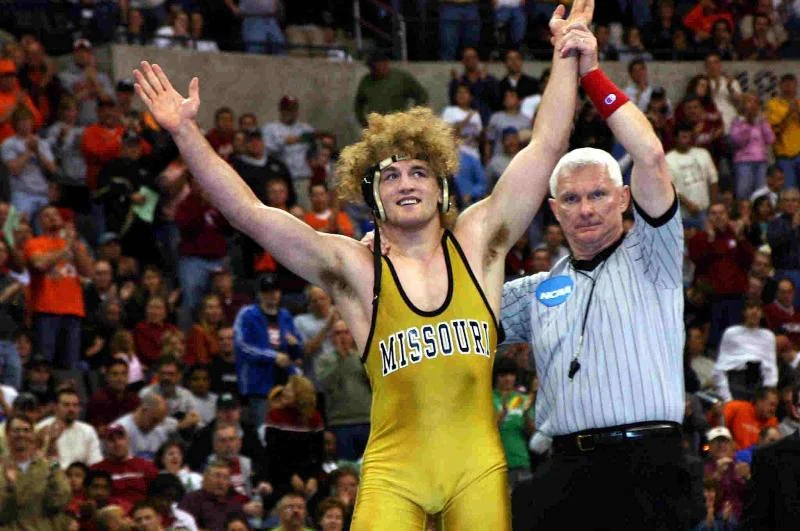
In 2007, he faced Jake Herbert in the NCAA finals. Herbert embodied everything Askren wasn’t—muscular, a lot of fast twitch muscle, technically orthodox. The result? A lopsided 14-2 win for Askren. That moment signaled a tectonic shift in wrestling’s landscape. The goofy kid who once cried at practice had dismantled one of the sport’s most polished athletes on its biggest stage.
Askren’s success didn’t stop with wrestling. In MMA, his unique brand of top control translated into an undefeated streak across ONE Championship and Bellator where he became champion in both promotions. His grappling neutralized strikers, jiu-jitsu players and wrestlers alike. His dominance wasn’t just physical—it was intellectual. He played a different game and he played it better than everyone else.
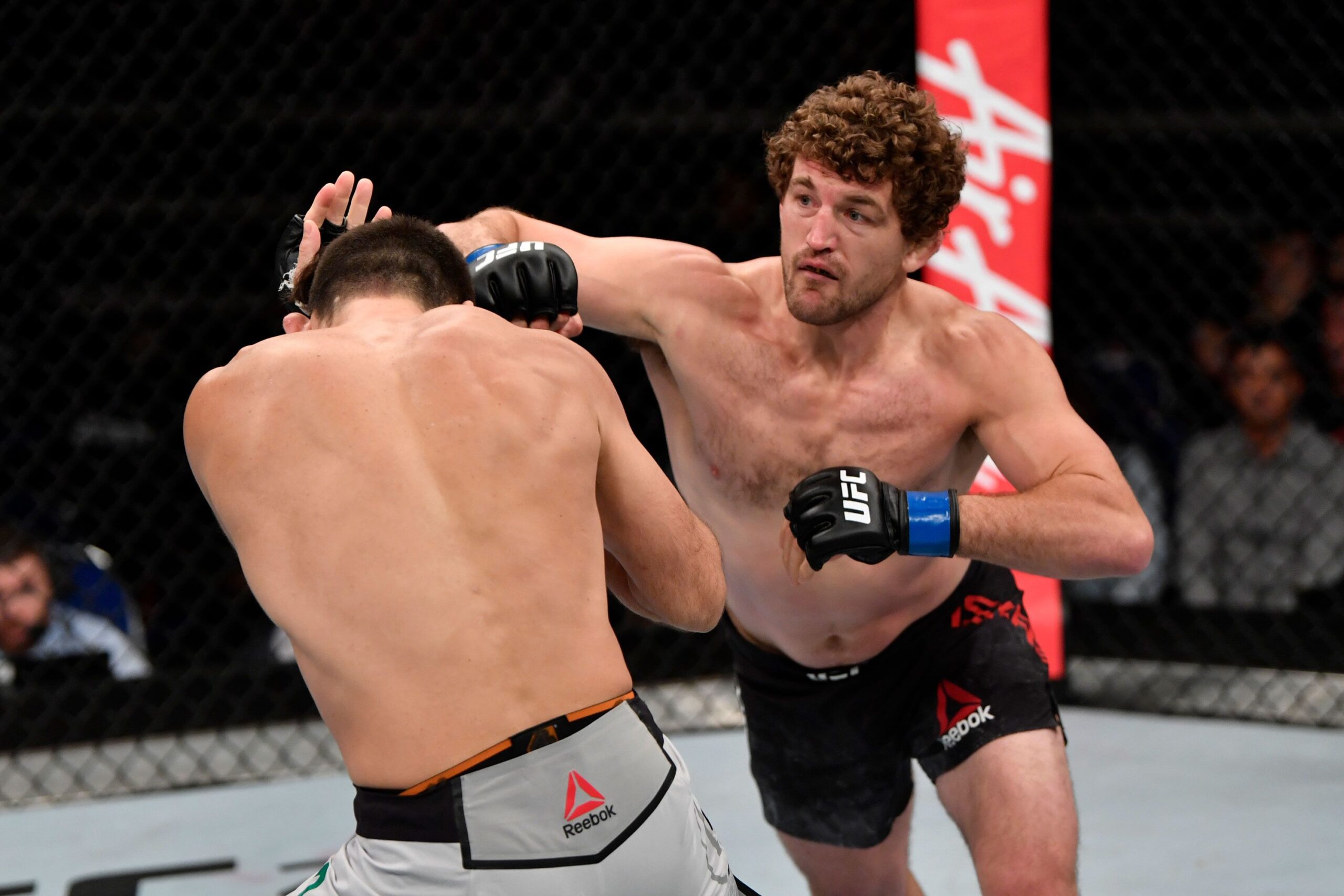
Ben Askren went from one of the weakest wrestlers on his college team, to p4p one of the most uniquely strong combat athletes of all time. His strength so pronounced he could crush two watermelons at once with his arms . – Flowrestling’s Christian Pyles wrote.
Even Coach Brian Smith recalled those watermelon-crushing days with a laugh but also pointed to the pain behind the strength: “Ben’s first year, he probably thought about quitting some days. He struggled. He got stuck halfway up a rope.” That struggle, however, became fuel.
Askren once said, “I had these people wrestling in my head. They didn’t have singlets. They didn’t even have bodies—they were just figures.” What was once considered “spaghetti wrestling” is now elite-level scrambling—and it all traces back to a kid who refused to accept the limits placed on him.
Askren is currently recovering from his health problems right now. The former Olympian and MMA star had been fighting a severe case of pneumonia that led to a double lung transplant and required weeks on a ventilator. At one point, his heart even stopped multiple times, and he has no memory of parts of the ordeal. Thankfully, Askren is now doing better and on the road to recovery.
