
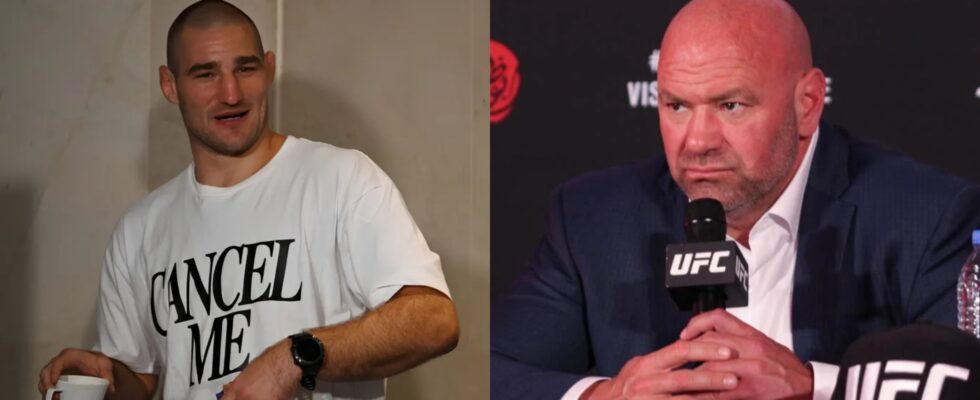
Sean McCorkle’s time in the UFC came to an end not simply because of his performances inside the Octagon, but because of what he was posting online. Speaking on a recent episode of the MMA History Podcast, McCorkle detailed how the UFC handled athletes whose public comments generated controversy.
One of the clearest examples involved a text message he received from longtime UFC matchmaker Joe Silva.
“Would you stop putting racist stuff on Twitter?” Silva texted him.
Looking back on the post in question, McCorkle said it was a joke involving his mixed-race girlfriend.
“Somebody asked if she was Hispanic,” he recalled. “And I said, ‘No, there’s no two things I can’t stand. Racism and interracial dating.'”
Rather than apologizing, McCorkle responded with a joke of his own. “What if it’s really funny, though?” he replied.
Silva’s response was brief: “Oh my god.”
Eventually, McCorkle’s UFC run came to an end. When his manager informed him of the decision, he was also given the explanation the promotion used internally.
“The risk is no longer worth the reward,” McCorkle recalled being told.
He then connected his own experience to that of Matt Mitrione, arguing that both men faced consequences for controversial public statements.
After Mitrione referred to Fallon Fox as a sociopath and compared her to the fictional character Buffalo Bill, the UFC reportedly punished him financially.
“He had a $25,000 bonus coming from his last pay-per-view match and they just kept it,” McCorkle said. “They just seized the money because it wasn’t technically his money.”
According to McCorkle, the decision left Mitrione furious. Recounting a conversation they had, he shared Mitrione’s reaction.
“Dude, I was in the NFL,” Mitrione told him. “Someone gets fined in the NFL is $500 or $1,000 and they’re making a hundred times the money guys in the UFC are making.”
He was particularly frustrated by the size of the penalty.
“I make one statement, my first ever offense, and I get $25,000 taken from me,” Mitrione said.
According to the hosts, earlier in the UFC’s growth, athletes were actively encouraged to build their own brands and attract attention.
“There was like a weird time,” the host explained. “At one point, the UFC wanted everybody to market themselves, like we’re the opportunity, we’re the springboard, jump as high as you can.”
As an example, he pointed to Miguel Torres, whom he considered one of the most entertaining personalities on social media at the time. According to McCorkle, the arrival of major gambling sponsors changed the promotion’s approach.
“All of a sudden, no, no, no, no,” he said. “You guys got to be politically correct. You can’t say this, you can’t say that.”
That reversal stood out to him because it contrasted with Dana White’s public image as a defender of free speech.
“It was so strange,” the host said. “It went from Dana White being a free speech absolutist right now. Well, he wasn’t at this time. He was before, not at this time. And then became one again.”
McCorkle also highlighted the financial leverage the UFC held over its roster through discretionary bonuses. Before walking out for his match against Stefan Struve, he said he was promised a bonus that would have dwarfed his actual purse.
“I was making $10,000 that night,” McCorkle recalled. “That would have been life-changing for me at that point.”
The bonus, he said, was worth $100,000. Looking back, McCorkle summarized the dynamic in simple terms.
“Play the game, you’ll get a bigger bonus,” he said. “Don’t play the game, you won’t.”
