
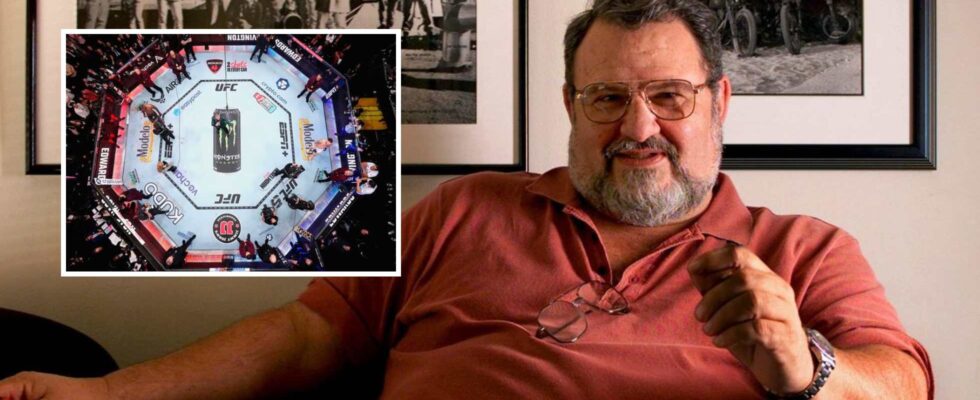
When audiences think of legendary Hollywood screenwriter John Milius, they remember the visceral storytelling of Apocalypse Now, the sword-wielding heroics of Conan the Barbarian, or perhaps the iconic line “I love the smell of napalm in the morning.”
What most people don’t realize is that this Academy Award-nominated writer played a pivotal role in creating one of the world’s most successful sports entertainment franchises: the UFC.
According to sources, Milius was part of the organization’s founding trio, working alongside marketing executive Art Davie and Brazilian jiu-jitsu practitioner Rorion Gracie to transform a bold concept into reality. This was long before Dana White became the public face of the UFC.

For nearly three decades now, the UFC has dominated the combat sports landscape, but its origins trace back to an unlikely collaboration between Hollywood creativity and martial arts passion.
Milius wasn’t your typical screenwriter content to live vicariously through characters on the page. His fascination with creating larger-than-life heroes extended into his personal pursuits. He became a dedicated student of Brazilian jiu-jitsu under Rorion Gracie, whose father Helio had helped develop the martial art form. This wasn’t merely a hobby for Milius—it was part of his desire to embody the mythic personas he created on screen.
The connection between Milius’s martial arts training and the birth of the UFC came through Art Davie, who shared an enthusiasm for the Gracie family’s techniques.
In the early 1990s, Davie pitched an ambitious concept to both Milius and Rorion Gracie: a 16-man single-elimination tournament called “War of the Worlds,” where practitioners of different martial arts disciplines would compete to determine which style was most effective. The idea resonated immediately, bearing similarities to the “Gracie Challenge” invitational tournaments.
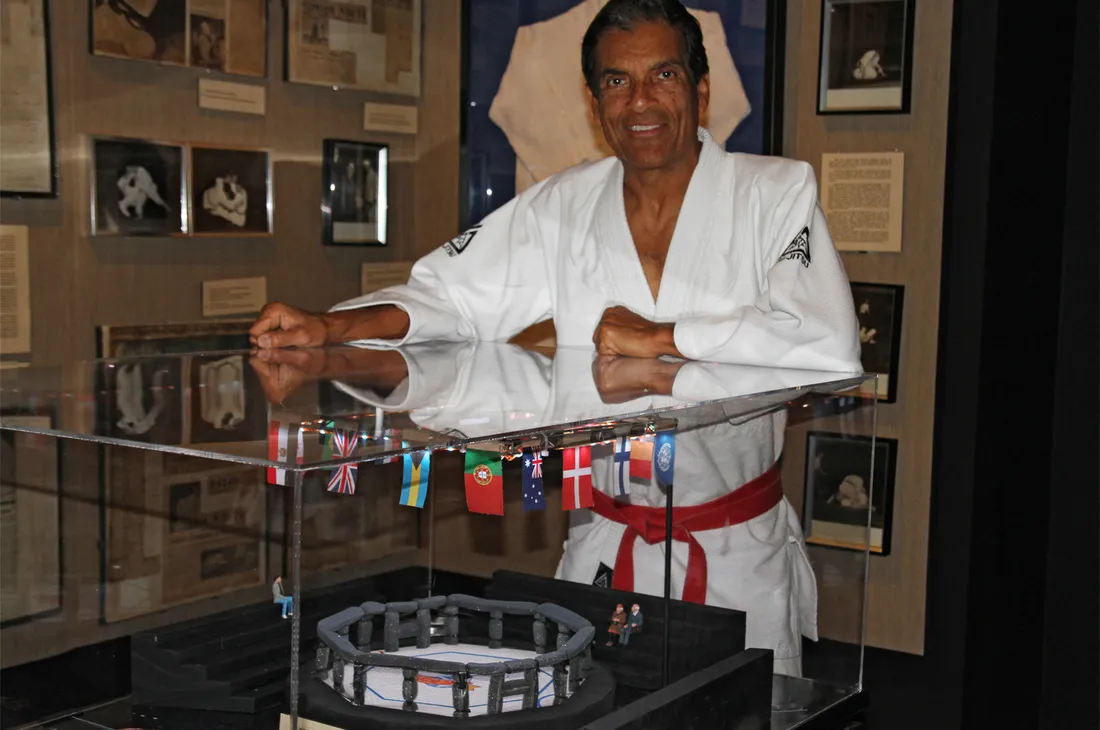
With Milius serving as creative director, the founding team began recruiting competitors by placing advertisements in martial arts magazines. While only eight competitors ultimately signed on for the inaugural event, Milius’s Hollywood credentials proved invaluable in another crucial area: securing financial backing. His name recognition helped attract 28 investors, enabling the group to establish WOW Promotions and make their television ambitions feasible.
However, Milius’s most enduring contribution to the UFC wasn’t his fundraising prowess or industry connections—it was his creative vision for how the competition would be presented. The distinctive eight-sided cage that has become synonymous with the UFC, known simply as the Octagon, is widely attributed to Milius’s imagination.
In a 2015 interview with Irish Film Critic, Milius’s son Ethan shed light on his father’s role in designing this iconic element: “My understanding was that Dad came up with the Octagon. I believe that Art Davie in his book denies this. But I think that Dad based it on the fighting pit in ‘Conan the Barbarian.'”
According to Ethan Milius, the original concept called for a recessed pit similar to the gladiatorial arena featured in Conan, complete with stadium-style seating. The design would have evoked ancient Roman combat spectacles.
However, practical considerations intervened—cameras couldn’t effectively capture the action if competitors moved against the walls of a sunken pit. The solution was to elevate the structure and replace solid walls with chain-link fencing, creating the Octagon design that would later become trademarked by Semaphore Entertainment Group.
True to his penchant for epic storytelling, Milius reportedly proposed even more theatrical elements for the first UFC event, including surrounding the Octagon with a moat filled with sharks and alligators. While this particular vision never materialized, it exemplified his commitment to creating spectacle and mythology.
Once a practical design was finalized, video director Jason Cusson was hired to construct the official Octagon. On November 12, 1993, UFC 1 took place, marking the fruition of Milius’s creative contributions and establishing his legacy beyond the silver screen.
While Milius may not have remained involved with the organization as it evolved into a multi-billion-dollar enterprise, his fingerprints remain on every UFC event. The Octagon isn’t just a competitive space—it’s a symbol of the sport itself, instantly recognizable to millions of fans worldwide.
