

AJ McKee recently addressed the controversy surrounding his dramatic entrance in a $150,000 python skin samurai suit during a Bellator event in Japan. While the spectacle garnered mixed reactions, McKee defended his decision, citing cultural respect and a personal connection to the samurai tradition.
Behind-the-Scenes Tension
On the JAXXON Podcast, McKee detailed the pushback he faced from event organizers. “They tried their best… it was a big fight before for him not to wear that suit,” explained fellow fighter Quinton “Rampage” Jackson, who witnessed the ordeal. According to McKee, the resistance primarily focused on the helmet, which closely resembled promotional materials featuring his Brazilian-Japanese opponent.
“They didn’t want me to wear the helmet specifically,” McKee confirmed, emphasizing the cultural and symbolic importance of the ensemble to his entrance.
The Historical Defense
McKee justified his choice by highlighting what he described as historical ties between samurai heritage and his own background. “If you know true samurai, they have to have at least 1% Black in them to become a true samurai,” McKee stated. “They literally have Black in their bloodline — that’s how you become samurai.”
While this claim stirred debate, McKee remained adamant that his attire was a tribute, not a mockery, of Japanese culture. “For me, I like to relate to the culture of where I’m at,” he said, framing the suit as a gesture of admiration and respect.
Fan Reactions and Legacy
Despite initial opposition from promoters, the Japanese audience reportedly embraced McKee’s tribute. “The fans loved it, bro, the fans loved it,” Rampage noted. During the entrance, McKee also tossed signed dollar bills into the crowd, a gesture that resonated with fans, some of whom resold the autographed bills for $100 each on auction sites.
The ornate suit, crafted by the same designer responsible for baseball star Shohei Ohtani’s ceremonial attire, required meticulous care. After McKee’s entrance, the craftsman personally packed the suit, which now resides in storage. “It’s literally in a little 2×2 box,” McKee shared. “When I get my house… my man cave game room, then I’m going to pull that thing out.”
Balancing Tribute and Sensitivity
The incident underscores the fine line between cultural appreciation and appropriation, particularly on an international stage. While McKee’s intentions and the fans’ response suggest a successful homage, the initial resistance highlights the sensitivities involved in representing another culture.
Is this true?
Samurai, as a distinct warrior class, emerged in Japan and were overwhelmingly of Japanese ancestry, rooted in the indigenous populations of the islands. However, Japan’s long history of trade and cultural exchanges means that genetic diversity—while limited—was not entirely absent. The notion of “Black samurai” primarily centers around Yasuke, a man of African origin who served under Oda Nobunaga, a prominent daimyo, during the late 16th century.
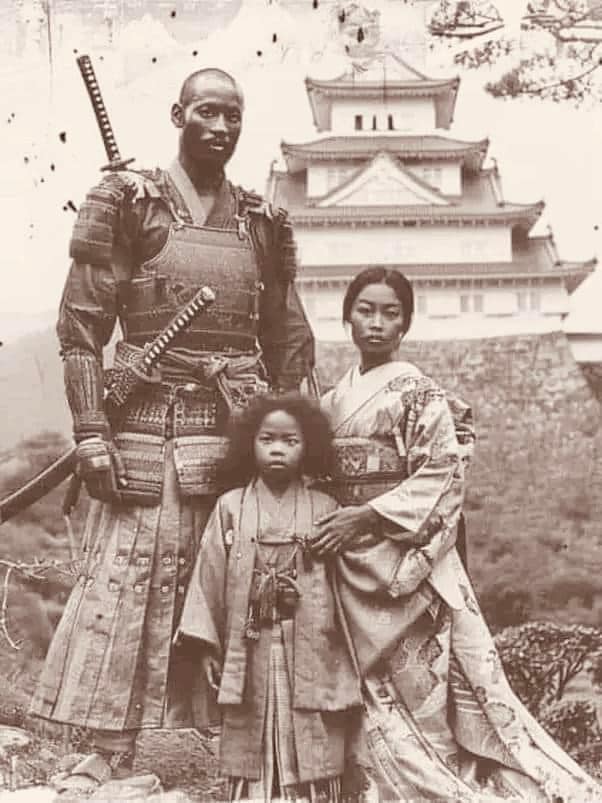
Yasuke arrived in Japan with Jesuit missionaries, possibly as a bodyguard or servant. His origins are debated but likely trace back to Mozambique or Sudan. His presence fascinated Nobunaga, and he was eventually granted the status of samurai—a remarkable exception to the otherwise homogenous samurai class.
While the samurai class was almost entirely composed of ethnic Japanese, genetic studies show some influence from migrations and interactions over millennia. However, African genetic contributions to the samurai lineage would have been negligible, aside from rare exceptions like Yasuke.
For McKee, the samurai suit symbolizes more than spectacle—it’s a testament to his spirit and a nod to the warriors of the past. Whether seen as an act of respect or a controversial choice, the legacy of the $150,000 samurai suit remains as striking as the fighter who wore it.
