
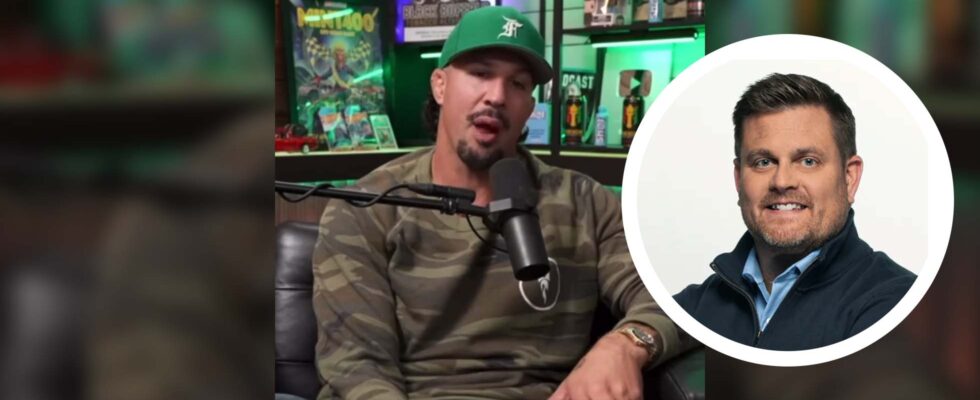
Brendan Schaub recently made headlines for being one of the very few public figures to defend the CEO of UnitedHealthcare in a highly controversial incident. Schaub’s stance diverged sharply from the broader commentary offered by most other voices in the media, positioning him as an outlier in a debate that has stirred much public discussion.
While prominent figures like Bill Burr and Joe Rogan focused on systemic issues within the healthcare industry—particularly the exploitative practices of insurance companies—Schaub took a much more personal approach in his analysis. He distanced himself from the broader, societal concerns that have dominated the conversation and chose instead to focus on individual factors.
On his podcast, Schaub dismissed the commonly held perspective that the incident was driven by corporate malfeasance or systemic healthcare failures. Instead, Schaub put the blame squarely on personal circumstances, suggesting that the shooter’s motivations were primarily rooted in pain and personal suffering. “I don’t think it’s any of that,” Schaub said, brushing off the discussions of larger healthcare issues. “I think he’s under a lot of pain.” Schaub placed particular emphasis on the shooter’s reported back injury and inability to be intimate with women, speculating that these personal challenges were the primary reasons behind the violent actions.
This viewpoint, which has been widely criticized, contrasts sharply with the views of others like Bill Burr, who openly discussed the exploitative nature of the insurance industry. Burr pointed out the troubling reality that “these insurance companies treat people when they at their most vulnerable after we’ve all given them our money every month and now we finally need you and all you do is deny us.” Burr’s critique highlights systemic issues such as the healthcare industry’s refusal to support people in times of dire need. In contrast, Schaub ignored these factors in favor of a much narrower interpretation that focused on the shooter’s physical condition and personal life.
The fact that Schaub chose to sidestep larger questions about healthcare access and the insurance industry’s practices has not gone unnoticed. His commentary has drawn considerable backlash from listeners and critics alike, many of whom accuse him of oversimplifying the situation. Schaub’s insistence on focusing only on the individual’s circumstances, while avoiding the discussion of broader societal factors, has caused many to question whether he truly grasped the complexities of the event.
Schaub’s take on the shooting incident exemplifies a pattern in his approach to discussing controversial topics. Known for his often-unconventional opinions, Schaub tends to veer away from widely accepted narratives, instead offering his own interpretations that prioritize personal experiences over larger societal issues. In this case, his defense of the UnitedHealthcare CEO seemed more like an attempt to minimize or overlook systemic problems in the healthcare industry, rather than offering a nuanced perspective on the issue.
As Schaub continues to carve out his niche in the world of podcasting and comedy, his approach to current events remains polarizing. His tendency to focus on personal struggles over institutional factors has led to an increasingly divided reception from his audience. While some listeners appreciate his willingness to voice controversial opinions, others feel that he fails to address the root causes of the issues at hand.
Ultimately, Schaub’s defense of the UnitedHealthcare CEO paints him as one of the few pundits willing to side with corporate interests in the face of widespread public criticism. Whether or not his stance will help or hurt his public image remains to be seen, but it’s clear that Schaub’s unique brand of commentary continues to spark intense debate about the role of individuals versus institutions in shaping society’s challenges.
