
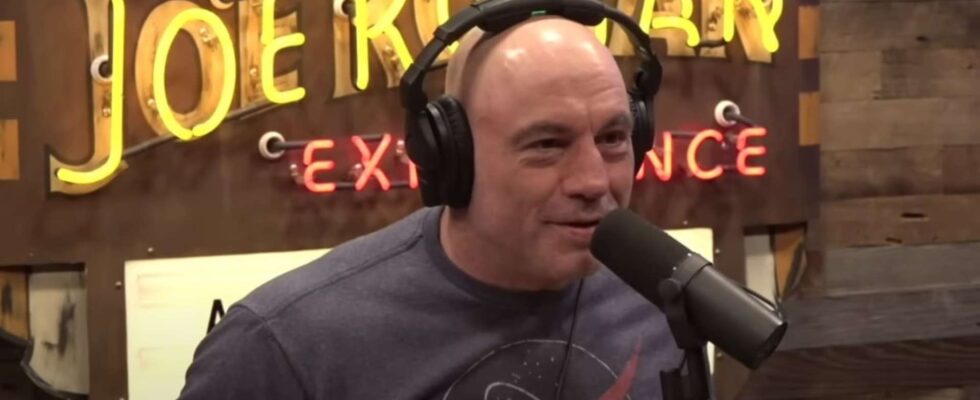
Joe Rogan’s popularity appears to have hit a new low over the past year and a half, with recent data seemingly confirming what many longtime listeners have been feeling. According to sources, much of the criticism centers on Rogan himself. Critics argue has gradually abandoned the principles that once made him relatable, becoming so wealthy and insulated that he no longer recognizes how out of touch some of his statements have become.
One example is Rogan’s insistence that success should come with its own challenges. He claims to actively seek out uncomfortable situations, explaining: “It’s very important when you’re successful to be under pressure, to do things that are hard and scary.” He doubles down, adding: “I do scary things all the time. I do things that give me a lot of pressure.”
However, Rogan’s idea of hardship increasingly looks like an exercise in expensive privilege. Hunting elk on private land, working out in a private gym, and spending time in a private sauna hardly represent the sort of challenges most people face.
For someone with hundreds of millions of dollars at his disposal, these activities might be enjoyable, but presenting them as examples of deliberately embracing adversity comes across as remarkably disconnected from reality.
His changing attitude toward gambling is another example of what critics see as a departure from his earlier principles. Rogan previously warned listeners about the addictive nature of betting, saying, “That thing [ ] people.” He went even further, comparing gambling addiction to drug addiction: “There’s no difference in the drug [ ] and the gambling [ ]. Not at all. No difference.”
Today however, Rogan regularly promotes DraftKings during his podcast episodes. Defending recreational betting, he argues: “Shouldn’t you be able to have a balanced life and also bet 500 bucks on a game that you care about? Yes.”
He also explains how placing a wager can make watching sports more entertaining: “you throw a $500 bet on it and it makes it exciting for you.”
When confronted with concerns about gambling addiction, his response is considerably less nuanced: “Don’t do it if you have a problem with it.”
The contradiction is difficult to ignore. A man worth hundreds of millions of dollars, receiving compensation to promote a gambling platform, is encouraging his audience to place $500 bets while seemingly dismissing the very risks he once emphasized.
Rogan has also maintained that criticism barely affects him, claiming, “I pay very little attention to what other people say about me. I think it’s very important. I’m peripherally aware of it.”
Yet his own comments suggest that criticism has become something he actively tries to manage. Discussing his phone arrangements, he admitted: “I have multiple phone numbers, but I’m going to switch over primarily to a different phone number and then just have that phone just for if I have to post something.”
His reluctance to engage with certain critics has also attracted attention. Rogan reportedly refused to share an elevator with Hasan, while his decision not to release a four-hour episode featuring Rick Glassman after being trolled further complicated his claims of being largely unaffected by public opinion.
These incidents may not prove that criticism gets under his skin, but they certainly complicate the image of someone completely indifferent to it.
Perhaps the biggest shift, however has been Rogan’s relationship with politics. His podcast increasingly became associated with the Trump administration and the broader political establishment surrounding it, while episodes featuring politically aligned commentators often drew criticism for their perceived lack of scrutiny.
Now, Rogan appears to be acknowledging some of those problems himself. Discussing the kinds of guests he no longer wants on his show, he stated:
“I don’t want to have on these people that I think are propagandists, that are loyal to a party to the point where they’ll just distort facts or obfuscate or talk over you when you’re trying to make points like the Piers Morgan model.”
The admission raises an obvious question: why did it take so long?
For years, Rogan built his appeal around skepticism, independent thinking, challenging conventional narratives, and refusing to blindly accept institutional authority. Those principles helped turn him into one of the most influential podcast hosts in the world.
