

Former Navy SEAL turned podcaster Shawn Ryan finds himself at the center of a growing controversy involving allegations of censorship, conflicts of interest, and what critics are calling “stealth advertising” for the prediction market platform Polymarket.
According to sources, the situation exploded after Ryan declined to publish an interview with investigative researcher known as The Leah Files, who focuses on tracking investment money in tech surveillance companies.
According to Leah, Ryan’s producers told her before recording that she could not name specific tech investors like Peter Thiel and Marc Andreessen, despite these figures being central to her research on companies like Flock cameras.
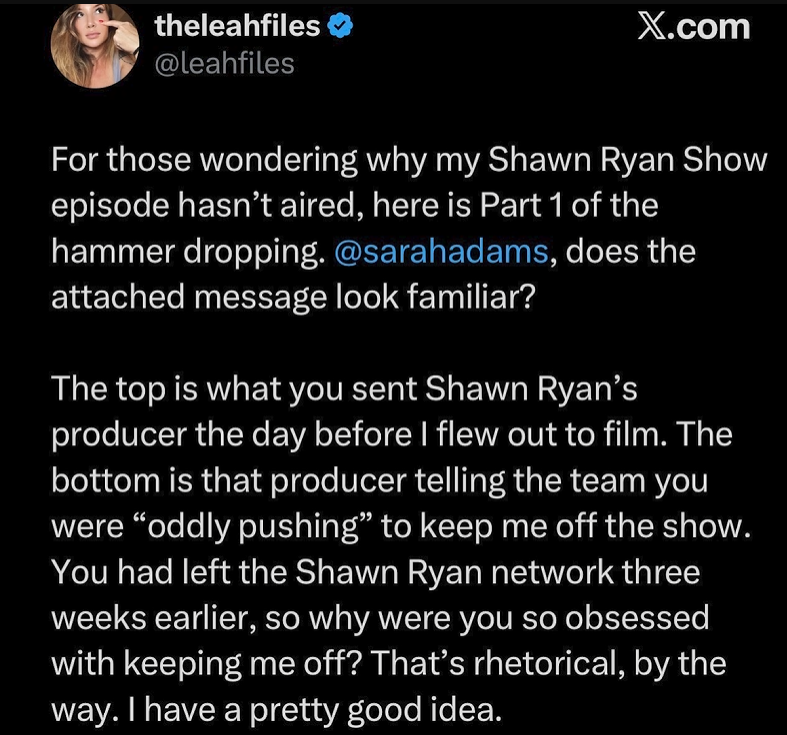
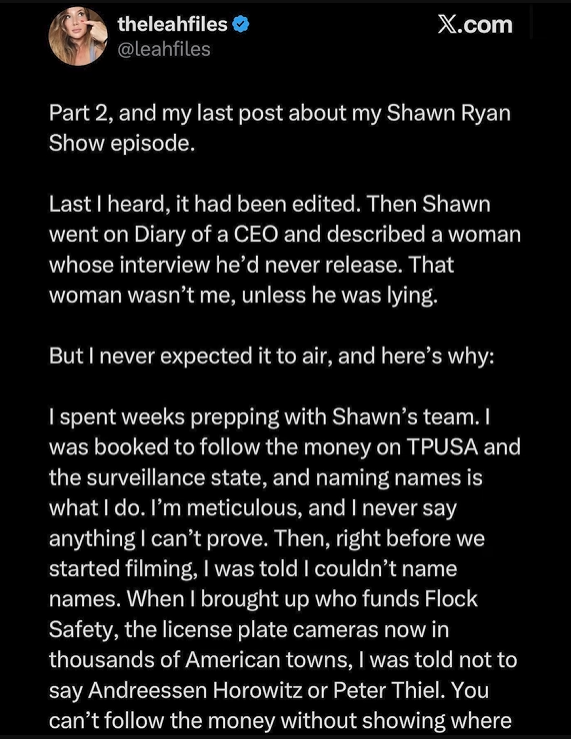
Ryan eventually released the episode after Leah went public with her account, calling her “a total fraud” but never directly addressing whether his team imposed naming restrictions.
He noted, “I didn’t release it because personally I think she is a total fraud and full of [ ]. And honestly, I also didn’t release it to help her save face a little bit, but whatever, we’ll release it.”
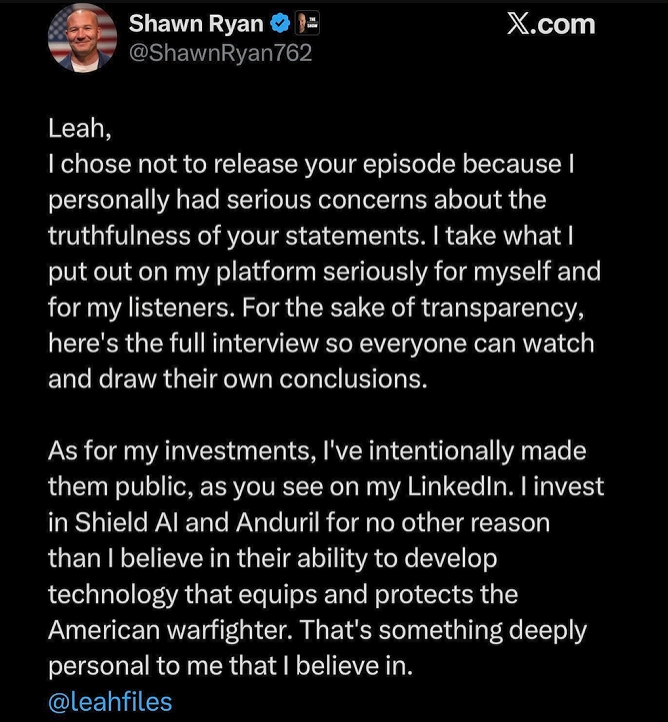
During the published interview, Leah notably refers only to “two investors” when discussing Flock’s backing rather than identifying them by name, which appeared to confirm her version of events.
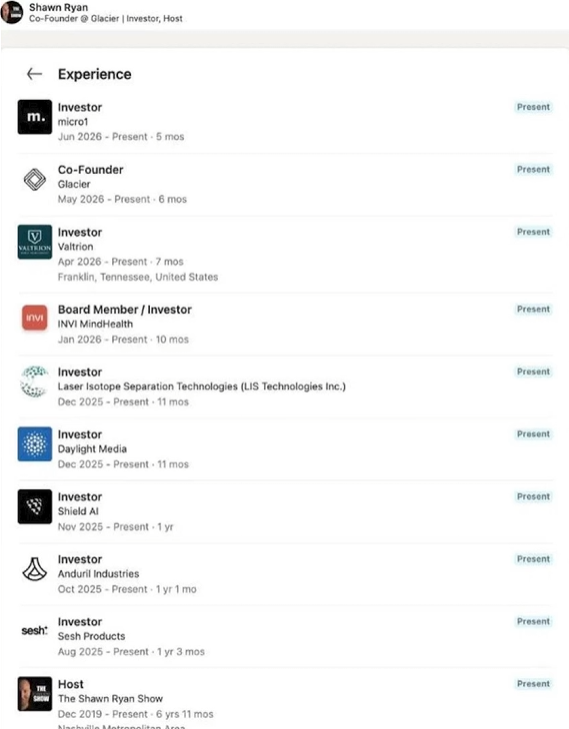
The naming restriction raised eyebrows because Ryan has extensive business relationships with the tech figures Leah wanted to discuss. His LinkedIn shows investments in companies like Shield AI and Anduril, both backed by Andreessen and Thiel. Ryan also promotes products from companies where Thiel holds major stakes, including the AI platform Claude.
Most significantly, Ryan regularly mentions Polymarket throughout his episodes in what appears to be sponsored content, though he rarely discloses this clearly. Thiel is a major Polymarket investor, and the platform is backed by Donald Trump Jr.
Rather than traditional ad reads, Ryan weaves Polymarket references into conversations organically, citing odds on topics like the Epstein files release or political races. These mentions often appear on cue cards visible during filming, with the website displayed on screen, yet Polymarket frequently does not appear under listed sponsors in video descriptions.
Observers note that Ryan’s Polymarket promotions operate differently than standard podcast advertising. He casually references the platform while discussing topics, making statements like “Polymarket gives it a 3% chance we get the Epstein files by the end of the year” during conversations. This approach makes it difficult for some viewers to recognize they are watching sponsored content.
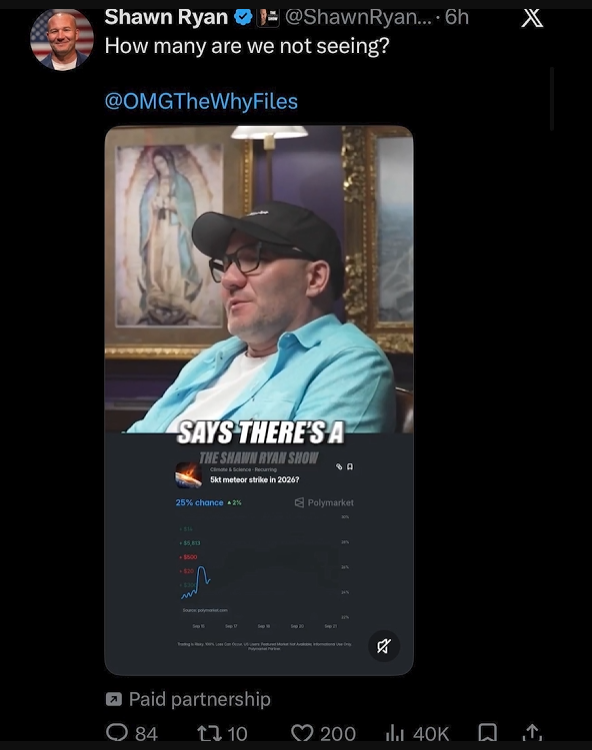
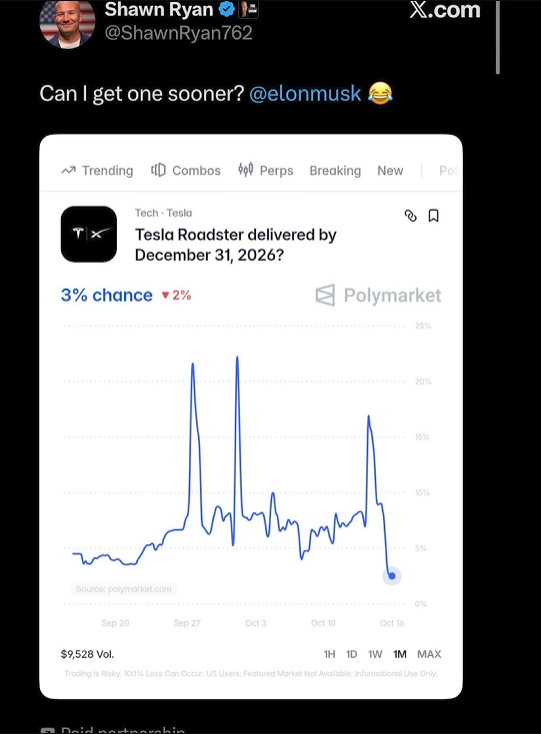
Ryan’s investments add to the complexity. He invested in Shield AI and Anduril, both Department of Defense contractors, shortly before military actions that benefited these companies. Critics point out the tension between Ryan’s public criticism of the Iran conflict and his financial stake in companies profiting from military operations.
Former guest Shawn Webb claimed that Pentagon officials contacted Ryan about Webb’s podcast appearances and subsequently influenced who could appear on the show. Webb suggested this Pentagon pressure ended his relationship with the podcast.
The controversy divided the community that Ryan has cultivated. Candace Owens defended Ryan vigorously, stating she faced no restrictions when discussing Epstein or Thiel on his show.
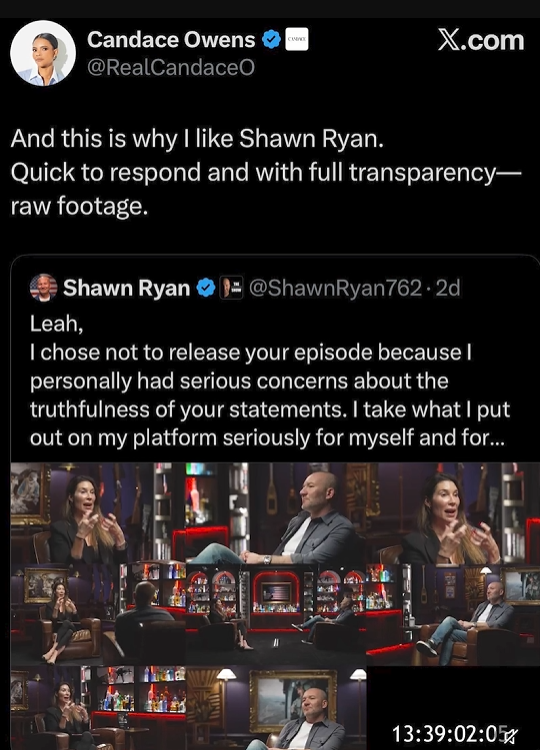
However, it later emerged that Owens was simultaneously running advertisements for Glacier, Ryan’s privacy app, raising questions about her objectivity.
The defense of Ryan became more complicated when Owens claimed unfamiliarity with Glacier despite promoting it, only to later write detailed rebuttals of technical criticism about the app. The contradiction undermined attempts to portray the advertising relationship as inconsequential.
Critics note the unusual nature of Ryan’s position: he discusses tech surveillance and privacy concerns while maintaining close business ties with major investors in surveillance companies. He promotes a privacy app while partnered with figures backing the very technologies his audience fears.
Ian Carroll, a researcher who has appeared on major podcasts, stated he has never been told to avoid naming individuals during interviews, even on shows considered more commercially driven. This made Ryan’s alleged restrictions stand out as particularly unusual in podcasting.
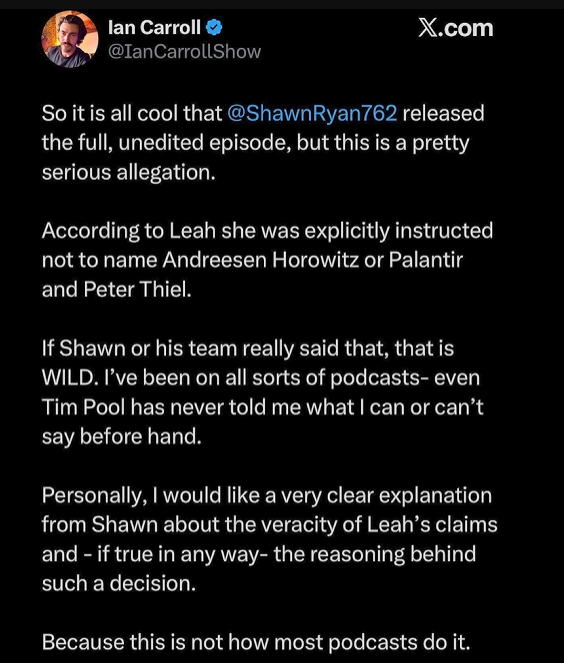
Ryan’s case proves especially stark given his shift from interviewing military personnel to hosting tech investors and politicians, followed by recent criticism of those same political circles.
