
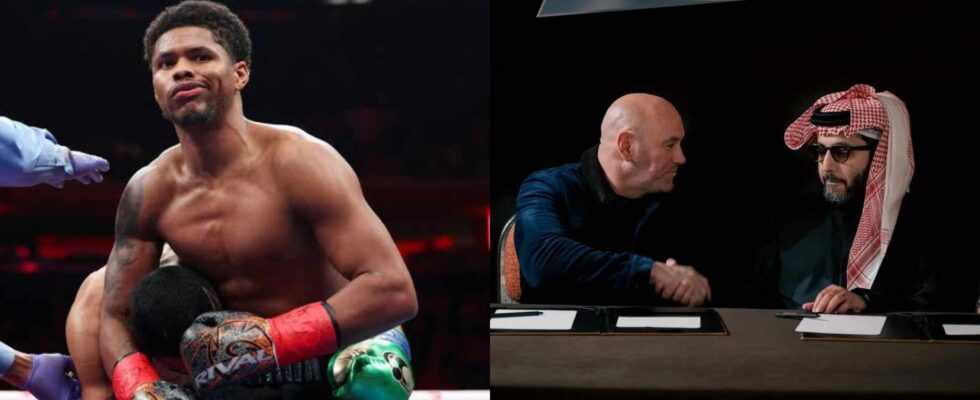
Legendary boxing promoter Bob Arum has raised serious questions about the long-term viability of Zuffa Boxing’s presence in the sport, suggesting that the company’s reliance on Saudi Arabian funding may be reaching its limits.
According to Arum, the financial landscape that initially enabled Zuffa Boxing to enter the promotional business has shifted dramatically. The Saudi investment in boxing through entities like Sportabox brought significant capital to the sport, but Arum believes the spending model was fundamentally flawed from the start.
“The problem is that the Saudis have thrown a lot of money into the Sportabox, which in a way is a very good thing,” Arum explained. “Unfortunately, what is the bad thing is they have been paying purses which are way out of the realm of economic responsibility.”
The Top Rank founder pointed to a critical issue with the Saudi-backed approach: paying unsustainable purses that don’t align with realistic revenue projections.
“In other words, if you’re going to run these promotions and hope to make a profit from it, you can’t continue to pay these first,” he said, noting that the Saudi backers have recently become more selective with their investments.
This shift in Saudi spending has created opportunities for established promoters. Arum noted that the changing financial environment allowed Top Rank to secure a quality matchup between Emanuel Navarrete and Oscar Valdez at economically sensible terms.
“That’s the importance, getting the top guys to compete against each other in an entertaining match,” he said.
The most visible evidence of Zuffa Boxing’s financial challenges came with the departure of Shakur Stevenson, who left the promotional outfit before ever competing under their banner. Arum was direct in his assessment of what went wrong.
“Well, Zuffa Boxing felt that they had a bankroll in the Saudis. And they felt that whatever talent they get, would be able to finance it through Saudi Arabia. Well, that’s no longer the case anymore,” Arum stated.
He questioned the fundamental economics of Stevenson’s reported deal: “And so you can’t have a contract with an athlete to pay him $15 million, no matter who he’s going to compete against and hope to do it profitably. It just won’t work.”
The veteran promoter emphasized that while Zuffa Boxing and Stevenson mutually agreed to part ways, the contract structure never made business sense. “I mean, $15 million, where is it going to come from? At the end of the day, if it’s going to be a business, the numbers got to make sense,” he said.
Looking ahead, Arum sees limited pathways for Zuffa Boxing’s future in the sport. The company has reportedly told shareholders they won’t invest their own capital into boxing operations, which Arum believes creates an insurmountable obstacle.
“If they’re going to continue with their plan that they’re not going to spend their own money, and they’ve said that to their shareholder, then they’ve got no chance,” Arum said. “If they’re going to spend their money, then like everybody else, they can put on good matches.”
Beyond simple financial considerations, Arum identified a deeper structural problem for Zuffa Boxing related to their parent company’s core business in mixed martial arts. The UFC has faced legal challenges from athletes claiming monopolistic practices, settling one case for $380 million with another potentially larger settlement pending.
This creates what Arum described as a significant legal exposure if Zuffa Boxing commits substantial resources to boxing promotion.
“If Zuffa continues in boxing and spends money that it would take to promote these events, they’re gonna sure as hell get a lawsuit from their athletes and they can easily prove to a judge that they’re being underpaid because why is a boxer promoted by Zuffa getting all this money and myself from UFC not even though we’re both headliners,” he explained.
The Hall of Fame promoter suggested these legal considerations force Zuffa Boxing into difficult strategic decisions about whether a sustainable future exists in boxing once Saudi involvement diminishes.
“So they have some serious questions to consider whether after the sortie involvement ends, whether there’s a future for them in boxing. How it’s gonna come out, I don’t know,” Arum concluded, adding diplomatically, “I have nothing bad to say about Dana White.”
