

The world of professional bodybuilding has always pushed boundaries, but recent revelations from young competitors reveal a sport spiraling into dangerous territory. What was once about discipline and physique has transformed into a pharmaceutical arms race, with teenagers wagering their health and futures for a chance at glory.
According to sources, Logan Dishman started his journey like many young lifters, inspired by watching his father train. But social media changed everything. Enhanced physiques weren’t just visible, they were celebrated.
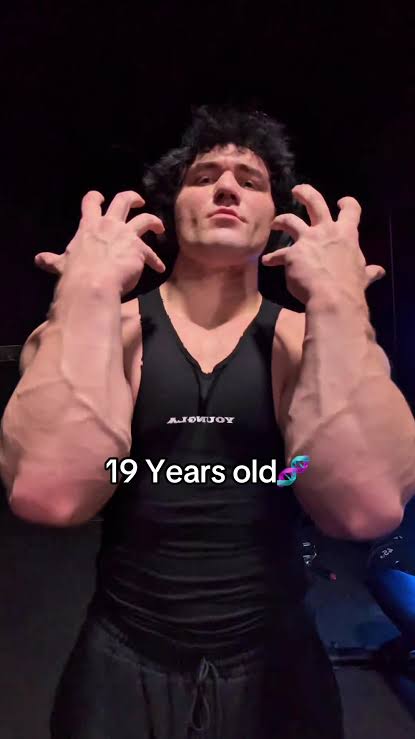
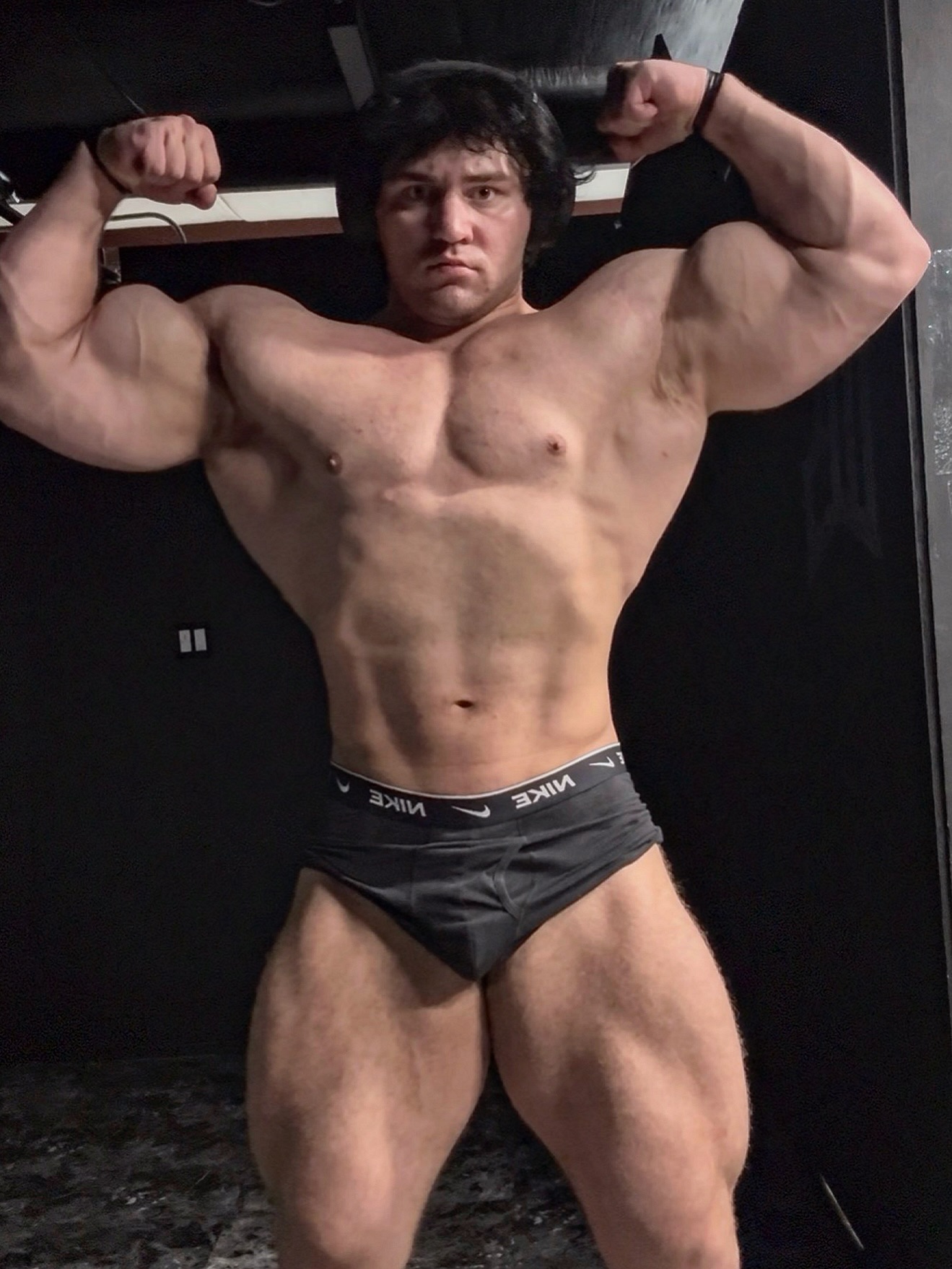
By age 17 and a half, Dishman was using PEDs. At 260 lbs (118 kg), the teenager casually discusses dosages that would alarm medical professionals: 400-800 milligrams of testosterone during his offseason, escalating to combinations of multiple compounds during competition preparation.
The side effects came quickly. “Especially in the beginning, I had a lot of side effects. Mental crazy mental side effects. It would got to the point where like I was hearing voices,” Dishman revealed.
Sleep became impossible. Relationships deteriorated. Yet when asked if he would accept dying at 45 in exchange for winning Mr. Olympia, his answer was immediate: “I pick the Olympia.”
Sjo Herben represents an even more strange case. The Netherlands-based bodybuilder admits to taking up to 4,700 milligrams of various compounds at his peak. His chest bears permanent scars from medication-induced acne. He survives primarily on processed cream of rice and has developed a nicotine vaping habit to suppress appetite.
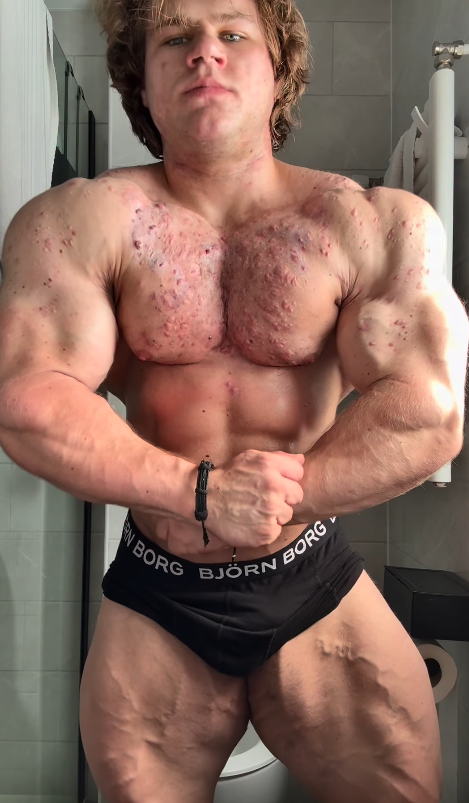
Like Dishman, Herben would accept premature death for competitive success, though he acknowledges his girlfriend has given him more reason to prioritize longevity.
The accessibility of these PEDs compounds the problem. A Las Vegas dealer speaking anonymously, confirmed he supplies customers as young as 14 or 15 years old.
“It’s not the [ ] that kills, it’s the dose,” he claimed, showing zero concern for buyer safety. Research indicates 36% of black market substances are counterfeit, with another 37% substandard—users literally have no idea what they’re injecting.
Dr. Ernst von Schwarz, a celebrity cardiologist explained the cardiovascular consequences. Testosterone enlarges heart muscle cells, thickening ventricle walls and compromising oxygen supply. Heavy lifting creates enormous vascular stress. Many bodybuilders develop aortas measuring 4 centimeters instead of the normal 2.5-2.8 centimeters.
“I have seen two young bodybuilders who overdose someone hormones awesome of sudden death. They were in their 20s, late 20s,” von Schwarz stated. One patient injected growth hormones intended for racehorses, both users died before reaching 30.
The struggle extends beyond physical health. Multiple professional bodybuilders described relationships destroyed by the sport’s demands. One competitor recalled eating alone at a restaurant on his birthday, desperate to “feel something” after months of restrictive dieting.
Another admitted to chewing and spitting food to avoid consuming calories. Post-competition binge eating affects many athletes, with some gaining 20-40 pounds within weeks, creating dangerous fluid buildup that can overwhelm the heart and lungs.
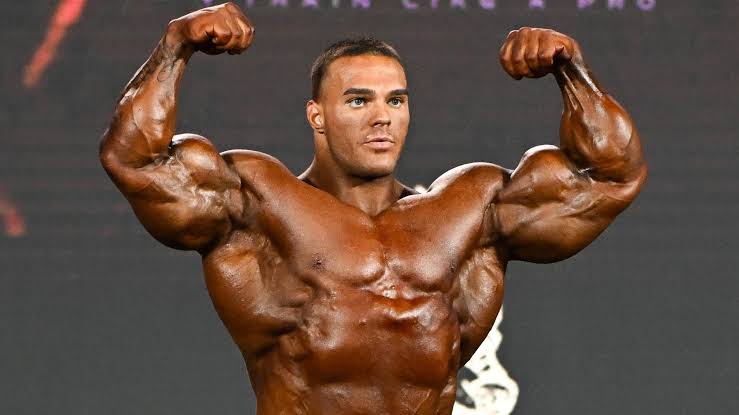
Current Mr. Olympia champion Nick Walker acknowledged the all-consuming nature of his pursuit. “You sacrifice like everything you have,” he said, describing missed family events and constant isolation. Yet surrounded by loved ones after his victory, he felt it was worth it.
The sport faces a critical crossroads. As competitors grow younger and pharma experimentation intensifies, the bodybuilding community must confront an uncomfortable truth: the pursuit of the perfect physique has become a threat to the athletes chasing it. The “whatever it takes” mentality once celebrated, now requires serious reconsideration before more young lives are permanently altered or lost.
