
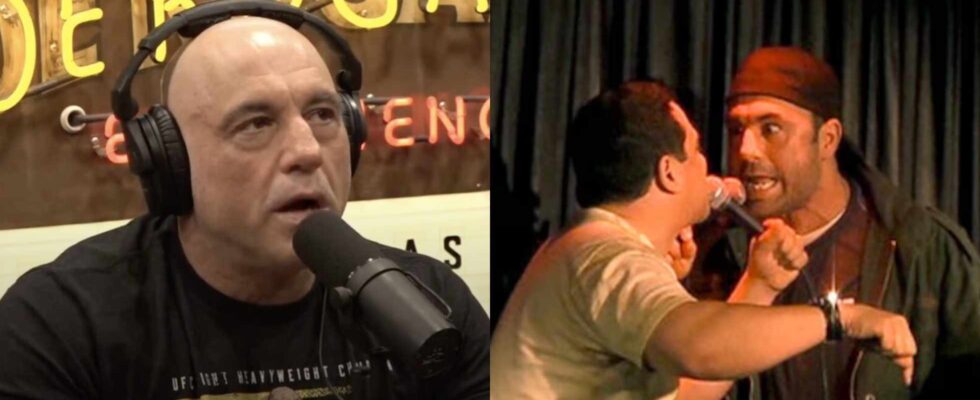
During a recent episode of The Joe Rogan Experience featuring Texas comedian Ali Siddiq, the conversation briefly landed on the tax fraud arrest of Carlos Mencia, the comedian whose career Rogan derailed nearly two decades ago after publicly calling him out for stealing jokes.
The topic arose naturally as Siddiq and Rogan were discussing people who build their public identities on deception and the way that approach tends to collapse eventually.
Rogan drew a direct parallel to Mencia’s recent legal troubles, telling Rogan: “Like when they arrested Carlos Mencia recently for like all his counts of tax fraud. I was like, I don’t want that to happen to him. But there it is, right? I mean, that’s what it is.”
Rogan laughed, though he made clear almost immediately that the news brought him no satisfaction. “I didn’t, I wasn’t… it didn’t bring me any joy to see that,” he said, adding: “I don’t like anybody getting arrested for taxes.”
Rogan’s objection was rooted in a frustration with how governments handle public funds.
“I think taxes, until they have an accurate account of where the money goes and until you completely eliminate all fraud and waste, what are you doing locking people up for not paying taxes? You guys should get locked up for not doing a good job with our money,” he said.
Rogan’s history with Mencia dates back to a now-legendary 2007 confrontation at The Comedy Store in Los Angeles, where he called Mencia out on stage for taking material from other comedians.
The exchange, captured on video and widely circulated online, effectively ended Mencia’s mainstream career and contributed to the cancellation of his long-running Comedy Central series.
Despite that history, Rogan showed no interest in taking pleasure in Mencia’s legal problems. His remarks quickly widened into a general argument about government accountability, pointing to reports about a proposed White House ballroom renovation projected to cost around 600 million dollars, with roughly 300 million of that drawn from government accounts.
“When you find out just how much fraud there is in nonprofits, how much fraud is in insider trading and propping up companies so that they can get better deals,” he said, “the whole thing is fraud.”
