
Some of America’s biggest food companies are bracing for significant financial losses as a wave of new state laws reshape what consumers can buy with federal food assistance benefits.
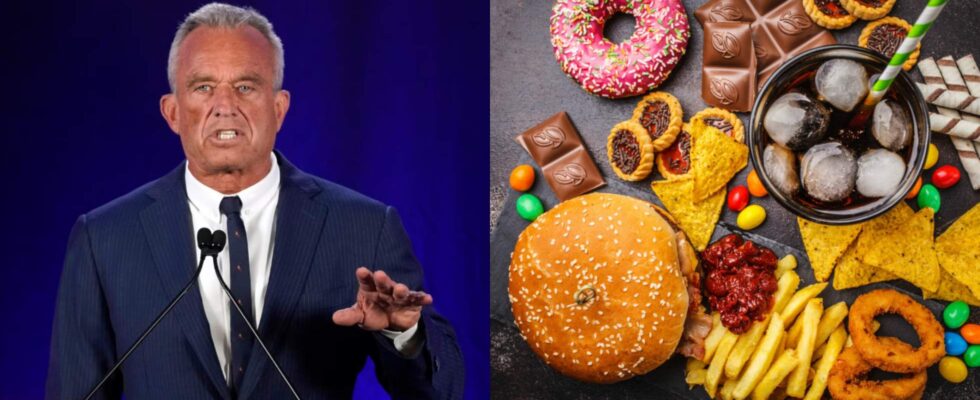
Iowa recently became one of the latest states to sign legislation inspired by the Make America Healthy Again movement, championed by Health and Human Services Secretary Robert F. Kennedy Jr. The law restricts recipients of SNAP benefits from using them to purchase sugary drinks like soda and candy, and also cracks down on synthetic petroleum-based food dyes in schools.
Supporters framed the move as a public health win. “Iowa is leading by improving nutrition, strengthening public health and building a stronger future for American children and families,” RFK Jr. said.
Iowa is far from alone. The USDA has approved food restriction waivers in more than 20 states, which together account for nearly one third of all SNAP participants in the country. According to research firm Numerator, those restrictions could reduce food and beverage sales by as much as $830 million this year alone.
The categories most exposed are exactly the ones that have long driven revenue for major food brands: candy, soda, and snacks. Companies including PepsiCo, Coca-Cola, Kraft Heinz, Hershey, General Mills, and J.M. Smucker are all paying close attention to how the policy continues to evolve.
Hershey has already begun studying SNAP shoppers to understand how their buying habits might shift under the new rules, looking at everything from product swaps to budget tradeoffs.
The company said in a statement that it “has observed some consumer uncertainty regarding the new changes,” and that it “anticipates this will improve as store execution improves, rules become clearer and Snap users can plan and budget with more certainty.”
Not every executive is raising red flags yet. J.M. Smucker CEO Mark Smucker said the changes implemented so far have not had a meaningful impact on the company, though he acknowledged there is still a lot of uncertainty ahead.
Part of that uncertainty comes from the scope of potential future restrictions. While most current limitations target soda and candy, some states are weighing broader definitions that could eventually pull other packaged snacks into the conversation.
There is also growing pressure on companies to reformulate their products. Kennedy’s push to eliminate artificial colors has accelerated efforts across the food industry, with several manufacturers pledging in 2025 to remove certain synthetic dyes and additives by 2027 or sooner. Nestle recently announced it has already met that timeline.
What started as a public health movement is now forcing some of the country’s largest food companies to rethink their products, their customers, and their futures.
