
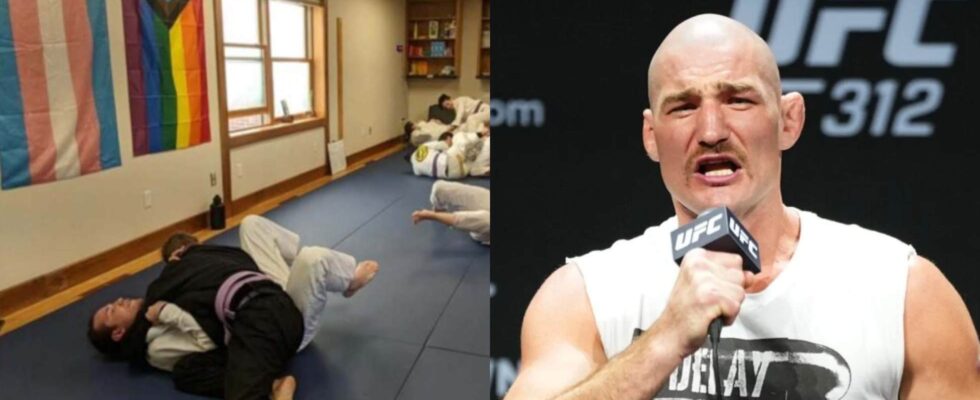
Two Brazilian jiu-jitsu black belts have voiced concern over what they see as a growing trend of anti-transgender rhetoric within combat sports, suggesting that some UFC figures may be leveraging the issue in a way that draws attention and engagement online.
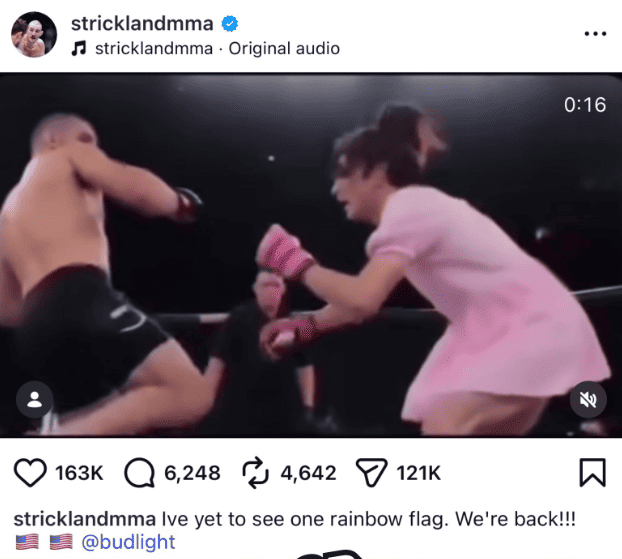
Their comments come amid ongoing controversy surrounding Sean Strickland, who recently circulated an AI-generated video depicting himself in a violent scenario involving a transgender woman inside the octagon.
Black belt Mike Mahaffey, said, “There’s only one reason somebody would do that, and it’s if they ha te trans people and want to cause harm to them,” adding criticism of the lack of response from major UFC leadership. “No word from Dana White on this. Nobody with any real power is calling this out.”
The discussion also touched on debates around transgender participation in sport. “That argument is covering fire that a lot of really terrible people use to threaten violence,” Steve Kwan said. “We need to call a spade a spade and not pretend that what Strickland and these other people are doing is based on any sort of meaningful fact or public political statement. It’s just a straight-up call to harm.”
Kwan also referenced stars such as Jake Shields and Bryce Mitchell, suggesting that segments of the MMA ecosystem have built followings around similarly provocative commentary.
“It’s a deliberate money-making approach because he knows it’s going to rile up a certain type of person,” he said, adding uncertainty about intent but pointing to financial incentives.
While this incident reflects concerns shared in certain academic, coaching, and advocacy circles, it is not necessarily representative of the wider fanbase or practitioner base of BJJ and MMA. Opinions on transgender participation in sport and related discourse remain highly varied and often divided.
Within much of the MMA and BJJ community, discussions around these topics tend to be more fragmented, with many practitioners focusing primarily on competitive, technical, or sport-specific considerations rather than the cultural and political interpretations raised here.
