
When Louis Theroux appeared on Chris Williamson’s podcast to discuss his new Netflix documentary on the manosphere, the conversation took a turn toward a question that clearly matters to Theroux personally: where does the manosphere actually begin and end?
Williamson, who has faced his own accusations of being manosphere-adjacent, raised the issue directly, pointing out that figures like Jordan Peterson and Andrew Huberman get lumped under the same label as Myron Gaines and Andrew Tate. Theroux did not disagree.
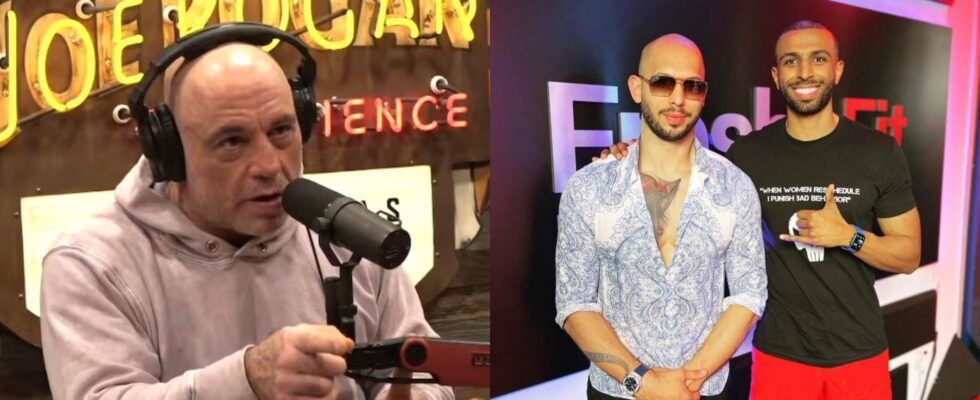
“The term is highly inexact,” Theroux said, “and actually you’re right and I’ve been on Theo Von and I’ve been on Joe Rogan and I like those guys and I know those have been characterized as manosphere.”
For Theroux, the problem is one of conflation. The word manosphere has expanded so far that it has begun to lose descriptive value altogether, grouping together people whose worldviews have almost nothing in common.
Theroux made clear that his documentary was not designed to hold up fitness culture or hustle content as the face of something dangerous.
“I said many times like I’m not about to make a film where it’s like look at these guys,” he explained. “They like to have big muscles and they want to make a lot of money, you know, hustle bro culture and whatnot. I don’t find that interesting.”
Instead, Theroux was explicit that the film targets a specific and self-identified corner of the internet. “We do try and clarify in the documentary like this is the ex treme end of a certain world,” he said, citing a tight network that includes Sneko, Justin Waller, Myron from Fresh and Fit, Nick Fuentes, and Andrew Tate as examples of the community he was actually investigating.
“There’s a huge gulf, there’s a huge spectrum within the so-called manosphere community,” Theroux said. “The more we can avoid a conflation of, you know, everyone who happens to have a male audience or everyone who advocates for some sort of sense of like there’s certain things that are helpful for men and it’s good for their mental health.”
Williamson added his own framing: “Shared audiences don’t really indicate shared motives.” He noted that the term manosphere had essentially concept-crept to the point where it now functions more as a pejorative catchall than a meaningful category.
Theroux agreed, noting that what truly distinguishes the figures in his documentary is not that they talk about male identity, but that they combine a paranoid conspiratorial mindset with what he described as “utterly cynical cli ckbait-based content creation,” all in service of a financial angle directed at a vulnerable young audience.
Joe Rogan, in Theroux’s reading, does not belong in that company.
