
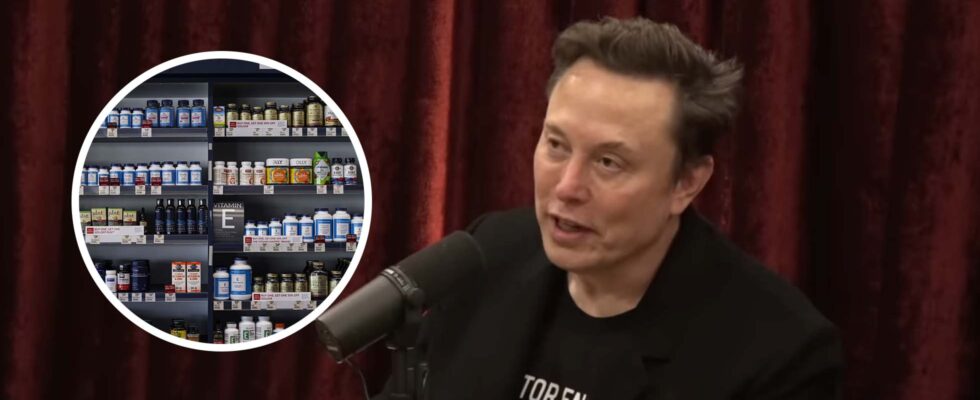
In a revealing moment during his appearance on The Joe Rogan Experience, Elon Musk shared an experience that highlights a troubling aspect of modern healthcare, doctors selling unnecessary treatments to wealthy patients in high-rent districts.
Musk recounted visiting a highly recommended physician, described as a “doctor to the stars,” for routine blood work. During the office visit, the doctor informed him he was B12 deficient and needed to begin taking specialized vitamin supplements immediately. The doctor provided a starter pack and explained the ongoing treatment would cost approximately $1,000 per month.
It’s rumored the physican in question is Dr Daniel Amen – who sells his own supplements and recently got confronted about it.
The situation took an absurd turn when Musk reviewed his actual blood test results at home. According to the lab work, he didn’t have a B12 deficiency at all. In fact, the results showed he had excess B12, with levels above the recommended range. The prescribed supplements contained a staggering 20,000 percent of the recommended daily dose.
When Musk confronted the doctor with photographic evidence of both the blood work showing excess B12 and the supplement facts showing the extreme dosage, the physician’s response was dismissive:
“You can never have too much B12.”
This exchange occurred approximately five years ago, before advanced AI health analysis tools became available. Musk noted that today, patients can photograph their blood work and upload it to an LLM, which can provide accurate medical interpretations and catch such glaring inconsistencies.
Musk acknowledged that while excellent physicians practice in places like Beverly Hills, the high overhead costs can create temptation to recommend unnecessary treatments.
The experience also underscores a broader conversation about medical transparency and the potential for technology to empower patients. With AI-powered health analysis becoming increasingly sophisticated and accessible, individuals now have tools to verify their doctors’ recommendations and catch potentially harmful or fraudulent medical advice.
Musk’s story resonates with growing concerns about the commercialization of healthcare and the importance of patients being informed advocates for their own health rather than passive recipients of potentially profit-driven recommendations.dations.
