

Table Tennis England is poised to introduce significant changes to its competitive framework, with new regulations prohibiting transgender women from participating in female competitions beginning in August 2026.
According to sources, the sporting body joins an expanding list of English sports organisations—including football, cricket, and netball—that have revised their eligibility criteria following a landmark legal decision.
This shift follows April’s Supreme Court ruling, which established that the legal definition of “woman” under the Equality Act is determined by biological sex rather than gender identity.
The forthcoming policy explicitly states that transgender females will be “eligible to play in the category of their biological sex.” Notably, the regulations will permit transgender men to continue competing in male tournaments, creating an asymmetrical approach to inclusion across categories.
While the policy awaits the completion of its consultation process, its scope will be limited to official competitions regulated by Table Tennis England. Recreational and amateur matches outside the governing body’s jurisdiction will remain unaffected by these restrictions.
Fiona McAnena, director of campaigns at Sex Matters, expressed support for the decision. “It’s great to see Table Tennis England joining other sporting bodies in finally restoring common sense and fairness for women in their competitions,” she told The Telegraph. She emphasised the physical advantages that male athletes possess in the sport, arguing that maintaining separate categories is essential for competitive equity.
McAnena added: “Separate women’s events exist because men have a physical advantage over women in table tennis, so allowing men who say they are women to compete in female competitions was always deeply unfair and unjustifiable.”
The draft policy has drawn scrutiny for its terminology, particularly the phrase “assigned female at birth,” which critics argue suggests that biological sex is arbitrarily determined rather than observed at birth.
The policy employs this language when defining transgender individuals, describing a transgender woman as “a term used to describe someone who is assigned male at birth but identifies and lives as a woman.”
McAnena suggested the organisation should reconsider this terminology, stating: “As part of this welcome policy change, TTE should take the opportunity to distance itself from nonsense trans activist language such as ‘assigned at birth’ and should encourage sex-based fairness at every level.”
She further advocated for extending these principles beyond competitive settings: “Women and girls who have signed up for women’s matches, even if amateur or casual, should not find themselves facing a male opponent.”
The sport’s most prominent transgender athlete is Luca Kumahara, a Brazilian player who transitioned from female to male and now competes in men’s events, demonstrating that transgender participation exists across multiple directions within the sport.
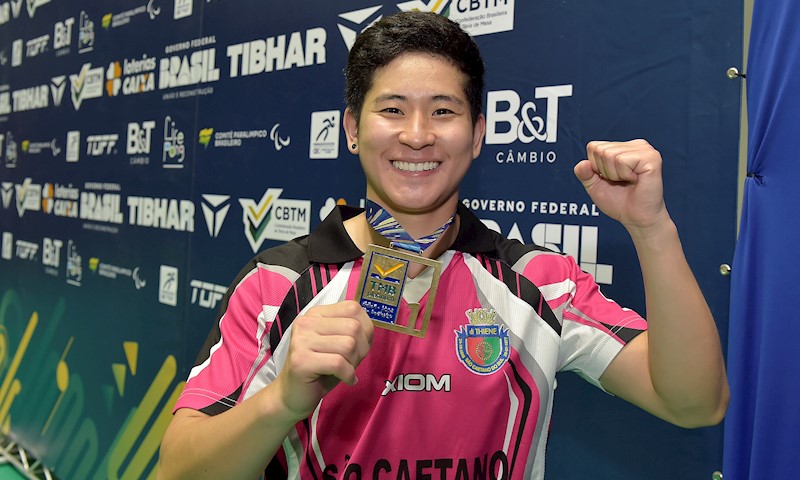
Table Tennis England declined to provide comment during the ongoing consultation period.
Recently, many public institutions have delayed implementing changes following the Supreme Court judgment, awaiting updated guidance from the Equality and Human Rights Commission (EHRC).
This guidance, expected from Bridget Phillipson, the Minister for Women and Equalities, has reportedly been subject to delays, leading to criticism from those seeking clarity.
The EHRC has urged public bodies to comply with the Supreme Court’s determination in the interim, though the delayed guidance has left some organisations uncertain about how to proceed.
Recent weeks have seen other prominent organisations, including the Women’s Institute and Girlguiding, announce their own restrictions on transgender membership.
