In a surprising turn from his usual controversial takes Sean Strickland has emerged as an unlikely advocate for one of the fitness world’s most debated supplements. While recent studies question creatine’s muscle-building benefits Strickland’s endorsement comes from an entirely different angle—its impact on neurological health.
The former UFC champion recently opened up about his personal experience with creatine supplementation revealing struggles that many wouldn’t expect from a professional MMA star.
“My entire life dude this brain real f***ing r*tarded doesn’t work right,”
Strickland candidly shared in a video transcript.
“It doesn’t work right i’ve had like nervous like twitches i mean i could f***ing talk for hours about how f***ing weird it is.”
What makes Strickland’s testimony particularly compelling is the unexpected discovery that led to his creatine advocacy. It wasn’t a coach or nutritionist who pointed him toward the supplement—it was his girlfriend who noticed a pattern.
“My girl said hey it could be a coincidence but every time you stop taking creatine like twitches or ticks get like significantly worse,”
he explained.
This personal observation prompted Strickland to investigate further leading him to research connecting creatine to neurological function.
“I finally looked it up and there’s like definitely a correlation between like pgst the nervous system and creatine so i’m a f***ing believer and you guys should all take creatine,”
he concluded.
Strickland’s experience aligns with emerging research on creatine’s neurological benefits even as new studies challenge its reputation as a muscle-building powerhouse. A recent University of New South Wales study found that creatine supplementation doesn’t significantly enhance muscle growth beyond what exercise alone provides contradicting decades of fitness industry wisdom.
Dr. Mandy Hagstrom the study’s senior author noted that previous research may have been skewed by creatine’s water-retention properties.
“We’ve shown that taking 5 grams of creatine supplement per day does not make any difference to the amount of lean muscle mass people put on while resistance training,”
she stated.
However Strickland’s focus isn’t on physical gains but mental stability. On social media he’s described creatine as working
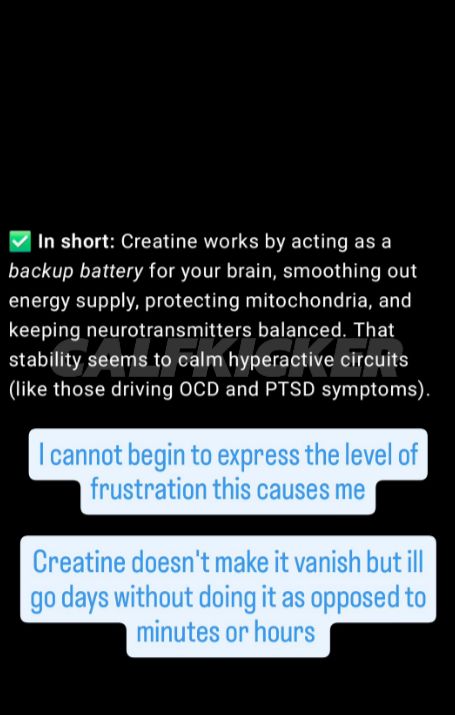
“by acting as a backup battery for your brain, smoothing out energy supply, protecting mitochondria, and keeping neurotransmitters balanced.”
He credits this neurological support with calming what he describes as hyperactive brain circuits.
The UFC athlete has been remarkably open about how creatine affects his daily life particularly regarding repetitive behaviors that previously caused him significant distress. While he acknowledges that creatine doesn’t eliminate these challenges entirely he reports dramatic improvements in frequency and intensity.
This neurological angle represents a fascinating shift in how some athletes view supplementation. Rather than chasing marginal physical performance gains Strickland’s approach focuses on mental wellness and neurological stability—benefits that may prove more significant than traditional metrics.
Interestingly Strickland’s advocacy comes at a time when supplement experts are increasingly skeptical of popular products. Dr. Mike from Renaissance Periodization recently identified several overrated supplements that generate billions in sales despite minimal benefits though creatine notably didn’t make his disappointment list.
The disconnect between creatine’s muscle-building reputation and its potential neurological benefits highlights how supplement research continues to evolve. While the UNSW study challenges creatine’s status as a hypertrophy enhancer researchers suggest future studies should examine higher doses and longer trial periods.
For Strickland the debate over muscle gains is irrelevant. His creatine use stems from tangible improvements in neurological symptoms that have affected his quality of life.
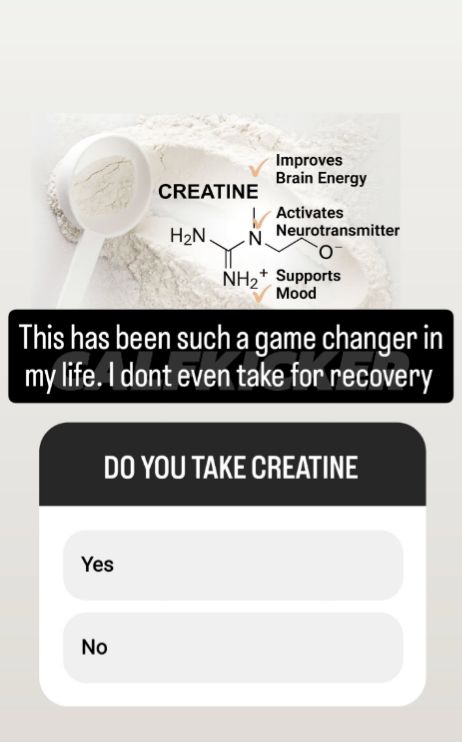
“This has been such a game changer in my life. I dont even take for recovery,”
he shared on social media emphasizing that his motivation extends far beyond athletic performance.
The MMA star’s unexpected role as a wellness advocate demonstrates how personal experience can sometimes lead to insights that formal research is still catching up to. While scientists continue investigating creatine’s various effects Strickland’s testimony adds another dimension to discussions about this widely-used supplement.
His message to followers is straightforward: the benefits he’s experienced have made him
“a f***ing believer”
in creatine’s potential particularly for neurological health. Whether this perspective will influence how others approach supplementation remains to be seen but it certainly adds complexity to ongoing debates about creatine’s true value.