

Australia’s Quillan Salkilld has publicly accused veteran commentator Daniel Cormier of actively coaching his opponent during their bout at UFC 316, raising serious questions about broadcast neutrality.
The controversy stems from Salkilld’s recent interview with Jon Bernard-Kairouz, where the 2-0 UFC star made a startling claim about what he heard during his contest. According to Salkilld, Cormier crossed professional boundaries by providing tactical advice to his opponent while calling the action from the commentary desk.
“I heard him cornering, saying what my opponent to do,” Salkilld revealed during the interview. “In the last round, we tied up into some sort of clinch situation. And I heard someone say, ‘You’ve got to break away.’ And I thought it was his corner.”
The Australian’s suspicions were confirmed when he realized the linguistic barrier that exposed Cormier’s alleged interference.
“And then afterwards, I realized his corner’s not speaking English. And it was DC saying him to break away. He’s cornering against me.”
This accusation comes amid an ongoing war of words between Cormier and Australian wrestlers. The former UFC heavyweight and light heavyweight champion has been vocal about his dismissive views on Australian grappling talent, stating during his international wrestling career that facing Australian opponents “might as well give me a bye.”
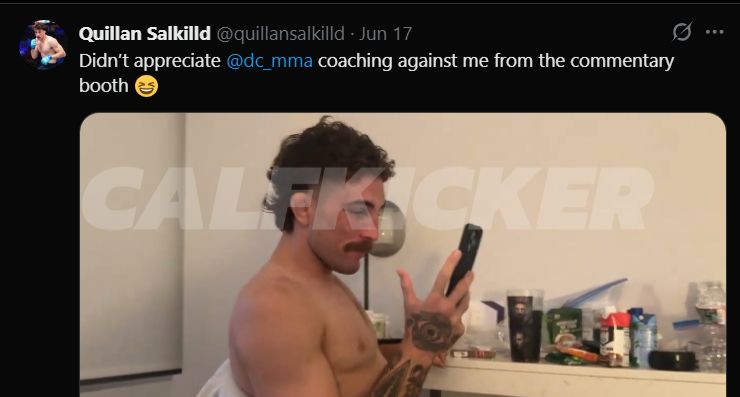
Salkilld, who represents the new generation of Australian mixed martial artists, didn’t take kindly to these comments and used the alleged commentary incident as ammunition in their brewing feud. The up-and-coming star believes he’s part of a “dominant” era of Australian combat sports athletes who are proving critics wrong on the global stage.
“Aussie grappling beats American grappling, man,” Salkilld declared confidently. “We’re seeing this with all the fights with Volk, with JDM now. Like, we’re hard to wrestle with, man.”
The Australian referenced the success of compatriots like Alexander Volkanovski and other Australian athletes who have made their mark in elite competition, suggesting that Cormier’s outdated opinions about Australian wrestling don’t reflect the current landscape.
In a pointed jab at the former champion turned commentator, Salkilld offered a sarcastic solution to the alleged bias:
“Maybe he should corner me next time. Make things even. That’s what I think.”
Daniel Cormier has faced repeated accusations of bias during his broadcasts. Critics and fans alike have pointed out moments where Cormier appeared to favor certain guys—often teammates, friends, or American wrestlers—either by downplaying their opponents’ successes or overhyping their performances. Notably, some have publicly voiced frustration with his commentary, suggesting it can shape public perception unfairly. While Cormier brings undeniable experience and insight to the booth, his emotional investment in certain athletes has, at times, blurred the line between analysis and favoritism, prompting calls for more objectivity in high-stakes bouts.
