

Former UFC competitor and MMA analyst Chael Sonnen recently weighed in on the Tim Kennedy stolen valor controversy. He suggested that chronic traumatic encephalopathy (CTE) may have played a role in the military veteran’s false claims about receiving military honors.
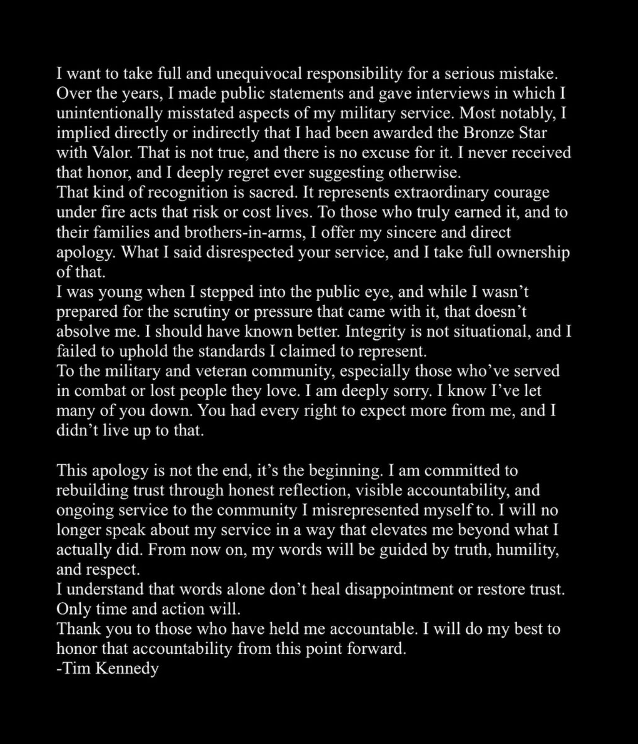
Kennedy is a former UFC middleweight who also served in the military. He recently issued an apology for claiming he received a military award that he did not actually win. The scandal originally broke nine months ago but gained renewed attention when Kennedy formally addressed the allegations through a press release.
Sonnen has been a longtime supporter of Kennedy’s career. He recently expressed surprise at the allegations, noting that such behavior seemed completely out of character for the competitor he’s known for years.
“This is so incredibly unlike something that Tim would do,” Sonnen stated during his commentary on the situation.
The MMA veteran pointed to Kennedy’s extensive military service and legitimate accomplishments, questioning why someone with such an already impressive record would need to fabricate additional achievements. Sonnen emphasized that Kennedy’s actual military service involved significant sacrifices and that his UFC career demonstrated genuine skill and toughness.
However, Sonnen raised the possibility that brain trauma from Kennedy’s combat career might have contributed to the false claims. “You’re dealing with a guy that comes from a sport and CTE is real. There’s something to it,” Sonnen explained, referencing the growing understanding of chronic traumatic encephalopathy’s effects on combat sports athletes.
While Sonnen made clear he wasn’t offering CTE as an excuse for Kennedy’s actions, he suggested it should be considered as a potential factor in understanding how someone with Kennedy’s background might make such uncharacteristic claims. The condition, which results from repeated head trauma, can affect judgment, memory, and decision-making abilities.
Sonnen also admits to being an outsider to military culture as a civilian who didn’t serve, acknowledging that the military community has the right to handle such matters according to their own standards. However, he noted that from his observations, while Kennedy wasn’t particularly popular among some military personnel, he was still recognized as an effective soldier.
Sonnen concluded by urging forgiveness for Kennedy, asking people to consider accepting his apology and giving him the benefit of the doubt given his legitimate service record and the potential medical factors that might have influenced his actions.
