
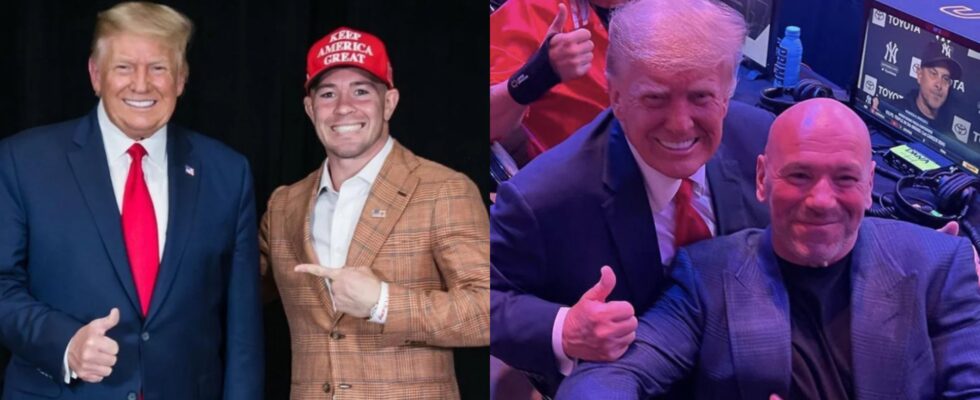
On a recent episode of Luke Thomas Gets Political, MMA analyst Luke Thomas laid out why UFC’s current cultural direction makes genuine audience expansion among non-MAGA viewers a structural end, and why there is likely no path back.
The conversation started with Dana White’s framing of the UFC’s White House event as a universal celebration. Thomas was unconvinced.
“Who is this argument for?” he asked. “You’ve pushed out everyone in the sport who would have been receptive to that message.”
Thomas used the contrast between Twitter and Blue Sky as a concrete illustration of how far the UFC’s cultural identity has drifted. MMA content thrives on Twitter, he noted, but on Blue Sky it simply cannot find an audience. Meanwhile, NFL and soccer coverage on Blue Sky draws large followings.
“You can cover the NFL on Blue Sky. I’ve seen people do it,” he said. “You can cover soccer on Blue Sky. I’ve seen people do it, like have huge audiences too. Like not minimal ones, big ones.”
The UFC cannot replicate that crossover because the culture surrounding the sport has narrowed to the point where it no longer appeals to a broad audience.
The athlete conduct issue was central to Thomas’s argument. He pointed to the tolerance of slurs as a practical barrier for any new viewer who does not already share the prevailing worldview inside the sport.
He said, “If you didn’t know anything about UFC and then you watched and you loved it, but like you don’t have, you know, you don’t think calling people slurs is super awesome, how long are you going to last when athletes are just doing it and there’s like nothing that happens to them as a consequence?”
The answer, he made clear, is not long.
Thomas acknowledged that UFC might eventually pull back from the most visible forms of political performance once the White House chapter closes. But he was firm that any reduction in overt political content would not reverse the underlying cultural shift.
“The people who would have been there are gone,” he said, “and the new ones who come in, they’re going to see the culture. It is inhospitable to anyone who doesn’t have already one of these kinds of worldviews. They’re going to realize that sooner or later.”
For any theoretical course correction to occur, Thomas argued, someone would have to come in and deliberately try to change the culture from within, and even then the culture itself may reject it. He expressed no expectation of seeing that happen.
“I certainly do not see this ever happening in my lifetime,” he said.
His conclusion was direct: “This is just what it is now. You have to decide what your proximity to all of this is going to be.”
