

When President Donald Trump stood before cameras at the White House to unveil TrumpRx, he promised “one of the most transformative healthcare initiatives of all time.”
The new government website, trumprx.gov, launched with what the administration described as unprecedented discounts on commonly prescribed medications.
“Starting tonight, dozens of the most commonly used prescription d**gs will be available at dramatic discounts for all consumers throughout a new website,” Trump announced during the presentation. “This launch represents the largest reduction in prescription d**g prices in history by many, many times. And it’s not even close.”
The President detailed several striking price cuts. He said pharma companies would reduce costs dramatically.
He stated: “Ozempic dropping from over $1,000 to $199, Wegovy falling from more than $1,300 to $199, and a common insulin medication decreasing from $200 to $25. Perhaps most impressively, he noted that “a common inhaler” would decline “from $458 to $51, a difference of nearly 800%.”
Yet within days of the launch, healthcare researchers and consumer advocates began raising concerns about how the site actually functions and whether it delivers the savings promised to average Americans.
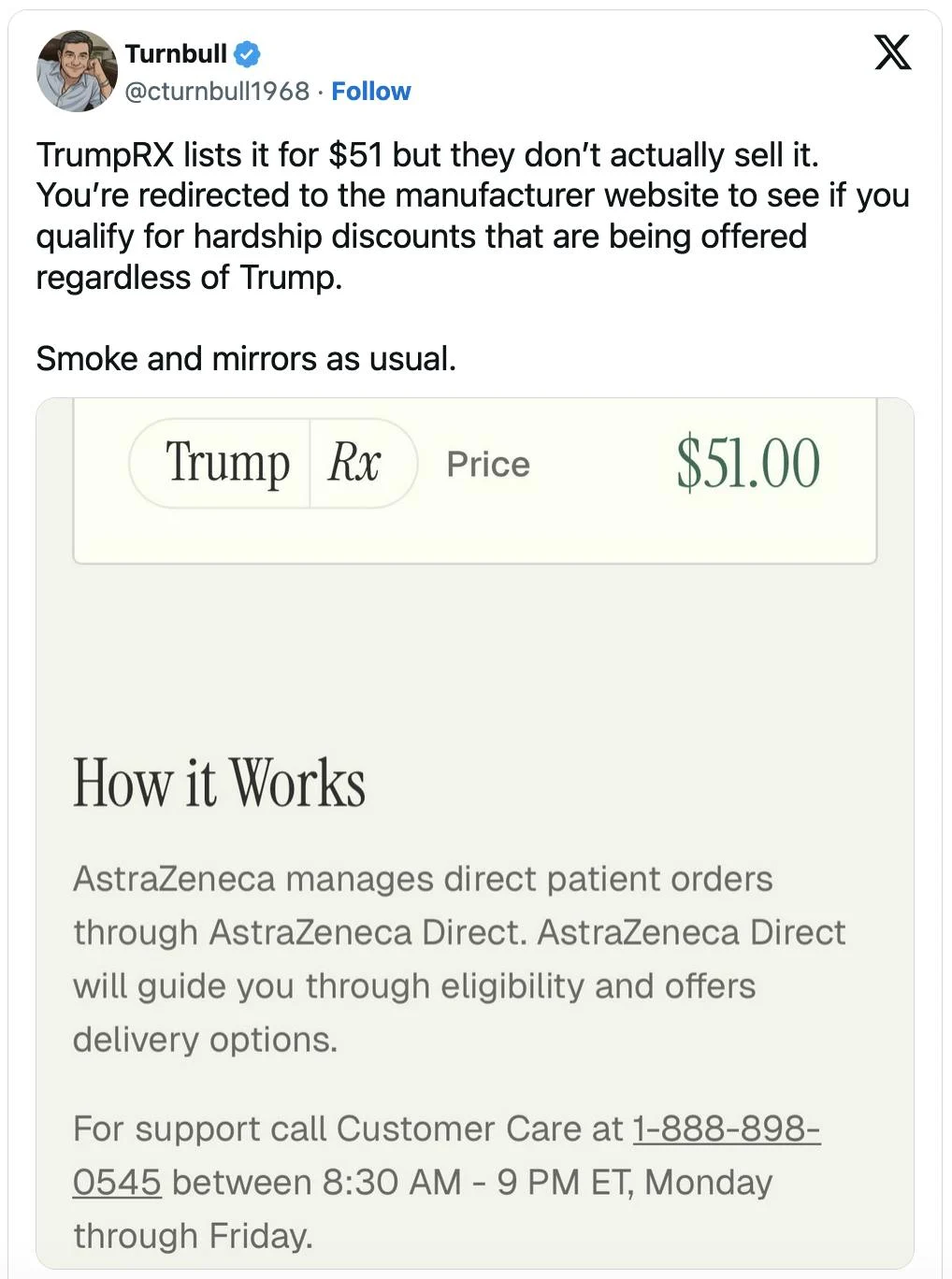
One X user pushed back on Trump’s claim Thursday that TrumpRx would cut the price of inhalers from $458 to $51. They noted that the TrumpRx listing does not actually sell the product.
Instead, clicking the link simply redirects users to the manufacturer’s website, where they can check whether they qualify for hardship discounts. As the user pointed out, those discounts are available regardless of any involvement from TrumpRx.
Anna Kaltenboeck, president of Verdant Research and a specialist in pharma pricing, analyzed the TrumpRx offerings and discovered a significant gap in the advertised benefits.
Her examination revealed that 26 of the 43 medications available at launch have generic alternatives that cost substantially less than the branded versions featured on the government site.
“To the extent that a patient was buying these without insurance, I don’t see this being a benefit,” Kaltenboeck stated.
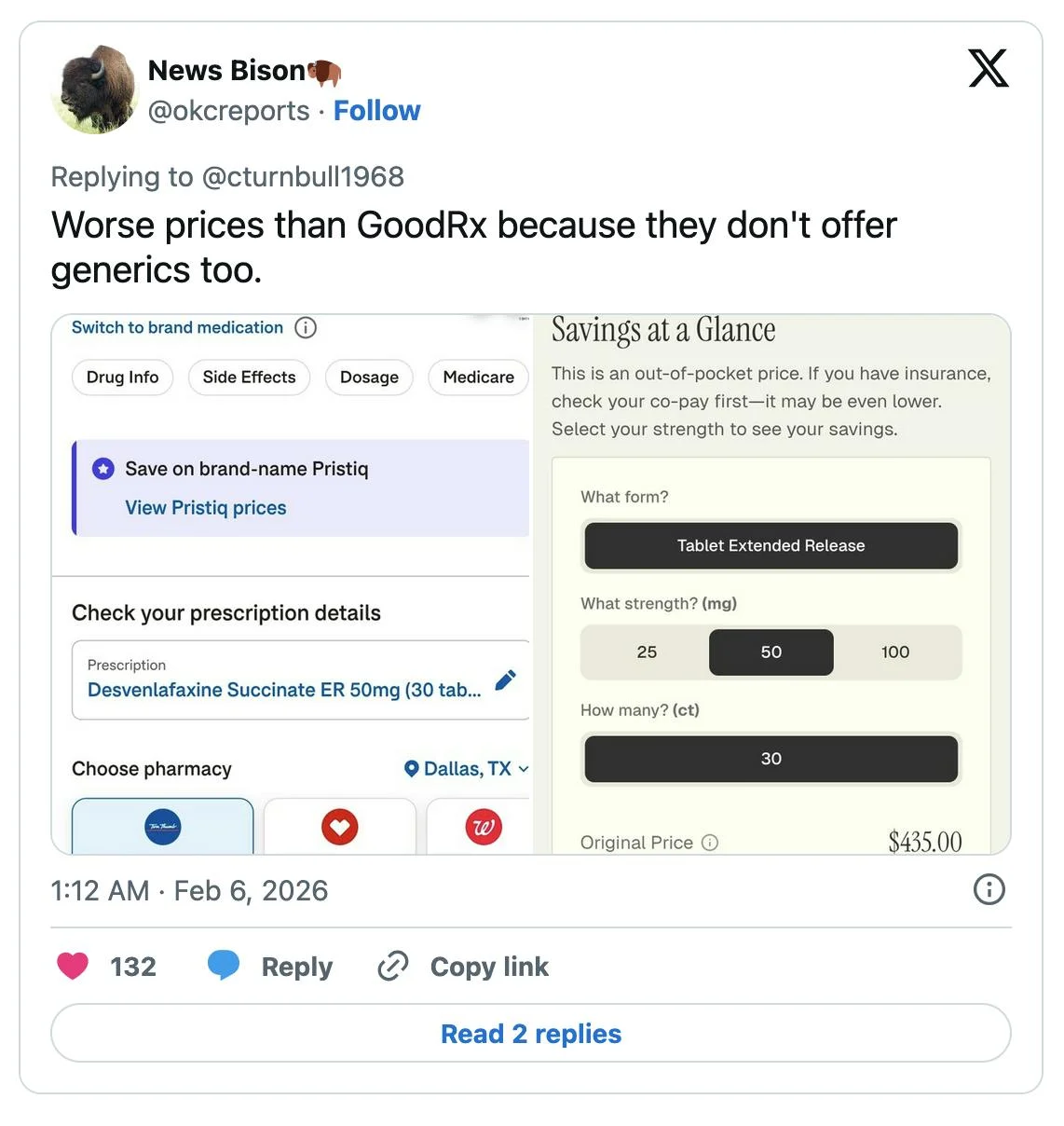
Meanwhile, a generic version containing the identical dosage is available for under $30 on GoodRx, a popular discount platform. The same generic costs just $16.65 on Cost Plus Dr*gs, the pharmacy operation founded by entrepreneur Mark Cuban.
Social media users quickly noticed another apparent inconsistency.
A user criticized the platform for offering higher prices than prescription comparison services like GoodRx, arguing that TrumpRx’s lack of generic options makes it less competitive.
Health economist Sean D. Sullivan of the University of Washington was even more blunt, calling TrumpRx “a sideshow” and saying he does not view it as a serious attempt to reduce prescription drug costs for Americans.
Even more concerning are the strict eligibility requirements tied to these discounts. Users must confirm that they are not enrolled in Medicare, Medicaid, or programs such as the VA, DoD, or Tricare.
This effectively shuts out millions of Americans who depend on government healthcare coverage, including most seniors, veterans, and low-income patients. Ironically, these are often the very groups who face the greatest burden when it comes to prescription d**g costs, yet they appear to be excluded from the promised savings.
Additionally, limited-time pricing and looming expiration dates mean that a deal available today may disappear tomorrow. For patients who rely on consistent, long-term access to medication, this lack of stability makes it difficult to plan ahead or budget for ongoing healthcare needs.
The White House has defended the site’s approach. A spokesperson told Axios that “it’s possible that cheaper alternatives are available for some products listed on TrumpRx, but the site’s value is in providing the lowest-cost option for branded products.”
