

Igor Zinoviev’s combat career ended almost as quickly as it began. The Russian-born MMA star entered UFC 16 in 1998 with an undefeated record of four wins and two draws.
During his time in the organization, he earned himself a title shot against Frank Shamrock. The match lasted less than a minute.
Shamrock’s slam knocked Zinoviev unconscious and broke his collarbone, effectively ending his career. Without UFC coverage for medical expenses, the financial burden made continuing in the sport impossible.
According to sources, seven years later in 2005, Zinoviev accepted a bodyguard position paying $75,000 annually (over $120,000 in today’s dollars). His new employer was Jeffrey Epstein. Zinoviev would work for Epstein from 2005 to 2011, a period that would later raise serious questions about what he witnessed and what role he played.
During this time, Epstein faced legal consequences for his crimes. In 2008, he was sentenced to 18 months but served only 13. The lead prosecutor was attorney Brad Edwards, whose aggressive approach reportedly bothered Epstein.
According to Edwards, Zinoviev approached him with a peculiar story. Edwards claims Zinoviev told him that immediately after Epstein’s arrest, he was sent to CIA headquarters in Langley. There, Zinoviev allegedly spent a week in classes as the only private citizen present, then received a book with a handwritten note to personally deliver to Epstein in jail.
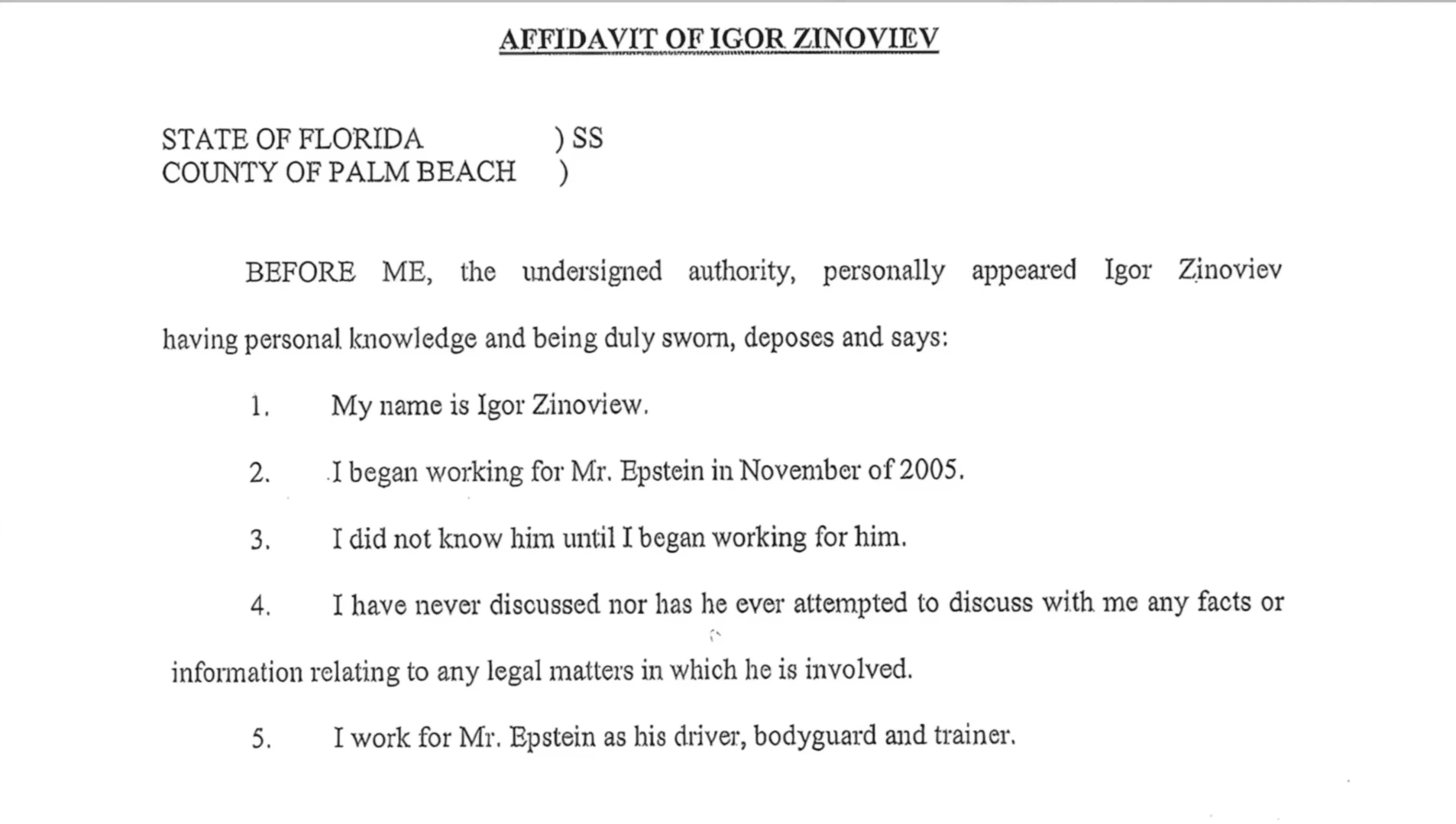
Edwards, a well-respected attorney, has no apparent reason to fabricate such an account. In November 2009, Zinoviev submitted a court affidavit confirming his employment as Epstein’s bodyguard and driver, though he claimed to have never witnessed illegal activity.
The most revealing information comes from interviews with reporter M.L. Nestel. In 2015, Nestel conducted a phone interview with Zinoviev that was never published. Four years later, in 2019, Nestel interviewed him again, and this time the conversation was released. During this second interview, Nestel confronted Zinoviev with statements from their 2015 conversation.
Nestel asked him, “In our conversation in 2015, you described his relationship with teenage girlfriends: ‘So many time I tried to stop him. I try to tell him my opinion about that. He don’t listen to me. That’s the reason why I’m not working for him no more. I make him do that — to let me go.’ Do you remember saying that?”
According to Nestel’s notes, Zinoviev had previously described trying to stop Epstein’s behavior with teenage girls, saying it was why he stopped working for him.
In 2019, Zinoviev denied seeing teenagers around Epstein, insisting he only saw women over 18. When pressed about advising Epstein on his conduct, Zinoviev’s answers became contradictory and evasive.
He said, “It’s not the teenage girls. I never see the teenage girls… Plenty of times when I work for him I never see anything unproper or teenage girls around him. That’s what I say.”
Nestel read back quotes about Epstein rotating different girlfriends on trips, bringing them along then replacing them with others. When asked if he remembered saying this, Zinoviev responded, “Kind of not.”
The interview took a concerning turn when Nestel reminded Zinoviev that Epstein was no longer alive and there was nothing to fear. Zinoviev response was cryptic: “Listen, don’t put yourself in trouble. Seriously, why is it so important? You’re really smart. You have no idea. Please.”
When asked if he’d spoken to the FBI, Zinoviev paused, said “great talking to you,” and ended the call. Throughout the entire 2019 interview, he never once stated clearly that he hadn’t made those initial statements in 2015.
Perhaps most troubling was Zinoviev’s own comment during the interview: “I remember one thing. I say like if I be the father and somebody screw up my daughter, I don’t give with how much money he have, I definitely do some bad thing.”
For someone who spent years as Epstein’s constant companion to express such sentiments raises serious ethical questions. Zinoviev was present during a significant period of Epstein’s activities, yet his testimony remains inconsistent and incomplete. What remains unknown about those years may be far more significant than what has been revealed.
