

In a recent social media post, UFC middleweight Sean Strickland sparked controversy with his unconventional views on masculinity and happiness. The outspoken UFC star, known for his provocative statements, shared his perspective on men’s mental health and the pursuit of contentment.
Strickland’s message, which quickly gained traction online, suggested that men should prioritize the happiness of others over their own. “You guys, I’m miserable. My resting state is misery and anger,” he admitted candidly. However, he went on to propose a solution to this state of discontent.
The UFC star advocated for a shift in focus, urging men to ask themselves, “What will make my woman happy? What will make my family happy?” rather than seeking personal satisfaction. He claimed that this approach has significantly improved his own well-being.
Strickland’s comments drew comparisons to statements made by controversial social media personality Andrew Tate. When confronted about the similarity, Strickland initially dismissed the comparison, referring to Tate as a “con artist.” However, Tate responded with unexpected composure, acknowledging the quote as his own and expressing satisfaction that the message was being spread.
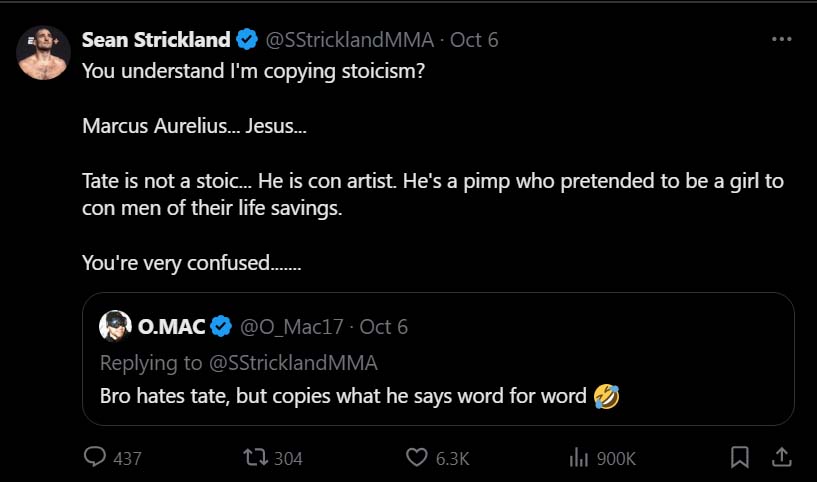
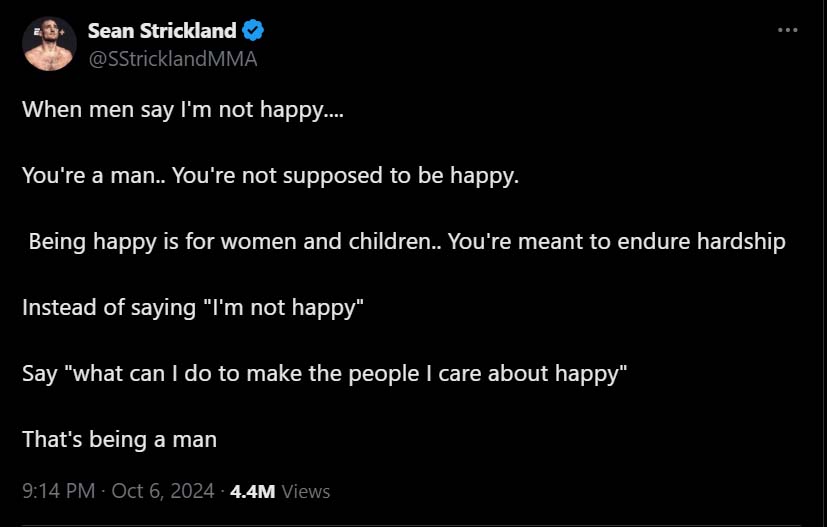
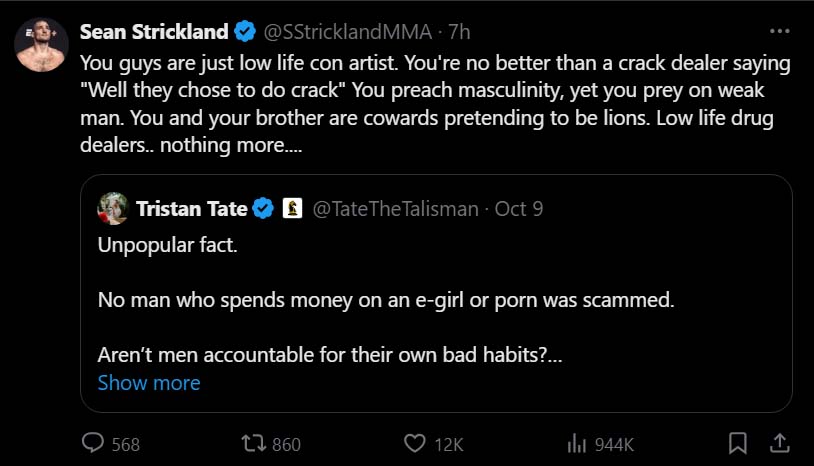
The exchange has reignited debates about masculinity, mental health, and the nature of influence in the digital age. While some critics argue that Strickland’s views perpetuate harmful stereotypes about male emotions, others have praised his honesty in discussing personal struggles.
Mental health experts caution against generalizing such advice, emphasizing the importance of individual approaches to well-being. They stress that seeking professional help and developing healthy coping mechanisms are crucial for addressing depression and other mental health issues.
ADCC Winner Gordon Ryan Claims Therapy for Weak Men After His Dana White Post Goes Viral
Gordon Ryan faced backlash after sharing a video supporting Dana White’s controversial stance against men expressing their emotions. In the clip, White dismisses the importance of discussing feelings, while Ryan intensifies the sentiment, criticizing therapy and those who openly share their struggles.
He labeled such men as “f*ing psies” and called therapy a “dumb idea,” emphasizing that men should suppress their emotions and confide only in a close circle. Despite his own chronic illness and personal struggles, Ryan remained firm in his belief that seeking professional help is a sign of weakness. His views sparked disagreement from some, including his mentor Tom DeBlass, though others, like Mario Lopez, supported him.
White, the UFC president, proclaimed that he doesn’t “want to talk about [his] feelings” and that men should suppress their emotions, asserting, “That’s what we f***ing do.”
Ryan doubled down on White’s comments in a lengthy rant, berating those who seek therapy or share their struggles publicly as “f***ing p**sies.” He claimed that paying a therapist to listen to one’s problems is “the dumbest idea of all time” and that real men should maintain a stoic demeanor, regardless of their internal turmoil.
Critics argue Ryan’s perspective is reductive and damaging, as mental health care, including therapy, provides essential tools for resilience and emotional regulation, a point highlighted by UFC fighter Paddy Pimblett, who advocates for men to seek help.
