
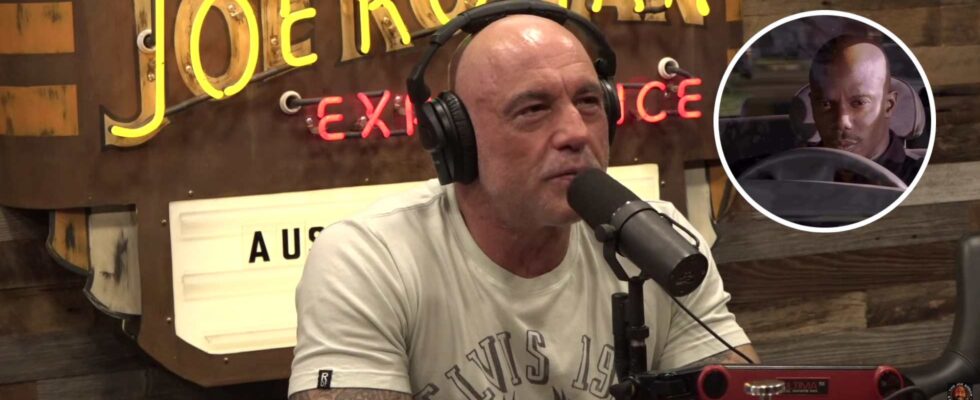
Before Joe Rogan became a household name in comedy and podcasting, he took on an unusual job that few know about: working as a private investigator’s assistant. During a recent episode of The Joe Rogan Experience featuring comedian Adam Ray, Rogan shared colorful stories from this brief but memorable chapter of his life in his early twenties.
The job came about in an unexpected way. Rogan was around 22 years old, competing in martial arts while doing standup comedy at night and working odd jobs to make ends meet. He was making roughly $20 an hour when he came across an advertisement for a private investigator’s assistant.
What he didn’t know at the time was that the real reason for the position had nothing to do with investigative work—the private investigator, a man named Dave Dolan, had lost his license due to drunk driving and simply needed someone to drive him around for three months.
Rogan described Dolan as “the funniest guy that I’ve ever met that wasn’t a comedian.” Known for calling himself “Dynamite f**king Dave Dolan,” he left such an impression on Rogan that years later, Joe kept an old phone just to preserve a voicemail message from him. Dolan has since passed away, but Rogan’s memories of their time together remain vivid.
The nature of the work was primarily insurance fraud investigation. Most cases involved catching people who claimed to be disabled from work-related injuries but were actually perfectly capable.
“And so, then we would go and most of it was insurance fraud. It was mostly like catching people like doing things like pretending their back was hurt, then you catch them carrying roof shingles up a ladder,” Rogan explained.
While Dolan appreciated having someone who could handle themselves physically if situations went sideways—Rogan was still actively fighting at the time—the job rarely required that kind of intervention.
One case particularly stuck with Rogan, highlighting the moral gray areas of the work. Dolan employed a deceptive tactic where he would approach subjects claiming his girlfriend had been in an accident and that a witness’s license plate number had been smudged on the police report.
When they knocked on one woman’s door with this fabricated story, she not only confirmed she had the same injury Dolan’s fictional girlfriend supposedly had, but she also revealed she was collecting insurance while simultaneously working under her maiden name—classic fraud. What made it worse was her kindness: she invited the two strangers into her home for coffee.
“She’s so nice, man. We can’t do that. We got to pretend this didn’t happen,” Rogan recalled thinking. But Dolan had a different perspective: “F**k her. She’s a f**king thief. F**k her.” The experience troubled young Rogan, who only worked the job for a few months—just long enough for Dolan to get his license back.
Another memorable case involved a man who suspected his wife of cheating. Dolan conducted surveillance and discovered she was indeed having an affair with a bodybuilder. He took photographic evidence and presented it to the husband.
Strangely, instead of ending the investigation, the man asked Dolan to continue following her. It became apparent to Dolan—and disturbed both him and Rogan—that the husband might have been deriving some kind of satisfaction from the surveillance, turning what should have been a straightforward infidelity case into something uncomfortable and possibly kinky.
The insurance fraud work, while morally complicated, was simply a numbers game for the investigative firm. These cases represented consistent income, even if they required deceiving people and occasionally catching legitimately nice individuals who were breaking the law.
Looking back, Rogan is clear that he couldn’t sustain that kind of work. “I can’t do this. I only did it for a few months,” he admitted. The job required an emotional detachment he didn’t possess, particularly when dealing with people like the kind woman who welcomed them into her home.
